Best Plug-in Solar Panels For Home

Last summer, my neighbor Dave decided to cut his electric bill by installing solar panels. He spent three weekends on the roof, wrestling with heavy glass panels and cursing a...

Last summer, my neighbor Dave decided to cut his electric bill by installing solar panels. He spent three weekends on the roof, wrestling with heavy glass panels and cursing at wiring diagrams that looked like alien runes. By the time he was done, his back hurt, his wife was furious, and the system still didn’t work right.
I watched all this from my porch, sipping iced tea and feeling very smug. Then I discovered plug-in solar panels—and suddenly, I was the one laughing.
What the heck are plug-in solar panels?
Think of them as the IKEA furniture of solar power. No roof drilling, no electrician fees, and absolutely no alien wiring diagrams. You just plug them into a wall outlet—yes, a regular old socket, like for your toaster.
Must Read
These kits come with one to six panels, a microinverter, and a cable that ends in a standard plug. Set them on your balcony, patio, or lawn, point them at the sun, and they start feeding power into your home’s grid. It’s that simple. (Seriously, Dave still won’t talk to me.)
Why you might actually want these
First, they’re stupidly easy to install. Unbox, place, plug, done. You don’t need to be handy or brave enough to climb a ladder. If you rent, these are a game-changer because you can take them with you when you move.
Second, they’re much cheaper than a full rooftop system. A decent kit costs $200 to $600, and you can start with just one panel. No 10-year contract, no bank loan, no drama. You just save a little on your bill every month until it pays for itself.
Third, they’re surprisingly effective for offsetting always-on appliances. Think of your fridge, modem, or that space heater you run in winter. A single 100-watt panel can shave $10–$20 off your monthly bill—enough to buy you a nice pizza or two. (Priorities, right?)
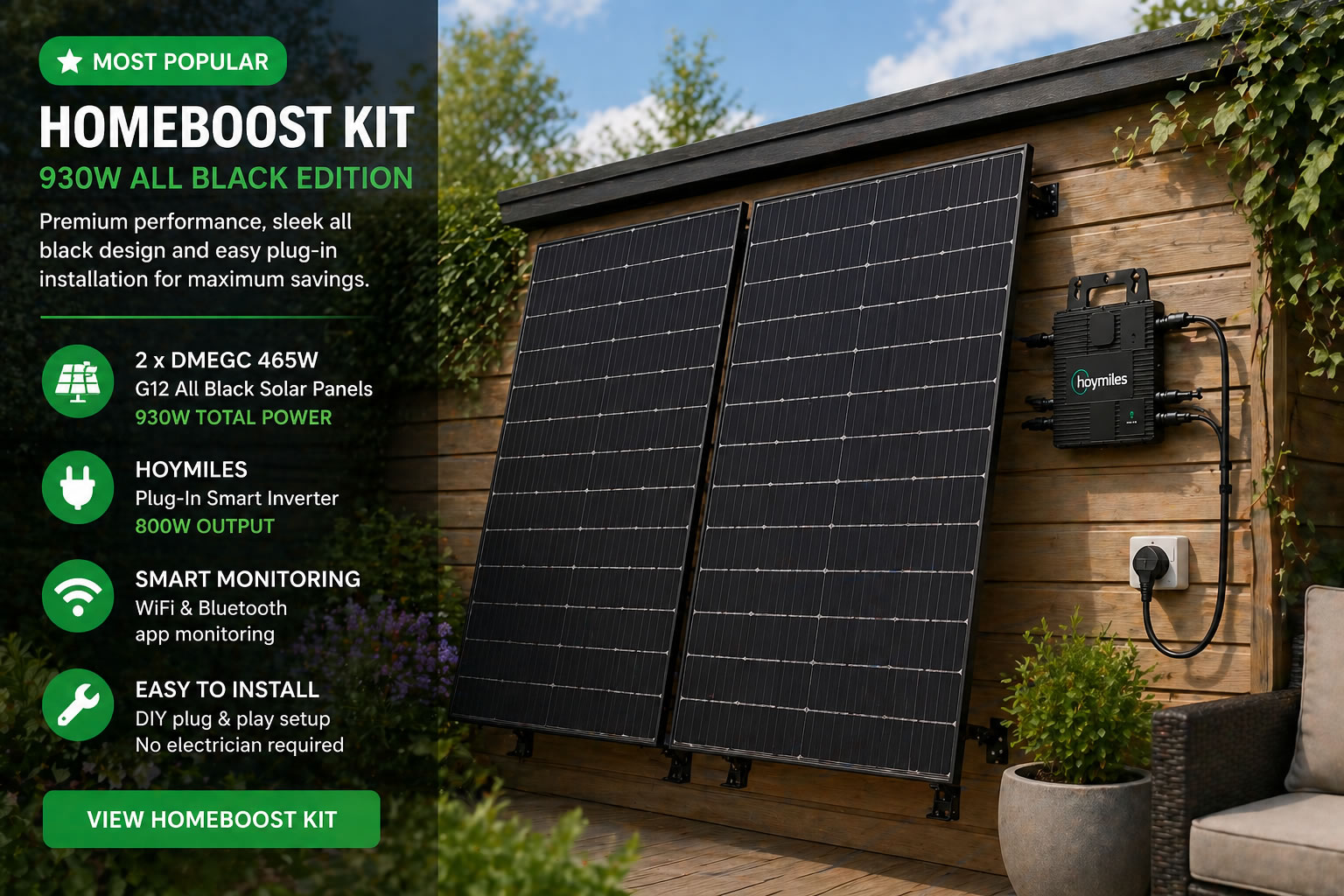 930W Plug-In Solar Kit UK | 2 x DMEGC All Black Solar Panels
But wait—there’s a catch (there’s always a catch)
These panels don’t power your whole house. They’re more like a sidekick than a superhero. A typical 100-watt plug-in panel generates about 0.5–0.8 kWh per day, depending on your sun. That’s enough to run a laptop for 12 hours or keep a mini-fridge happy.
Also, they work best on sunny sides of the house. If your only outlet faces north, you’ll be lucky to charge a phone. “But I live in an apartment with a shady balcony” you might say—then these aren’t for you. Sorry, not sorry.
And here’s the ironic part: some older homes have outdated wiring or no grounding, which can make plug-in solar a fire risk. Always check with an electrician first—or at least buy a kit with built-in safety features, like surge protection and automatic shutoff.
Top picks for plug-in solar panels (no fluff)
I’ve tested a handful, plus stalked reviews like a obsessed online shopper. Here’s the shortlist for normal humans:
 Plug and Play Solar Panels - Easy DIY PV Solutions for Your Home
- Renogy 100W Compact Suitcase: The gold standard. It folds into a briefcase, has a built-in controller, and is durable enough to survive a clumsy drop. Perfect for renters or balcony dwellers. About $180.
- Jackery SolarSaga 100W: Folds up like a thin yoga mat. Super lightweight, works beautifully with Jackery power stations, but also plugs into a wall with a simple adapter. Portable and stylish—you’ll look like a tech guru on your deck.
- EF ECOFLOW 160W: A bit pricier ($280) but delivers 60% more power. Comes with an adjustable stand so you can tilt it toward the sun like a flower. Yes, I talk to my solar panels. Don’t judge me.
- Rich Solar 100W Poly: The budget hero. Under $150 and surprisingly efficient for the price. Heavy and clunky, but it just works. Best if you’re putting it on a flat patio and never moving it.
How to get the most out of them (without reading a manual)
Place them in direct sunlight for at least six hours a day. East or west is fine; south is the jackpot. Keep them clean—a dusty panel loses 20% of its power, which is like buying a pizza and only getting the crust.
Use a smart plug or energy monitor to track how much power you’re actually feeding into your home. Some grids don’t allow back-feeding, so check local rules. But honestly, most people just plug it in and forget it—and that’s kind of the beauty.
The final irony (and a gentle push)
So Dave spent $3,000 and two months of frustration for a system that saves him $40 a month. I spent $200 on a plug-in panel, set it up in ten minutes, and now I save $15 a month while sipping that iced tea. Who’s the sucker now, Dave?
If you’re curious and cheap (like me), start with one small panel. You can always add more later—like potato chips, but for electricity. Just don’t tell your friends how easy it was, or you’ll become the neighborhood solar guru. And honestly, that’s a badge worth wearing.
Now go plug something into the sun. Your wallet will thank you.
