Can You Catch Norovirus More Than Once

So, that norovirus hit you like a freight train last winter. You’ve barely recovered from the memory of it, and now you’re wondering: can this monster come back for round two?...
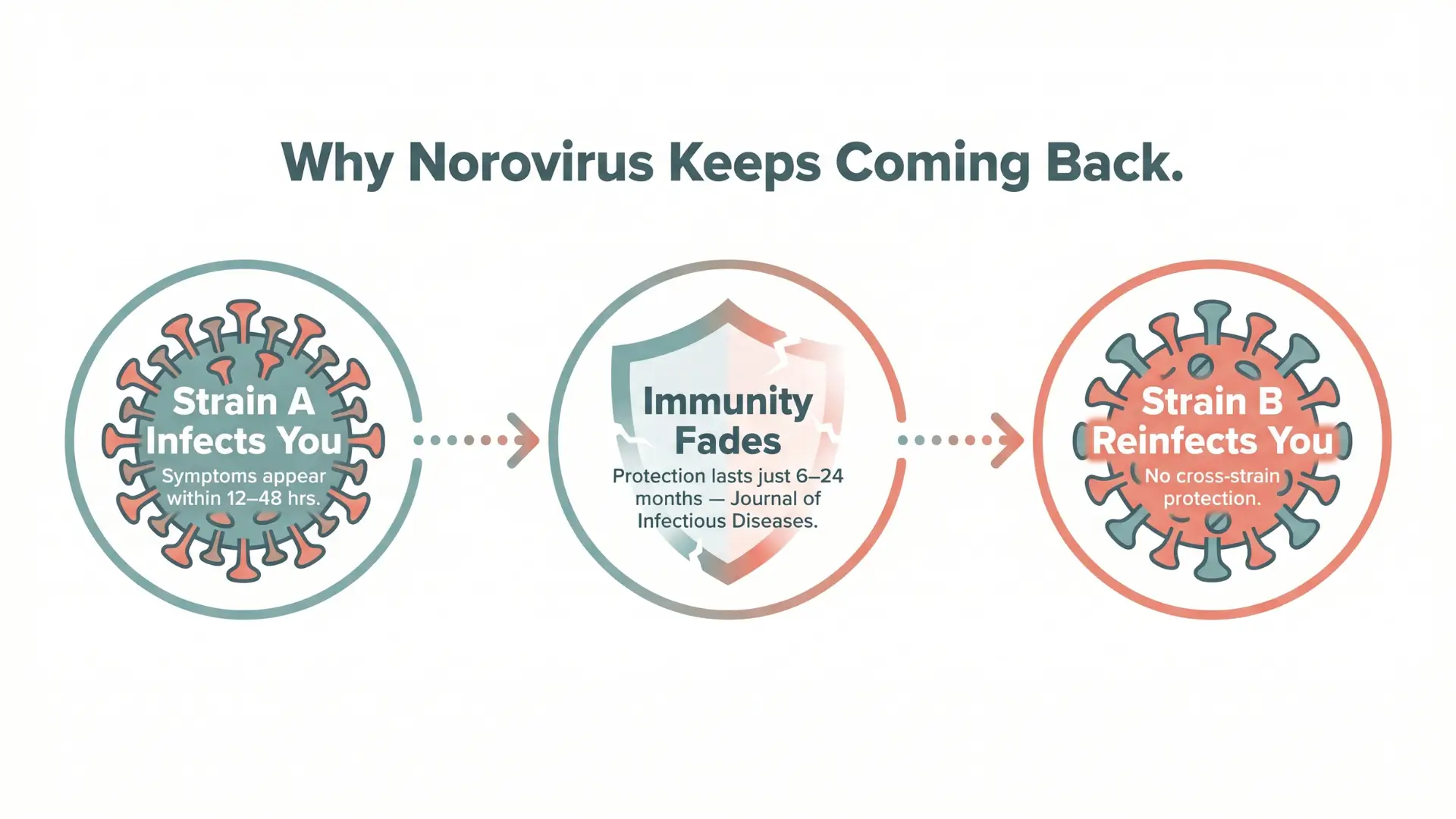
So, that norovirus hit you like a freight train last winter. You’ve barely recovered from the memory of it, and now you’re wondering: can this monster come back for round two? The short, brutal answer is yes, you can absolutely catch norovirus more than once. It’s not a one-and-done deal like chickenpox, and your immune system doesn’t exactly throw a victory parade.
Think of norovirus as the shape-shifting villain of the viral world. There are over 30 different genetic types of it, and your body only learns to recognize the exact one that gave you that 24-hour hell ride. Next season, a completely different strain can waltz in, and your immune system will be caught off guard.
Even if you get the same strain, the protection you build is surprisingly short-lived. Studies show that your immunity to a specific strain might last only a few months, maybe up to two years at best. In a social world of potlucks and cruise ships, that’s basically a blink.
Must Read
This explains why norovirus is the undisputed champion of outbreak circles. It’s why you can get the stomach bug in January, and then again in December, and still have your friends joke about “that time you got it in March.” Your body is basically starting from scratch each time a new genetic trick shows up.
Why It Feels Like Déjà Vu Every Time
Here’s a fun fact that feels less fun: it only takes 18 viral particles to make you sick. For context, a single speck of vomit can contain billions. You don’t need a hug from a sick friend; you just need to touch the same elevator button they did an hour ago.
The virus is a master of survival outside the body. It can live on surfaces like doorknobs, countertops, and even your yoga mat for days to weeks. Hand sanitizer? It’s not your friend here—norovirus is a non-enveloped virus, which means alcohol doesn’t destroy it like it does with flu or COVID-19.
This is why cruise ship outbreaks make headlines, but so do your local gyms and preschools. It’s a persistent little gremlin that laughs at your fancy hand gel. The only reliable defense is old-school: soap and water, scrubbing for at least 20 seconds.
The Uneven Battle: Who Gets It Again and Again?
Children, elderly people, and those with weaker immune systems are the most likely repeat customers. Kids under five—especially those in daycare—are basically walking petri dishes. They touch everything, share toys, and then bring the gift of norovirus home for the holidays.
 Norovirus Prevention What You Need To Know About Preventing The Spread
Adults can get it multiple times too, but often with a little more spacing. Your immune system has seen more battles, so it might fend off a low-level exposure better. But let’s be real: one bad oyster or a friend who “felt fine” at brunch can still knock you flat.
There’s also the genetic lottery factor. Some people have a mutation in their FUT2 gene—the “secretor” gene—that actually makes them less susceptible to certain norovirus strains. About 20% of the population are non-secretors, meaning they might dodge the bullet once or twice. Lucky them.
But don’t get cocky if you’re a non-secretor. You’re still vulnerable to other strains, and you can still be a carrier without symptoms. Basically, you can be the silent ninja of vomit transmission.
Practical Tips: How to Break the Cycle
You cannot build lasting immunity, but you can become a fortress of cleanliness. Bleach is your best friend. A solution of 1 part bleach to 10 parts water kills norovirus on contact, unlike those trendy “natural” cleaners. Wipe down your phone, light switches, and refrigerator handles weekly.
Wash fruits and vegetables thoroughly, because norovirus loves to hitch a ride on your arugula. And if a family member gets sick, isolate them in one bathroom for 48 hours after symptoms stop. The virus is actually most contagious right after you feel better—cruel, right?
Skip the handshake when people say “I had a bug last week.” Opt for an elbow bump or a friendly nod. And if you’re on a cruise, avoid the buffets and pools. The CDC reports that norovirus outbreaks on ships are down, but still a thing—so treat the lido deck like a biological hazard zone.
 Can You Catch Norovirus Multiple Times? Understanding Repeated
A Little Cultural Pocket Guide
Think of norovirus like the “Taylor Swift Eras Tour” of viruses—each year brings a new era, a new hit, and a new sold-out crowd of sufferers. One year it’s the Sydney strain, the next it’s a GII.4 variant. You can’t predict it, but you can prepare for it.
In Japan, it’s common to wear masks during flu season not just for COVID, but to protect against norovirus particles. And in the UK, the NHS recommends “catch it, bin it, kill it” even for stomach bugs. Cultural habits around hygiene are actually our best defense.
Fun fact: norovirus is sometimes called the “winter vomiting bug” in the Northern Hemisphere, but it’s actually a year-round menace. Summer cookouts, lake water, and undercooked shellfish are all common vectors. It’s the equal-opportunity destroyer of your weekend plans.
The Final Spin: Living with the Reality
So yes, you can catch norovirus more than once, and yes, it’s deeply annoying. But knowing this is actually freeing: you stop stressing about “building immunity” and start focusing on smart habits. You wash your hands with the focus of a surgeon. You keep bleach wipes in your car.
And you accept that sometimes, despite your best efforts, a tiny 18-particle virus will win. That’s not a failure—it’s just biology being a little bit of a prankster. You’ll recover, you’ll hydrate, and life will go on.
In the end, norovirus is a reminder that we’re all riding the same chaotic, messy bus called being human. You can’t catch a virus twice if you don’t let the first round define you. And the next time it hits, you’ll know exactly what to do: rest, hydrate, and kindly blame the oysters.
