Cost Of Living In Dubai Vs Uk

Let’s be honest—figuring out where your money goes each month can feel like a full-time job. If you’ve ever daydreamed about swapping your rainy UK commute for Dubai’s endless...

Let’s be honest—figuring out where your money goes each month can feel like a full-time job. If you’ve ever daydreamed about swapping your rainy UK commute for Dubai’s endless sunshine, you’ve probably wondered: “Can I actually afford that?” The answer is trickier than a simple yes or no, but it’s a fun puzzle to solve. So grab a cuppa (or a fancy Dubai latte) and let’s chat about the real cost of living in these two very different worlds.
The Rent Reality Check
First up: housing. In the UK, your rent often feels like it’s eating your entire paycheck, especially if you’re in London. A modest one-bedroom flat in a nice area can set you back £1,300 a month.
In Dubai, that same money might get you a flashy studio in a high-rise with a pool and gym, but don’t be fooled—rents here have shot up. A decent one-bedroom in a popular spot like Dubai Marina can cost around 70,000 AED per year (about £1,400 a month).
The catch? In the UK, you typically pay rent monthly. In Dubai, you often have to write one massive cheque for the whole year. It’s a gut-punch to your savings, but it means you don’t get a monthly reminder of how much you’re spending.
The Grocery Game
Now, let’s talk about the weekly shop. In the UK, a basket of basics—milk, bread, eggs, chicken, pasta—might cost you £40 at Tesco. You know the drill: meal deals, clubcard points, and a little treat for yourself.
In Dubai, the same basket at a supermarket like Carrefour can be surprisingly similar, maybe 200-250 AED (£40-£50). But here’s the twist: imported goods, like your favourite British cheese or a jar of Marmite, can cost double what you pay back home.
I remember trying to find proper baked beans for a fry-up. It felt like a treasure hunt, and when I found them, they were £4 a tin! So, if you’re a loyal fan of British brand names, your grocery bill might climb faster than a Dubai elevator.
Bills, Beaches, and Boiling Sun
Utility bills are a big plot twist. In the UK, your energy bill is a constant worry, especially in winter when the heating is on. You’ll easily spend £150 a month on gas and electric.
In Dubai, electricity is heavily subsidised for citizens, but for expats? You pay market rate—and your AC runs all summer. A one-bedroom flat can cost 500-700 AED (£100-£140) a month for utilities. Not too bad, right?
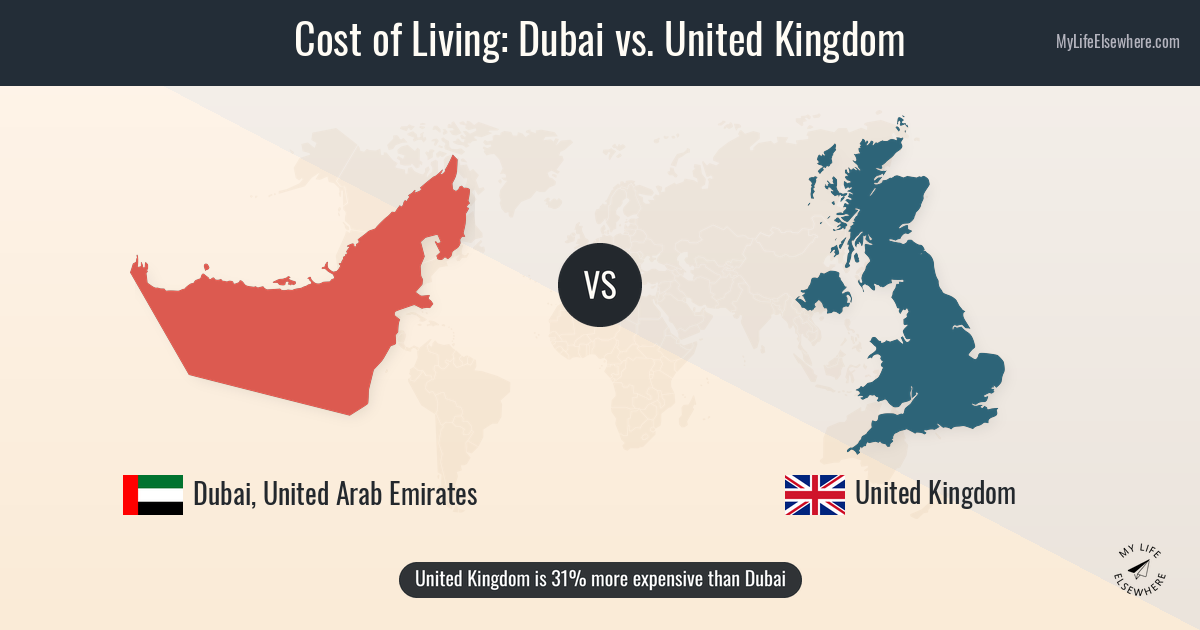 Cost of living in Dubai compared to United Kingdom
Wait—we forgot water. You’ll also pay for water, and Dubai uses a lot of it. And never ignore the “housing fee” on your DEWA bill (that’s the Dubai Electricity and Water Authority). It’s 5% of your rent added to your monthly bill. Ouch. That small print can add £50 a month.
Transport: Petrol vs. Train Fares
If you rely on public transport in the UK, a monthly train pass can cost you £200–£300, and the trains are often late. You know the pain of standing on a cold platform, praying for a seat.
In Dubai, petrol is cheap compared to the UK. Filling up a small car might cost you 150 AED (£30) versus £80 in the UK. But owning a car here means paying for insurance, registration (Salik tolls), and—this is key—constant parking fees in malls and residential areas.
On the flip side, the Dubai Metro is air-conditioned, clean, and a bargain at around £1.50 for a long ride. You can forget your umbrella and still stay dry—a huge win for any Brit used to soggy socks.
Dining Out and Social Life
Eating out in the UK has become pricier. A nice dinner for two with a couple of drinks can easily be £80. In Dubai, the same meal might cost 400-500 AED (£80-£100) at a mid-range restaurant. But here’s the secret: Dubai runs on incredible restaurant deals.
Every week, you can find “2-for-1” offers, ladies’ nights with free drinks, and brunch deals that make your wallet happy. I once had a three-course dinner with unlimited soft drinks for 99 AED (£20).
 what is the average cost of living in dubai?
Meanwhile, a pint of beer in a UK pub is now over £6. In Dubai, a pint at a normal bar is around £8-£10—steep. But if you drink at home, alcohol is heavily taxed. A bottle of wine that costs £7 in a UK supermarket can be £20 here. So, if you love a glass of red with dinner, your social budget takes a hit.
The Hidden Costs of Sunshine
One of the biggest differences is lifestyle costs. In the UK, you spend money on heating, warm coats, and maybe a Netflix subscription to survive the dark winters. In Dubai, you spend on air conditioning, sunscreen, and gym memberships.
Dubai is all about outdoor living—beach clubs, desert safaris, and rooftop pools. A day at a beach club can cost £30 for entry, plus £10 for a sun lounger. Brits, on the other hand, can stroll to their local park for free (provided it’s not raining sideways).
And let’s not forget school fees. If you have kids, this is the big one. In the UK, state school is free. In Dubai, even a basic private school costs 30,000 AED (£6,000) a year, and top schools can hit 100,000 AED (£20,000). That single factor can decide whether Dubai is a dream or a drain.
So, Which One Wins?
Honestly, there’s no clear winner. It’s about what matters to you. If you love sunny weekends, tax-free salary, and flashy experiences, Dubai can feel like a deal—until you hit the school fees or a surprise utility charge.
If you value predictable costs, free healthcare, and a pint for under a fiver, the UK feels cosy and familiar. But UK taxes nibble at your income, and the weather can make you want to emigrate anyway.
At the end of the day, both places will make you laugh, cry, and check your bank account with a slight frown. The trick is to visit both, buy a cheap Dubai brunch deal, then return to a British roast dinner, and decide where your wallet feels happiest. Just be ready for a few surprises—like a £4 tin of beans.
