Examples Of Positive And Normative Statements In Economics

Imagine you're at your favorite coffee shop, sipping on a latte and chatting with a friend about the economy. You might say something like, "I wish the government would do mor...

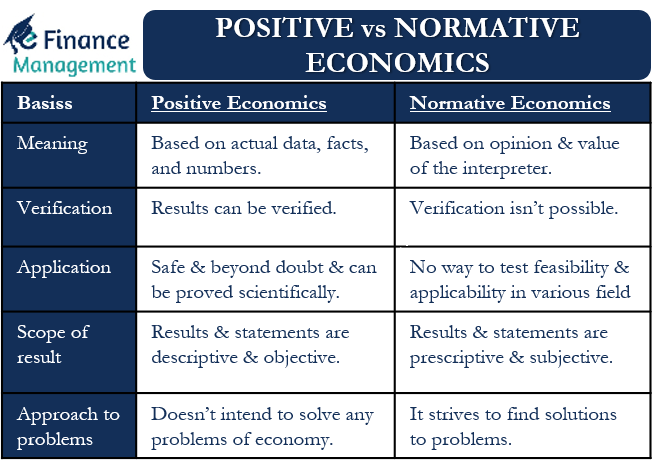
Imagine you're at your favorite coffee shop, sipping on a latte and chatting with a friend about the economy. You might say something like, "I wish the government would do more to help small businesses." That's an example of a normative statement, because you're expressing a value judgment or opinion about what should be done. It's like saying, "I think pineapples belong on pizza" - it's a subjective view that can be debated.
In contrast, positive statements are factual and objective, like saying, "The unemployment rate has been trending downward over the past year." This statement can be verified with data, and it's not about what should be, but rather what is. Think of it like saying, "The coffee shop is open from 7am to 7pm" - it's a straightforward fact that can be checked.
Why it matters
So, why should you care about the difference between positive and normative statements? Well, it's because understanding the distinction can help you evaluate arguments and make more informed decisions. For instance, if someone says, "We should increase the minimum wage to $15 an hour," that's a normative statement - but if they also provide data showing how it would affect employment rates, that's a positive statement that can be analyzed and discussed.
Must Read
Let's consider another example: "The new tax policy is unfair to low-income families." This is a normative statement, because it expresses a value judgment about what's fair or unfair. But if someone says, "The new tax policy will reduce government revenue by 10%," that's a positive statement that can be verified with data. By recognizing the difference, you can have a more nuanced conversation about the policy's effects.
In everyday life, we often mix positive and normative statements without realizing it. For instance, you might say, "I'm so glad the city is investing in renewable energy - it's the right thing to do!" The first part of the sentence is a positive statement (the city is investing in renewable energy), while the second part is a normative statement (it's the right thing to do). By being more aware of this distinction, you can clarify your own thoughts and communicate more effectively with others.
Real-life implications
In economics, understanding positive and normative statements can have significant implications for policy decisions. For example, a politician might say, "We need to cut taxes to boost economic growth." This is a normative statement, but if they also provide data showing how tax cuts have affected growth in the past, that's a positive statement that can inform the decision. By evaluating both types of statements, policymakers can make more informed choices that benefit society.
 What Are Positive Statements In Economics? – QIGWU
In your daily life, you might not be making policy decisions, but you're still making choices about how to allocate your resources - like deciding how to budget your money or whether to invest in a particular stock. By recognizing positive and normative statements, you can evaluate information more critically and make more informed decisions that align with your values and goals.
So next time you're chatting with a friend about economics or politics, try to notice when you're making positive or normative statements. It's not about being "right" or "wrong" - it's about having a more nuanced and informed conversation. And who knows, you might just become the most popular person at the coffee shop, known for your clever insights and ability to separate fact from opinion!
By being more mindful of positive and normative statements, you can enhance your critical thinking skills and engage more effectively with the world around you. So go ahead, grab another latte, and dive into the fascinating world of economics - with a newfound appreciation for the power of words and ideas!
