Frost Fairs On The Frozen Thames

Imagine, if you will, the heart of London transformed into a frozen, glittering carnival. This was the reality of the Frost Fairs on the River Thames, a series of impromptu fe...
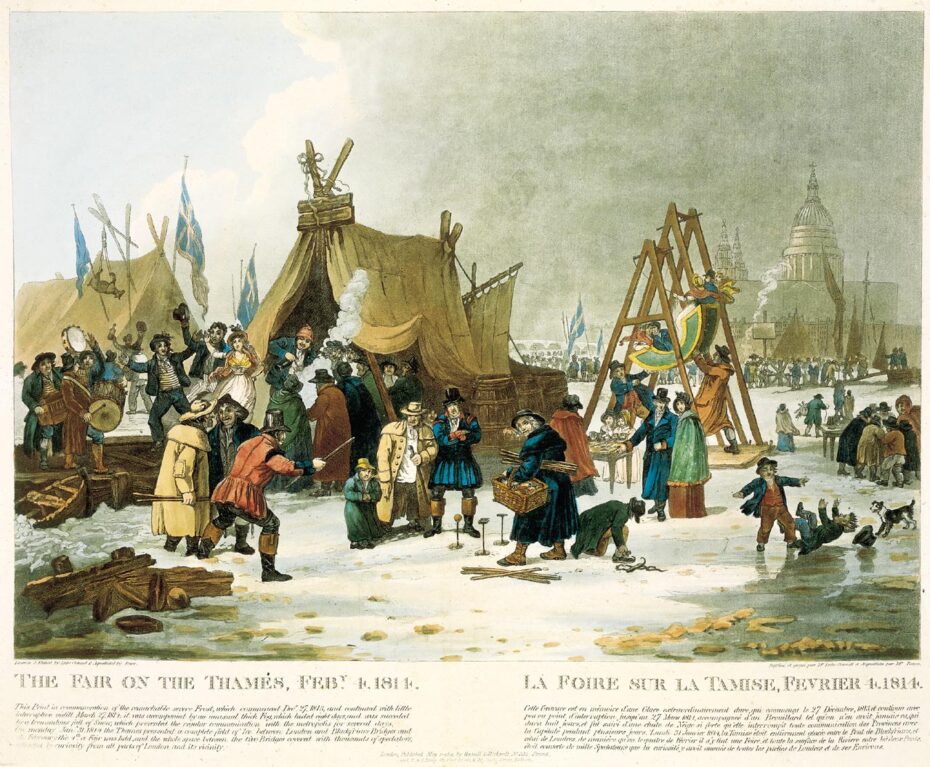
Imagine, if you will, the heart of London transformed into a frozen, glittering carnival. This was the reality of the Frost Fairs on the River Thames, a series of impromptu festivals that erupted on the ice during the Little Ice Age. For a few precious weeks between the 17th and 19th centuries, the city’s busiest waterway became a bustling, quirky, and utterly bonkers entertainment district.
A Brief Chill in History
Before the old London Bridge was replaced in 1831, its many arches slowed the river’s flow drastically. This, combined with particularly brutal winters, allowed the Thames to freeze solid—sometimes to a depth of nearly a foot. Crucial to the fair’s safety was the “frost,” a term used for the prolonged freeze that made the ice thick enough to walk on.
The first officially recorded Frost Fair kicked off in 1608, but the most famous ones occurred in 1683-84 and 1814. These weren’t just a few market stalls; entire tent cities sprang up, complete with streets, shops, and even pubs. One could buy a roast ox from a spit, get a souvenir printed on a press, or watch a puppet show while sipping hot gin.
Must Read
Life on the Ice: A Modern Guide
What would you do if you stepped onto the frozen Thames today? For starters, you’d need to dress in layers—wool, fur, and a sturdy pair of boots with metal cleats were the historical standard. The ice wasn’t a pristine skating rink; it was a chaotic, muddy, and uneven plain.
Eat and Drink Like a Frost Fairer
The signature snack was “lamb’s wool,” a bizarre but warming brew of roasted apples, ale, and spices. Forget artisan coffee—this was the hot toddy of the ice. Street vendors sold gingerbread, roasted chestnuts, and rare treats from far-off lands, all while skating about on bone skates.
A must-try activity was the “printing press.” For a small fee, you could have your name printed on a commemorative card, often featuring a poem about the cold. These cards are now prized historical artifacts, little pieces of Instagram before the internet.
Games and Spectacles
Forget passive entertainment; the Frost Fair was participatory. People played ninepins (an early version of bowling), had donkey races on the ice, and even watched elephants cross the river. Yes, an elephant was led across the Thames in 1716 to prove the ice’s safety—a public relations stunt worthy of a modern brand launch.
The merry-go-rounds were powered by people pushing the wheel, and there were even “coaches” pulled by horses that drove down the frozen river as if it were a road. It was a temporary, chaotic, and wildly democratic space—a leveller of class, where a merchant and a lord might bump elbows over a mutton pie.
Fun (and Frosty) Facts
Here are a few quick takes to impress your friends at a dinner party: The 1683-84 fair was so large it had a full street called “Freezeland Street.” One pub on the ice brewed its own beer, right on the frozen river. Also, in 1814, a barge floated up a massive block of ice and set it on fire—a truly spectacular and slightly terrifying sight.
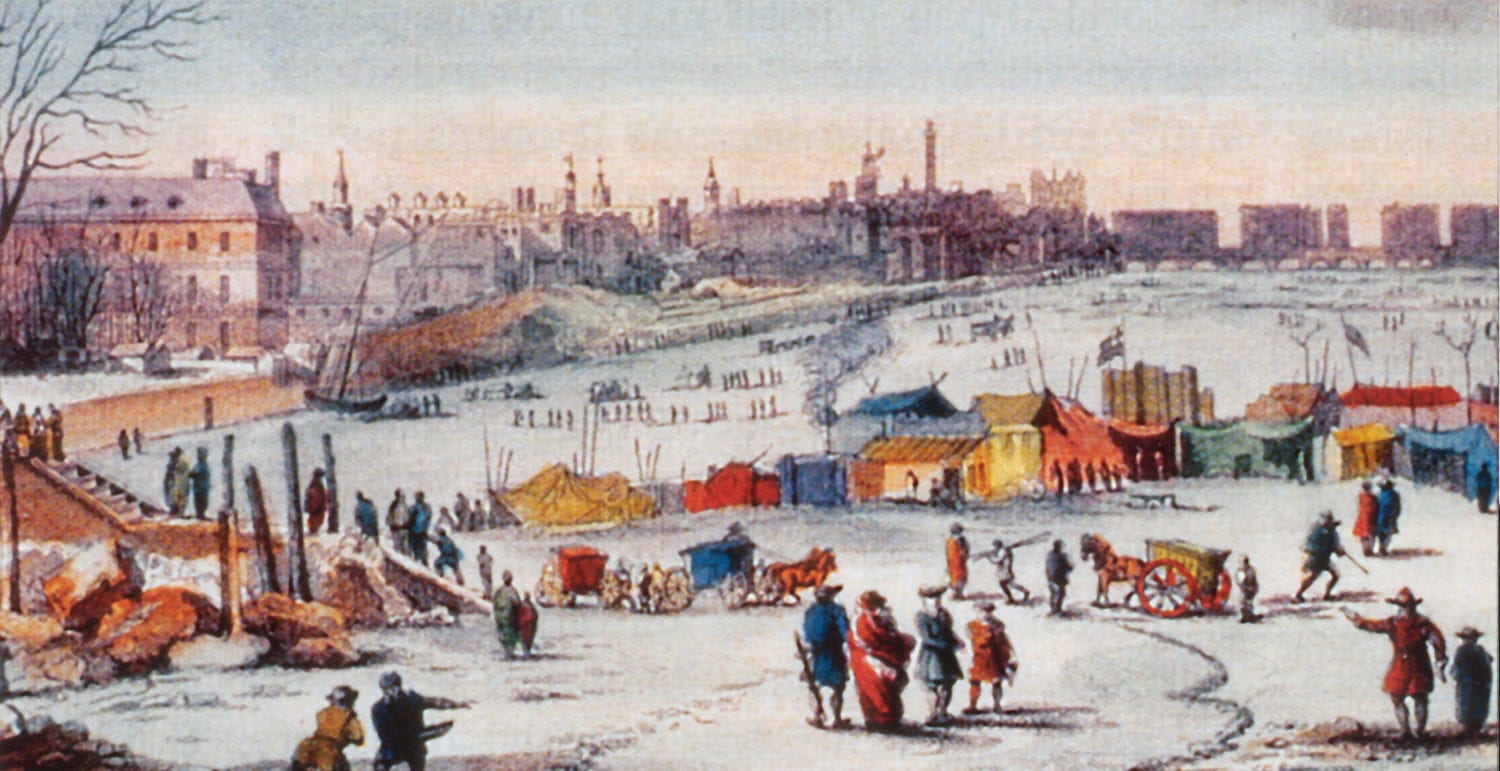 The Thames Frost Fairs in London
The trend didn’t stop with people. King Charles II and his entire court visited the 1683-84 fair, enjoying a royal feast on the ice. Later, a mischievous printer named George Davis set up a stall and printed a book titled The Frozen Thames right there on the spot. Talk about location-based content.
The Science of the Chill
Why don’t we have Frost Fairs today? Climate change is one obvious answer—our winters are milder. But the real culprit is the modern London Bridge, built with wide arches in 1831. The river flows faster, carrying away ice before it can thicken. Also, the river is now embanked, which prevents the ice from forming a solid sheet.
So, the Frost Fair is a historical anomaly, a perfect storm of environmental conditions and human ingenuity. We can’t recreate them without freezing the city’s plumbing and transport, but we can appreciate the sheer audacity of the event.
A Quick Lesson for Daily Life
The Frost Fairs remind us that adversity can be a party. When the Thames froze—a disaster for commerce and daily travel—Londoners didn’t just huddle indoors. They built a temporary city out of joy, inventing fun where there was only cold.
Think about your own “frozen Thames” moments—the delays, the cancellations, the unexpected bumps in your schedule. Instead of fighting them, consider how you might build a small, joyful fairground on the ice. Maybe it’s a spontaneous game night, a welcome-hour drink with a neighbor, or a decision to roast chestnuts (or marshmallows) for the sake of a good story.
The ice will always melt. But the memory of a good, defiant celebration sticks around far longer. So next time life hands you a frost, don’t just wait for spring—print your name on the moment, bring a friend, and make it a fair.
