How Much Is Rent In London England

Let’s cut straight to it: rent in London is expensive, but it doesn’t have to be a horror story. Yes, the city runs on a rhythm of red buses, grey skies, and eye-watering mont...

Let’s cut straight to it: rent in London is expensive, but it doesn’t have to be a horror story. Yes, the city runs on a rhythm of red buses, grey skies, and eye-watering monthly payments, but with a little know-how, you can find your place without selling a kidney. The magic lies in knowing where to look and what to expect.
The Big Picture: What You’ll Actually Pay
According to recent data, the average rent for a one-bedroom flat in central London is hovering around £2,000 to £2,500 per month. That’s the price of a decent used car—every twelve months. Move just three or four zones out, and that figure drops by at least a third, landing around £1,200 to £1,500 for the same space.
If you’re after a room in a shared house, you’re looking at £700 to £1,000 per month depending on the zone and your tolerance for damp bathroom limescale. And yes, that includes the obligatory “we don’t share” housemate who eats your hummus.
Must Read
Zone Obsession: Why Postcodes Matter More Than Your Career
London rent isn’t just about square footage; it’s about postcode prestige. Zone 1 (think Soho, Shoreditch) means you pay for the vibe of having a cocktail bar on your doorstep—even if you never go. Zone 2 (like Hackney or Brixton) offers a grittier charm with excellent brunch spots, but you’ll still be parting with £1,800 for a one-bed.
Zone 3 and beyond—think Wimbledon, Ealing, or Stratford—are where your money actually starts working. You’ll get a living room that fits a sofa and a dining table, and you might even afford a balcony for your spider plant.
The Hidden Costs Nobody Warns You About
Your rent is just the opening bid. Add in council tax (about £100–£200 a month depending on the borough), utility bills (another £150), and the mysterious “admin fee” that estate agents love. One fun fact: London’s annual renters’ insurance is cheaper than a weekly Pret coffee, yet most people skip it—until their laptop gets stolen.
Then there’s the deposit: typically five to six weeks’ rent, which means you might need to cough up £2,500 before you’ve even unpacked your oat milk latte. Pro tip: use a deposit protection scheme service, because rogue landlords are a London tradition older than the Tube.
Shared Living: The Great British Compromise
If you’re under 35, you’ll likely share. It’s a rite of passage, like queuing for a cold curry on Brick Lane. A room in a zone 2 flat share will set you back £800–£1,200, but you gain a built-in social life (and occasional war over the dishwasher). The average London flat share has 4.2 people—and exactly one working plug socket per common area.
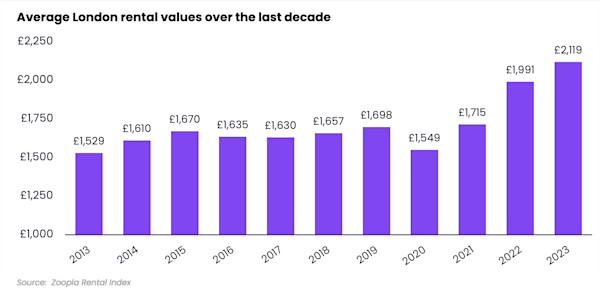 Average rent in London: February 2024 - Blackstones Residential
Newer purpose-built co-living spaces, like Collective or Vonder, charge £1,200–£1,800 for a micro-studio with a communal gym and free events. It’s like university halls, but with more oat milk and less floor vodka.
Fun Fact: The “Rent-a-Room” Scheme
Here’s a legal gem: if you rent out a room in your own home, you can earn up to £7,500 tax-free each year. That’s enough to cover a month of London rent—or a lifetime of Greggs sausage rolls. Landlords hate this one weird trick, but you will love it if you’re a homeowner looking for a lodger.
Meanwhile, about 1 in 5 Londoners is a private renter, making this city the most rental-saturated in the UK. You’ll never feel alone in your search—partly because 20 people are viewing the same damp studio as you.
How to Hack the Market Without Losing Your Sanity
First, move in winter. Between November and February, demand drops, and landlords get desperate enough to knock £100 off the rent. Second, join local Facebook groups—like “SpareRoom Hackney” or “South London Renters”—where deals appear before they hit Rightmove. Third, always ask if bills are included; that one word can save you £50 a month.
And never underestimate the power of a negotiation. If the flat has been listed for three weeks, the landlord might accept a lower offer. Just flash a smile, mention a patched-up crack in the ceiling, and see what happens.
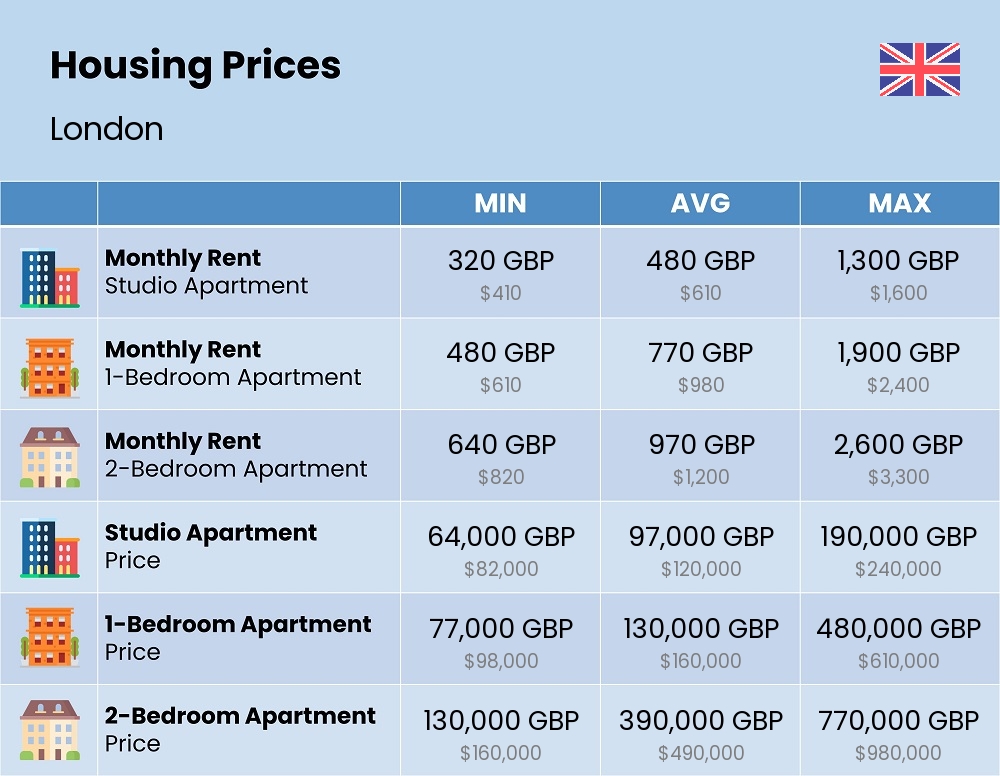 Cost Of Living in London 2025
The Scenic Route: Where Cheaper Gems Hide
If you’re flexible, head east to Forest Gate or Walthamstow, where rents dip below £1,200 for a one-bed. You’ll trade a 10-minute commute for a 30-minute bus ride, but you’ll also gain actual peace and a garden square. Or try West Hampstead in zone 2—it’s pricier, but has a village feel and a direct train to the City.
Interestingly, rents in zone 4 (like Harrow or Bexleyheath) are now growing faster than central zones, as remote workers seek space. Who needs a Soho balcony when you can have a whole dining room in Chingford for £1,100? The trade-off is time: your commute becomes your new podcast-listening hobby.
The UK vs. The World: A Reality Check
Compared to New York or San Francisco, London rent is still a bargain—believe it or not. Manhattan’s average one-bed is around £3,200, while London’s £2,000 feels almost reasonable. But against Berlin, where a similar flat goes for £900, London stings like a bad oyster.
Fun fact: the word “rent” comes from the Latin reddita, meaning “things returned.” In London, you return your entire salary. But you also return a life filled with theatre, markets, and the eternal promise of a good flat white.
A Short Reflection on Daily Life
In the end, rent isn’t just a number—it’s the price of being in a city that never signs a lease on adventure. Every pound spent is a vote for the chaos of night buses, the joy of a hidden canal walk, and the friend you meet while complaining about the deposit. Yes, it’s expensive, but so is a rented flat with a view of the Shard—and that view buys you a story.
So go ahead, refresh your SpareRoom tab. Because in London, your rent is just the beginning of a brilliant, maddening, and utterly unforgettable chapter.
