How To Get To The Natural History Museum

So, you want to visit the Natural History Museum? Excellent choice. It’s basically a giant, beautiful building full of dead things that tell us how alive the planet used to be...

So, you want to visit the Natural History Museum? Excellent choice. It’s basically a giant, beautiful building full of dead things that tell us how alive the planet used to be. And honestly, there’s nothing more fun than staring at a dinosaur skeleton while a toddler next to you screams like a pterodactyl.
First things first: you need to know where you’re going. The museum lives in South Kensington, London. Don’t panic. It’s not in the actual jungle, though the architecture might make you feel like you’re in a cathedral.
The Tube: Your Underground Steed
Your best bet is the London Underground. It’s cheap, it’s efficient, and it smells faintly of adventure and regret. Take the District, Circle, or Piccadilly line straight to South Kensington station.
Must Read
Once you pop out of the station, you’ll see signs for the museums. Just follow the crowds. If you see people carrying dinosaur backpacks, you’re definitely on the right track. Pro tip: don’t follow the pigeons—they’re just confused.
The Secret Tunnel Walk
Here’s the real hack: there’s a pedestrian tunnel from the station that spits you out right at the museum’s doorstep. It’s long, it’s tiled, and it feels mildly like a supervillain’s lair. But it’s dry and warm, which in London counts as a luxury holiday.
At the end of the tunnel, you’ll surface like a mole. Boom. You’re at the back entrance of the Natural History Museum. High-five yourself. You’ve earned it.
By Bus: If You Like Fresh Air (Or Rain)
If the Tube makes you claustrophobic, the bus is your friend. Take the 14, 49, 70, 74, 345, 360, 414, or C1—yes, that’s a lot of numbers, but one of them will work. They all stop near the museum on Cromwell Road.
Sitting on the top deck is magical. You can peer down at traffic jams and feel superior. Just remember to pull the bell before your stop, or you’ll end up in a furniture showroom in Fulham. Not ideal.
Walking (For the Adventurous)
If you’re staying near Hyde Park, just walk. It’s a gorgeous stroll through Kensington Gardens. You’ll pass the Albert Memorial, which is a golden statue that looks like a giant chess piece who got lost on his way to tea.
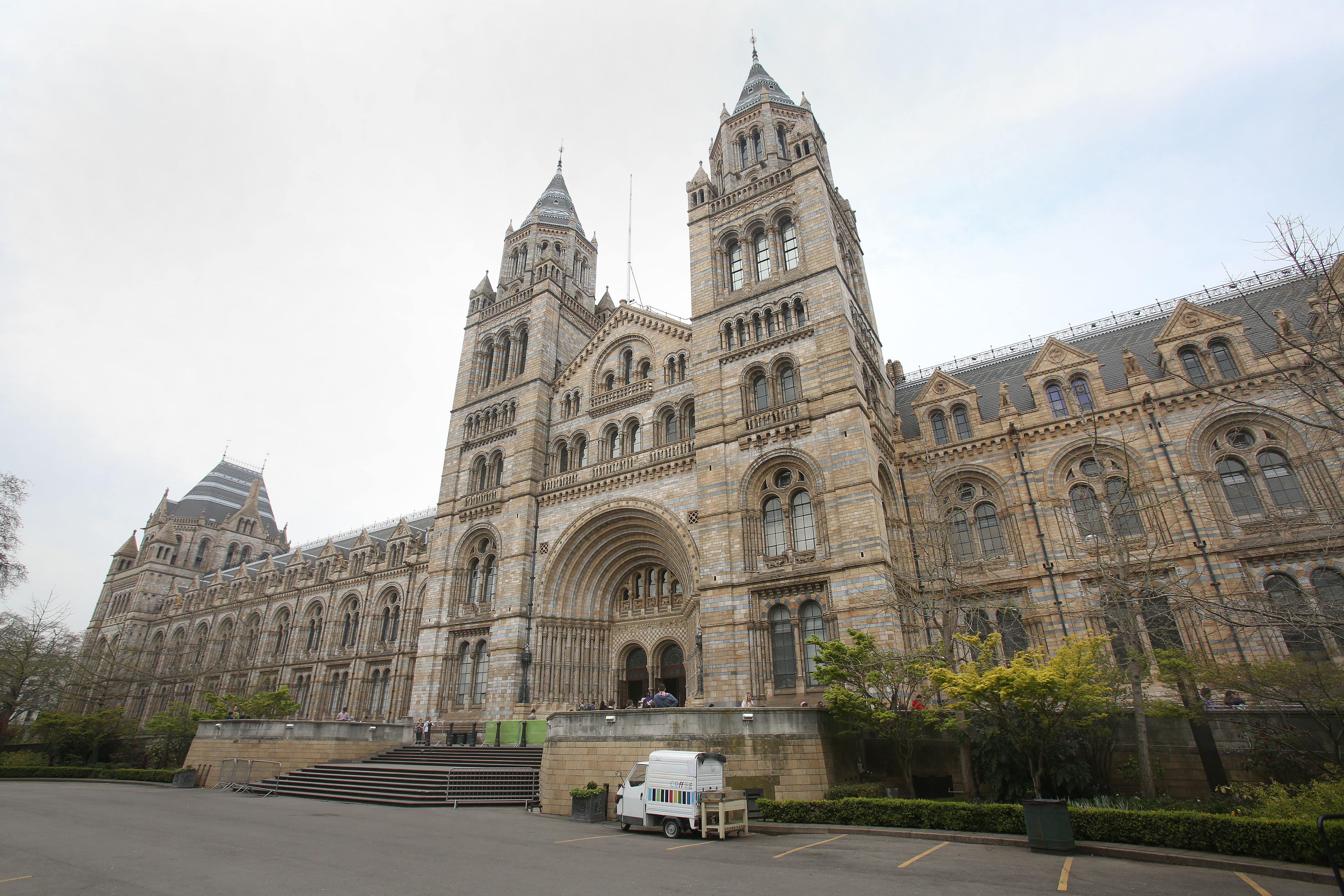 Natural History Museum named most visited indoor UK attraction again
The walk takes about twenty minutes. It’s free, it’s healthy, and you can pretend you’re in a period drama. Just don’t actually say “I say, what jolly good weather” out loud. People will stare.
Cycling: For the Bold and the Lycra-Clad
London has Santander Cycles—the “Boris Bikes.” You can rent one from a docking station and pedal your way to the museum. There’s a docking station right outside on Exhibition Road. Very convenient, very trendy.
Just be warned: London drivers are aggressive. You’ll need the reflexes of a cat and the patience of a saint. But hey, you’ll burn off the calories from the museum café’s scones. Worth it? Yes.
Driving: The Braveheart Option
If you insist on driving, bring a map, a prayer, and maybe a snack. Parking near South Kensington is nightmare fuel. There are a few paid car parks, but they cost more than a small unicorn. Your best bet is to park in a residential zone and walk twenty minutes.
Or, you know, just don’t drive. The museum was built in 1881. Parking was not a priority. They had horses. Be smarter than a Victorian horse.
Arriving at the Cathedral of Science
Once you’re there, you’ll see the iconic main entrance with its terracotta animals and gargoyles. Don’t be shy—walk right in. Security is friendly, and the building is free. Free. As in, you can spend hours looking at a blue whale skeleton without spending a single penny.
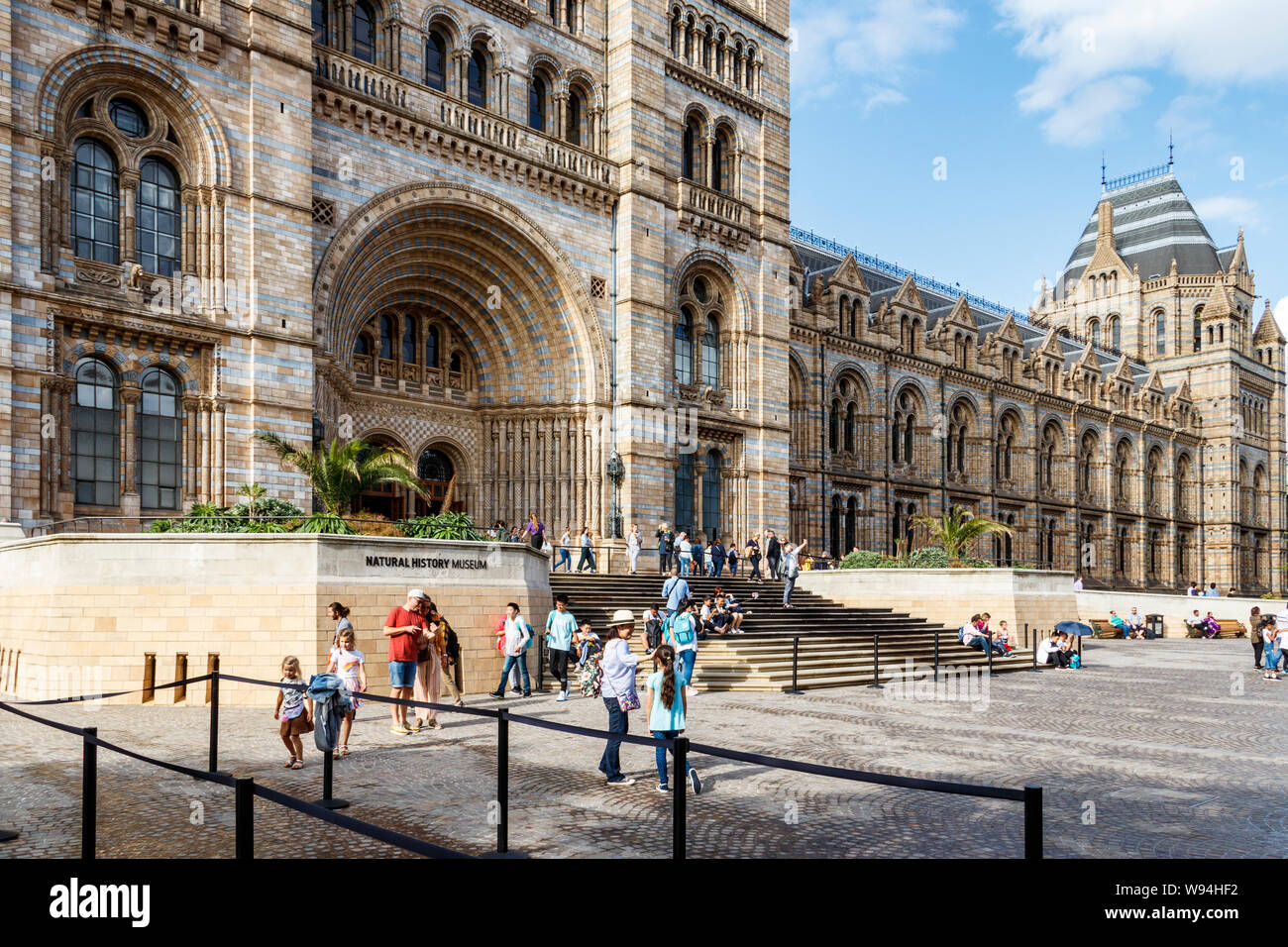 Natural History Museum London
Inside, you’ll find the Hintze Hall, where the giant whale hangs from the ceiling. It’s 25 metres long. It’s epic. You will tilt your head back and say “whoa” like a five-year-old. It’s mandatory.
A Few Final, Extremely Important Tips
Bring a water bottle. The café queue can be longer than the queue for a new iPhone. Also, wear comfortable shoes. You’ll be on your feet for two hours minimum, unless you’re a secret lizard who loves standing still.
And for the love of all that is fossilised, book a free ticket online beforehand. You can show up without one, but you’ll wait in a line that feels like a test of character. You have enough character already. Save yourself.
The Uplifting Conclusion
So there you have it. Getting to the Natural History Museum is an adventure in itself. You’ll ride tubes, walk through secret tunnels, and possibly dodge a rogue cyclist. But the reward is massive.
You’ll stand under a whale, stare into the eyes of a T. rex, and see a meteorite that travelled through space to end up in a glass box in London. That’s wild. You’re about to become part of a story—a human being, travelling across a city, to marvel at the history of all life on Earth. Take a selfie with a stuffed pigeon. Laugh at the funny rock names.
And when you leave, remember: you’ve just visited a place that holds three billion years of secrets. And you got there without a map app dying on you. That’s not just a victory. That’s science. Now go forth, friend. Explore. The Earth—and its very, very old bones—are waiting for you.
