What Stops Spiders Coming Into The House

Let’s be honest: spiders are the uninvited house guests that nobody asked for. One minute you’re cozy on the couch, and the next, a leggy silhouette is sprinting across the ce...
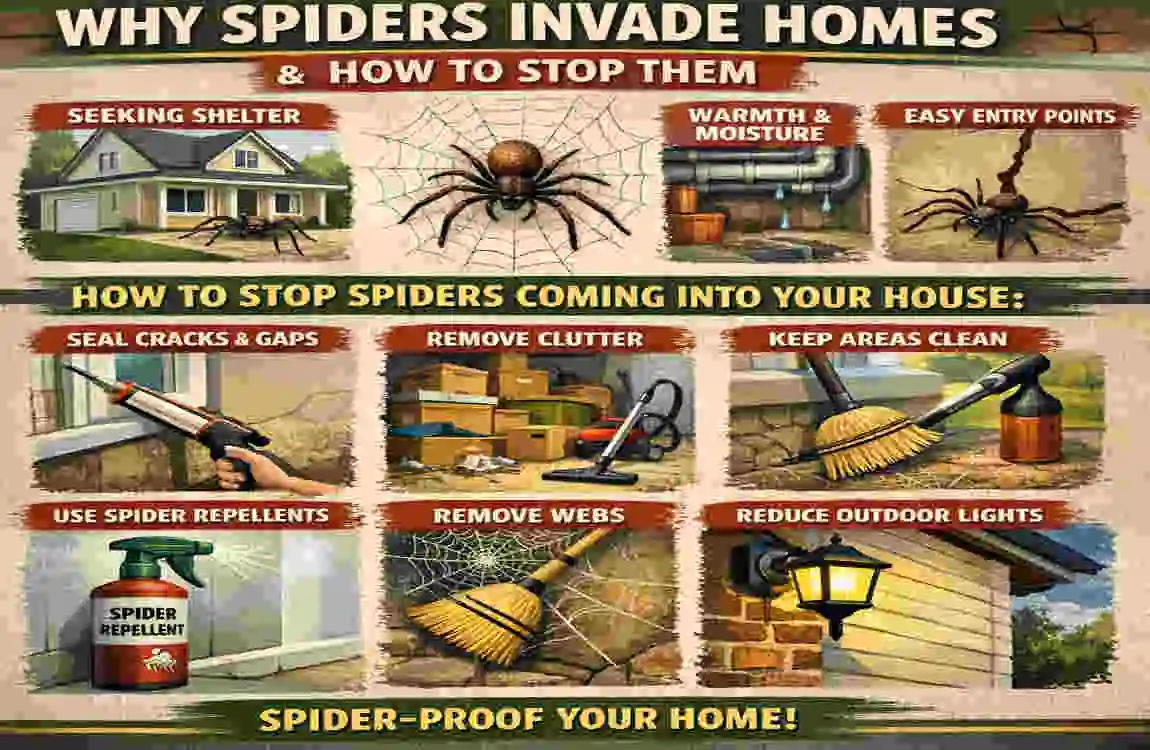
Let’s be honest: spiders are the uninvited house guests that nobody asked for. One minute you’re cozy on the couch, and the next, a leggy silhouette is sprinting across the ceiling like it owns the place. But here’s the good news—keeping them out isn’t about chemical warfare or sealing yourself in a bubble. It’s about understanding what they actually want, and then politely denying them that wish.
Why They Come In (It’s Not Personal)
First, a little empathy: spiders aren’t plotting against you. They’re just following two basic needs—food and shelter. If your home is a buffet of flies, moths, or ants, you’ve basically hung a neon vacancy sign.
Fun fact: The average house spider eats hundreds of insects a year. So technically, they’re doing you a favor—just not one you asked for. Think of them as the world’s worst pest control, because they don’t clock out.
Must Read
The Great Outdoors Strategy
The simplest trick? Make your home feel less like a forest and more like a sterile showroom—at least from the outside. Spiders often hitch a ride indoors through cracks, gaps under doors, or tiny openings around windows.
Grab a tube of silicone caulk and go to town. Seal gaps around pipes, baseboards, and eaves. It’s a boring Saturday project, but it’s also the single most effective barrier you can build.
Another pro tip: trim back shrubs and bushes that touch your house. Spiders love using leaves as highways. If you can create a two-foot gap of gravel or mulch between your foundation and the garden, you’ve just built a spider moat. Very medieval, very effective.
Lights, Camera, Action… Off
You know that warm porch light you love? Spiders love it too—because it attracts their favorite prey. Moths and beetles are basically spider food delivery.
Switch to yellow or sodium-vapor bulbs; they’re less attractive to insects. Or, better yet, turn off outdoor lights when you don’t need them. You’ll save on your electric bill and cut the spider buffet line in one move.
Cultural note: In Japan, it’s considered bad luck to kill a spider indoors—so people gently sweep them out. That’s a valid approach, but prevention beats sweeping every time.
Declutter Like You Mean It
Spiders are shy, introverted creatures. They love dark, undisturbed corners—behind the sofa, under the bed, in that pile of unused cardboard boxes. Your clutter is their real estate.
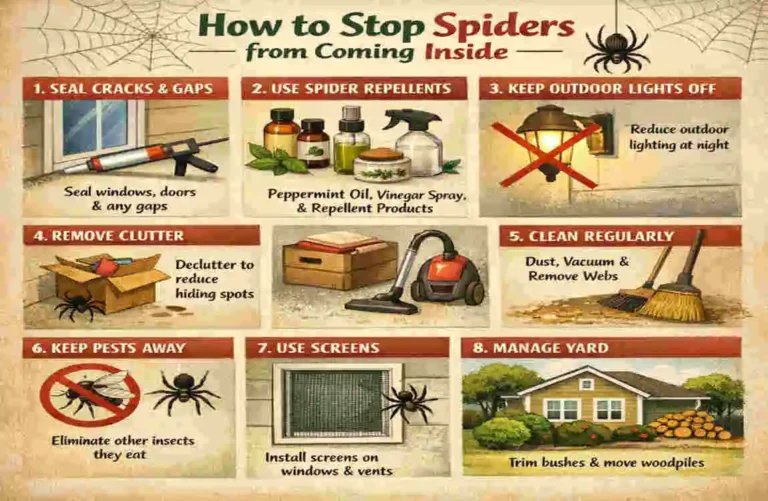 How Can You Stop Spiders from Coming Inside? - Blue shine home
Vacuum regularly, especially along baseboards and under furniture. Pay special attention to windowsills and door frames, where webs first appear. A spider web is a resume—it says, “I’m comfortable here.” Deny them that comfort.
Pro tip: Use a lint roller on your curtains and ceiling corners once a month. It picks up eggs and tiny webs before they become a spider family reunion.
Natural Repellents That Actually Smell Good
Forget harsh chemicals. Spiders hate certain essential oils—specifically peppermint, tea tree, and eucalyptus. Mix 10 drops of peppermint oil with water in a spray bottle, and spritz around windows, doors, and baseboards.
The smell is fresh to you, but it’s like a “no room service” sign to spiders. Bonus: It also deters ants and mice. Just reapply every week or two, especially after rain or cleaning.
Another old-school trick: chestnuts or cedar blocks placed in corners. Some folks swear by them, though the science is fuzzy. At worst, your home will smell like a cozy autumn cabin.
The “They’re Already Here” Protocol
If you see one spider, don’t panic—it’s probably a loner. But if you see webs daily, you’ve got a population. Collect webs with a duster or vacuum, not your bare hands. Spiders often rebuild in the same spot, so removing their work repeatedly sends a clear message: this neighborhood is gentrifying.
Fun fact: Some spiders, like the cellar spider, are actually cannibals. They eat other spiders. So if you see one, it might be your reluctant ally. But don’t count on it.
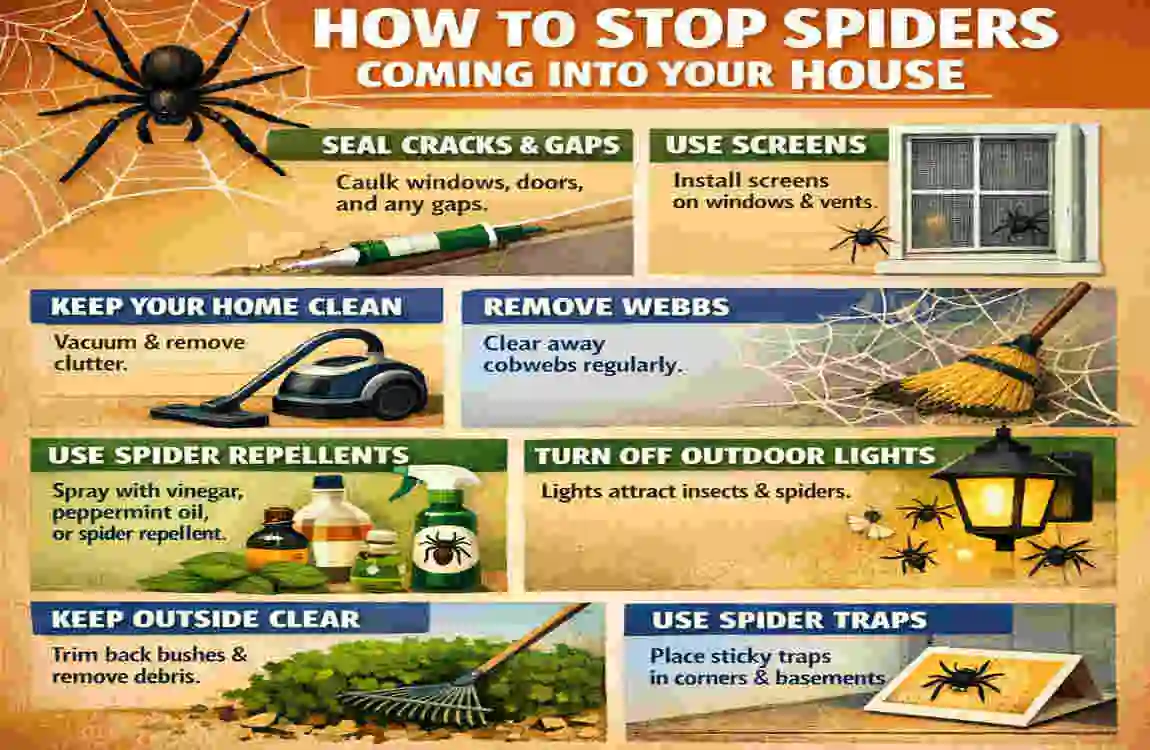 How Can You Stop Spiders from Coming Inside? - Blue shine home
Windows, Screens, and the Cat Factor
Check your window screens for even tiny tears. A spider can squeeze through a gap the size of a pinhead. Patch with clear tape or replace the screen.
And if you have a cat? Congrats—you already have a four-legged spider patrol. Cats love chasing and eating spiders (and then sometimes puking them up—nature is messy). Let your cat do the heavy lifting on ground-level patrols.
One More Thing: The Garage
Garages are spider glory zones. They’re dark, full of boxes, and near the outdoors. Keep your garage door closed when not in use, and store items in sealed plastic bins instead of cardboard. Cardboard is cozy for spiders; plastic is a “no vacancy” sign.
A Quick Word on the Bigger Picture
There’s a lovely, slightly philosophical angle here. Spiders are nature’s mediators—they remind us that we’re sharing space with a whole ecosystem, even indoors. You don’t have to love them, but learning to coexist is a tiny act of grace.
In Australian Aboriginal culture, spiders are sometimes seen as weavers of life. In European folklore, finding a spider on your clothes means money is coming. Maybe that’s worth a little tolerance?
The Takeaway: Simple Habits, Big Peace of Mind
None of these tips require a pest control license. A little caulk, some peppermint oil, and a vacuum run are all it takes to tip the scales in your favor. The key is consistency, not perfection.
So tonight, when you’re settling in with your tea and the evening is quiet, take a look around. If the ceiling is clear and the corners are clean, you’ve done it. You’ve created a tiny, spider-free sanctuary. And that, my friend, is a very modern kind of victory.
After all: home is where the webs aren’t. And that’s a reflection worth keeping.
