What To Put On Insect Bites

Last summer, I was sitting on my porch, minding my own business and sipping iced tea, when a mosquito decided I was its personal buffet. I slapped it too late, and within ten...

Last summer, I was sitting on my porch, minding my own business and sipping iced tea, when a mosquito decided I was its personal buffet. I slapped it too late, and within ten minutes, my arm looked like I’d lost a fight with a tiny, winged vampire. The itch was so intense, I almost considered asking my neighbor for sandpaper. That’s the moment you realize you have no idea what you’re actually supposed to do about an insect bite.
You’re not alone in that panic, friend. Whether it’s a mosquito, a fire ant, or that mysterious red dot you got while gardening, the reaction is always the same: panic-scratching. But here’s the thing—most bites are harmless, but they don’t have to drive you crazy. Let’s break down what actually works, and what your grandma probably got wrong.
The Immediate “Oh No” Phase
First, resist the urge to dig your nails into the bite. Yes, it feels amazing for two seconds, but you’re actually spreading the saliva that causes the itch. Stop. Breathe. Wash the area with soap and water first—this removes debris and reduces infection risk, especially if you’re outside.
Must Read
Next, grab some ice. Wrap it in a cloth (no direct contact, unless you want frostbite and an itch). Apply it for 10 minutes. This numbs the nerves and shrinks the blood vessels, which stops the swelling in its tracks. It’s like hitting a pause button on your body’s overreaction.
The Classic Heavy Hitters
You’ve probably heard of hydrocortisone cream. It’s a steroid that kills inflammation, and it’s the gold standard for mosquito bites. Apply a thin layer, and don’t overdo it—it’s not a pastry. For a more natural route, try calamine lotion. That pink stuff isn’t just for poison ivy; it dries out the bite and cools the skin.
Then there’s the pharmacy aisle hero: antihistamine cream, like Benadryl. If you’re allergic to bees or have a welt the size of a golf ball, this stuff is your best friend. Pro tip: You can also take an oral antihistamine (like a pill) if you have multiple bites. It works systemically, so your whole body chills out.
Wait, What About That Toothpaste Trick?
Yes, people spread toothpaste on bites. Why? Because it contains menthol and baking soda, which create a cooling, drying effect. Does it work? Kinda. But it’s messy, and if you have sensitive skin, you’ll wake up with a red rash on top of your bite. My advice? Save the toothpaste for your teeth.
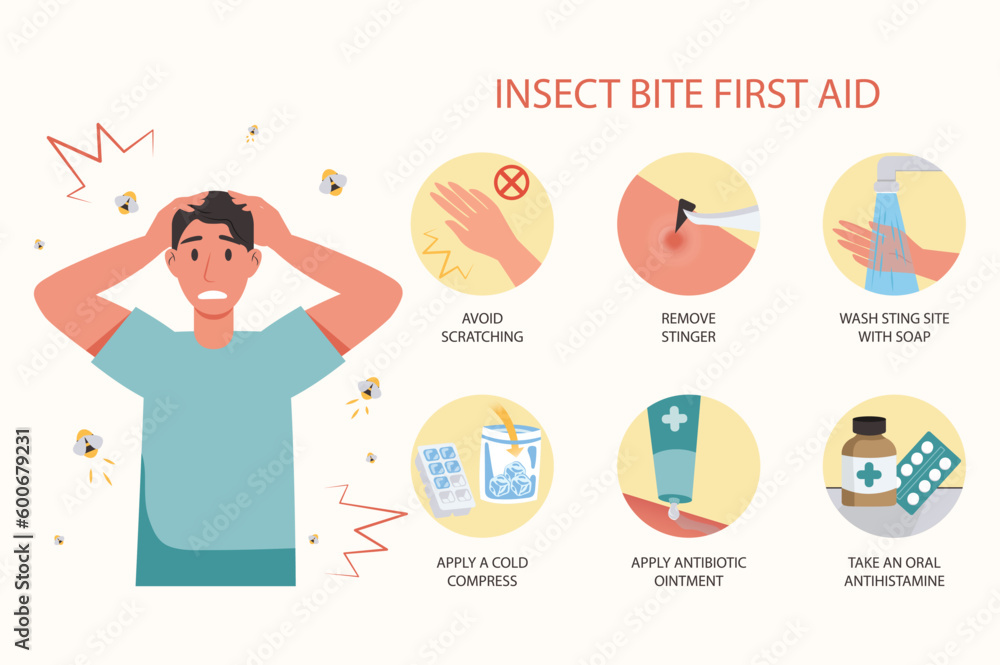 Insect bite first aid medical examination concept with people scene in
Another kitchen staple that sometimes works: baking soda paste. Mix a tablespoon of baking soda with a few drops of water. Slap it on the bite for 10 minutes. The alkalinity neutralizes the acid in the insect saliva. It’s not a miracle, but it beats scratching until you bleed.
The “Ouch, That Really Hurts” Bites
Not all bites are equal. Fire ants and wasps hurt differently—they burn, then itch. For these, vinegar can actually help because it neutralizes the venom. Dab a cotton ball in white vinegar and hold it on the sting for a few minutes. You’ll smell like a salad, but the pain fades.
If you get stung by a bee and the stinger is still in, scrape it out with a credit card. Don’t use tweezers—you’ll squeeze more venom in. Then apply a paste of meat tenderizer (yes, really). It contains papain, an enzyme that breaks down the protein in the venom. Weird, but science.
What Not to Do (Please)
Do not pee on a sting. I’m looking at you, internet. That’s an old myth that just introduces bacteria. Also, don’t use heat directly—like a hair dryer or a lighter. You’ll burn yourself, and now you have a blister and an itch. Double problems.
:max_bytes(150000):strip_icc()/mosquito-bites-1298218-5c04a65246e0fb000183d55a.png) How To Stop The Bug Bite Itch at Stephanie Reynolds blog
How To Stop The Bug Bite Itch at Stephanie Reynolds blog
And for the love of all that is holy, do not scratch a bite that’s already scabbed. That scab is your skin’s Band-Aid. Rip it off, and you’re inviting an infection that’ll take two weeks to heal. I’ve done it. I regret it every time.
When to Call It Quits and See a Doctor
Most bites are just annoying. But if you notice hives, swelling spreading up your arm, or difficulty breathing, drop the baking soda and go to urgent care. You might have an allergy that requires an epinephrine shot. Better safe than itchy on a hospital gurney.
Also, if the bite gets hot, oozy, or develops red streaks, that’s an infection (probably from all that scratching). You’ll need antibiotics. Don’t try to treat that with honey—leave it to the professionals.
The Final Itch-Free Takeaway
Your best defense is prevention—bug spray with DEET, long sleeves at dusk, and staying away from stagnant water. But since we’re all human and we forget, keep these basics handy: ice, hydrocortisone, and a chilly sense of humor about it.
Because honestly? Insects will always find us. They’re tiny, persistent jerks. But with this guide, you can turn a maddening itch into just another Tuesday. Now go scratch that itch—but, you know, gently.
