Who Was St George Of England

Let’s be honest: St. George is England’s most famous saint, yet he was almost certainly never setting foot in England. He’s the patron saint of a rainy island, but his whole s...

Let’s be honest: St. George is England’s most famous saint, yet he was almost certainly never setting foot in England. He’s the patron saint of a rainy island, but his whole shtick is fighting dragons in the Middle East. It’s like making the king of Norway your mascot for surfing. Bizarre, but we love it anyway.
The Man (Probably) Behind the Myth
Historians think the real George was a Roman soldier from modern-day Turkey. Yes, a Roman soldier. He didn’t wave a cross on a fancy English castle; he was probably grumbling about his rations in the 3rd century. He became a Christian martyr when Emperor Diocletian decided Christians were bad for business. George was tortured and beheaded for refusing to sacrifice to pagan gods—hardcore stuff, no dragons required.
Here’s the kicker: we don’t even have his bones. His supposed tomb is in Lod, Israel, and bits of him are scattered across Europe like a holy jigsaw puzzle. England? He never visited. Not once. He didn’t even get a postcard.
The Dragon Story: A Very Medieval Fish Tale
The famous dragon-slaying story? It was a late addition, like adding a unicorn to a grocery list. The tale goes that a dragon was terrorizing a Libyan city, demanding a daily sacrifice of sheep—and eventually, the king’s daughter. George rides in, spears the beast, and converts the entire city to Christianity.
Let’s be real: this is pure propaganda with a side of Saturday morning cartoon. Dragons don’t exist, and the story was written hundreds of years after George died. But it’s a banger of a tale. A princess, a monster, and a guy in shiny armor. Hollywood still uses this formula.
Fun fact: the dragon is actually a metaphor for paganism or evil. But try explaining that to a kid who just wants to see a lizard get stabbed. Spoiler: they don’t care.
How Did a Turkish Soldier Become England’s Mascot?
Blame the Crusades. English knights loved St. George because he was a soldier-saint—perfect for inspiring troops while they looted the Holy Land. King Edward III made him even bigger by creating the Order of the Garter (yes, named after a lady’s underwear mishap) under George’s banner.
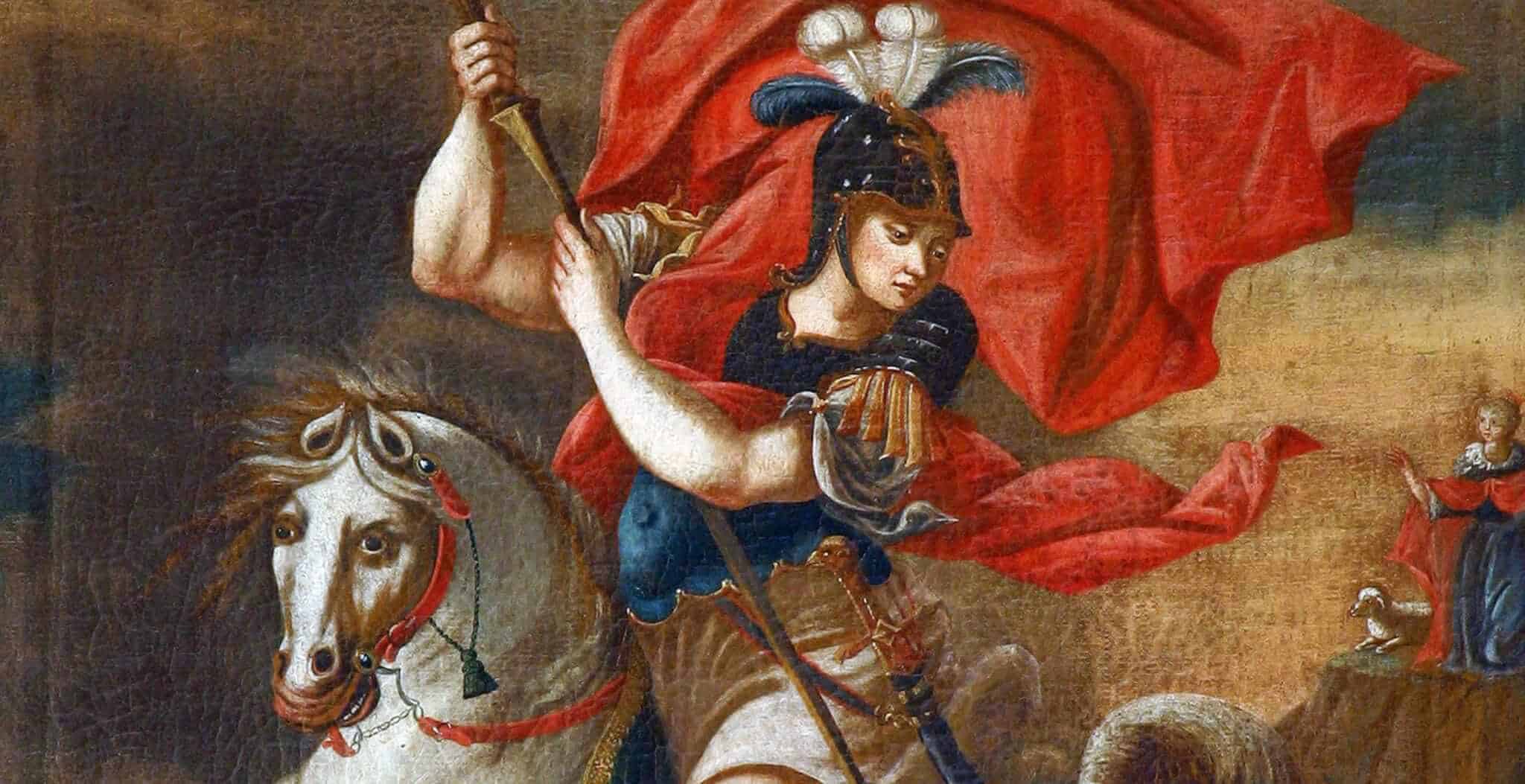 St George - Patron Saint of England
By the 16th century, Shakespeare himself had England crying “Cry God for Harry, England, and St. George!” It stuck. Never mind that the guy was a total foreigner. English identity needed a brand, and George was the most marketable saint available.
Oh, and that red cross on a white background? That’s the flag of Genoa originally. England just borrowed it and forgot to give it back. Classic.
Weird Bits You Didn’t Ask For
St. George is also the patron of scouting, syphilis patients, and horse archers. Yes, syphilis. In medieval times, if your bits were falling off, you prayed to the dragon-slayer. I’m not making this up—look it up.
He’s celebrated on April 23rd, which is also the date of Shakespeare’s death and, according to legend, the day George was martyred. It’s a triple-threat of Englishness: a Turkish saint, a dead playwright, and the royal family probably eating cucumber sandwiches.
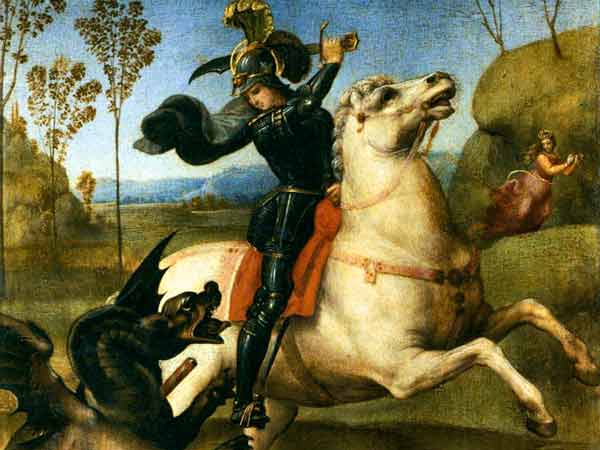 St George - Patron Saint of England - Wilderness England
In some traditions, St. George is also the same guy as Al-Khidr, a mysterious green-clad figure in Islamic folklore. So he’s not just England’s property—he’s got global street cred.
So, Who Was He Really?
The honest answer: a brave Roman soldier who died for his faith, embellished beyond recognition by centuries of medieval fan fiction. Was he a dragon-slayer? No. Is he English? Technically, no. But does England care? Absolutely not.
He’s a symbol. A stand-in for courage, stubbornness, and wearing a sword in public without getting arrested. In a weird way, he’s the perfect patron for a nation that invented the queue and calls a sausage a “banger.”
So next St. George’s Day, raise a pint to a Turkish soldier who never saw London. He’d be baffled. But he’d probably appreciate the dramatic flair.
