Can A Snake Eat A Person

Let’s be honest: the first time you saw a massive snake on TV—maybe in an old adventure movie or a nature documentary—you probably scooted a little farther back on your couch....
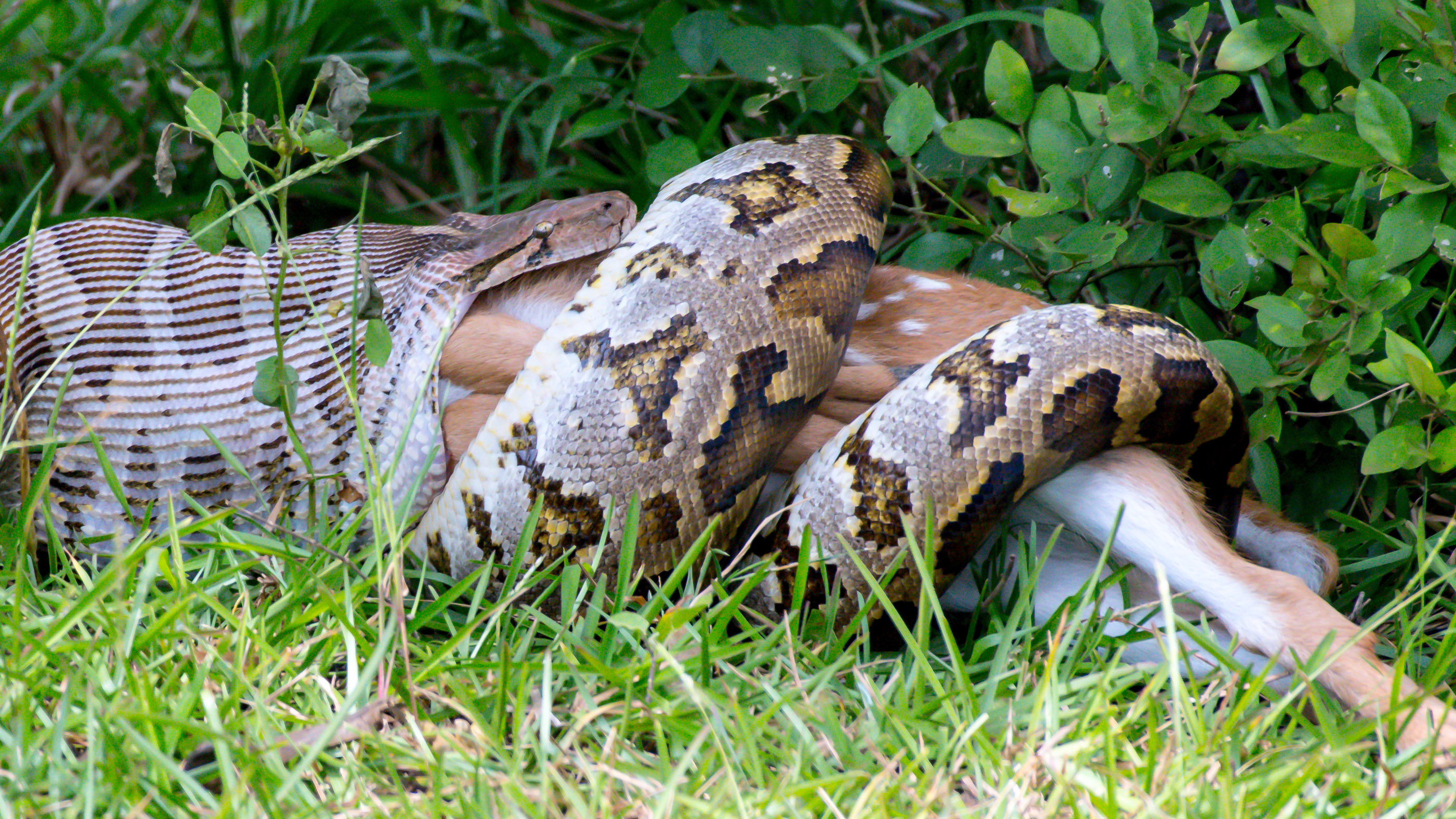
Let’s be honest: the first time you saw a massive snake on TV—maybe in an old adventure movie or a nature documentary—you probably scooted a little farther back on your couch. You might have even glanced at your feet, just to check. It’s a scene that lodges in your brain: a giant serpent, unhinged jaw, swallowing something way too big. But can a snake actually eat a person? The short, slightly unsettling answer is yes, but it’s far more rare than your imagination wants you to believe.
Think of snakes as nature’s cautious vacuum cleaners. They aren't looking for a fight; they’re looking for a meal that fits their budget. The vast majority of the 3,000-plus snake species on Earth couldn’t swallow a ham sandwich, let alone a human. A garter snake would struggle with a big mouse. So, when we talk about human-eating snakes, we’re really only talking about the absolute heavyweights: reticulated pythons, African rock pythons, and the green anaconda.
These are the bodybuilders of the snake world. They don't have venom; they have power. They kill by constriction, meaning they wrap around their prey and squeeze just enough to stop the heart. It’s not about crushing bones—that’s a myth. It’s more like giving you the world’s most aggressive bear hug until your blood stops flowing. And if they can get their coils around a deer, a pig, or a large crocodile, a human isn’t technically off the menu.
Must Read
But here’s the reality check: it’s a really bad date for the snake.
You might think a person is just a big, warm sausage. To a snake, we’re more like a dangerous, unpredictable package. Snakes are ambush predators. They want a meal that won’t fight back. A human? We scream, we flail, we have sharp elbows, and we tend to bring friends. A snake that tries to eat a person is taking a huge gamble. If we get even one arm free, or if we kick, we can injure the snake’s delicate ribs or its internal organs. For a snake, a failed meal can mean a fatal injury.
Think of it this way: it’s like you trying to swallow a whole, spiky pineapple that’s also kicking you. You’d give up pretty fast, right? That’s why documented cases of humans being eaten by snakes are incredibly rare. You have more chance of getting struck by lightning while holding a winning lottery ticket. Seriously. In the last 100 years, there are maybe a handful of confirmed, fully documented cases. And almost all of them involved small women or children in remote villages, usually in jungles or swamps.
 Snakes Eating Human Babies
The mechanics are mind-boggling... but also a little funny.
Imagine trying to fit a sofa through a front door. That’s what a snake is doing with your shoulders. A snake’s jaw isn’t hinged like ours. It’s connected by stretchy ligaments, so it can unhinge and spread wide—like a pair of jeans that are way too big for you. Then, they use their curved teeth like tiny anchor points. They don’t chew. They simply walk their mouth over the body. One side of the jaw moves forward, grabs, then the other side moves, and so on. It’s a slow, grueling process that can take hours.
Picture this: you’re at a buffet, and you decide to eat a whole turkey in one bite. Not just swallow it, but slowly, methodically work your face around it. That’s the snake’s life. It’s not glamorous. And after that big meal, the snake is basically a log for the next week. It can’t move fast. It’s extremely vulnerable. So, a snake that eats a human is basically saying, “I’m going to be useless for a week, and I hope no one bothers me.” It’s a desperate move, not a hobby.
So, why should you care? (And yes, you should care, just not in a panicky way.)
You should care because it’s a fascinating story about boundaries. We are not, biologically speaking, the ideal prey for anything. We’re too gangly, too loud, and too clever. Snakes eat people only when they mistake us for food or when we invade their space so deeply that they have no other option. It’s a story about respect for wild animals. If you live in a place with big snakes—like Florida, Southeast Asia, or the Amazon—you don't need to be scared; you need to be smart.
 What is the snake eating man coat of arms?
Don’t walk through tall grass at night wearing sandals. Don’t leave your pets outside unsupervised. And for the love of all things holy, don’t try to pet a 15-foot python because you saw it on Instagram. That’s how you end up as a headline. The people who get eaten are almost always people who did something incredibly risky, like teasing the snake, or who were sleeping on the ground in remote snake territory.
Also, let’s be real: the fear of being eaten whole is one of our most primal, ridiculous fears. It’s the stuff of nightmares, and that’s okay. It’s what makes us human. We imagine being consumed, disappearing without a trace. But in reality, a snake eating a person is a tragic accident for both parties. The snake almost always gets killed by other humans afterward. It’s a lose-lose situation.
So, the next time you see a snake at the zoo, or even a big one on TV, give it a little nod of respect. You’re not on its menu. You’re too much trouble, you’ve got too many sharp bits, and honestly, you’re probably not worth the heartburn. Stay curious, stay safe, and keep both feet on the ground—you’re far more likely to trip over your own shoelaces than to be someone’s dinner.
