Can You Use Chicken Broth Instead Of Chicken Stock

Picture this: you’re staring into your pantry like it’s a magic 8-ball, holding a carton of chicken broth and a box of chicken stock, wondering if swapping one for the other i...
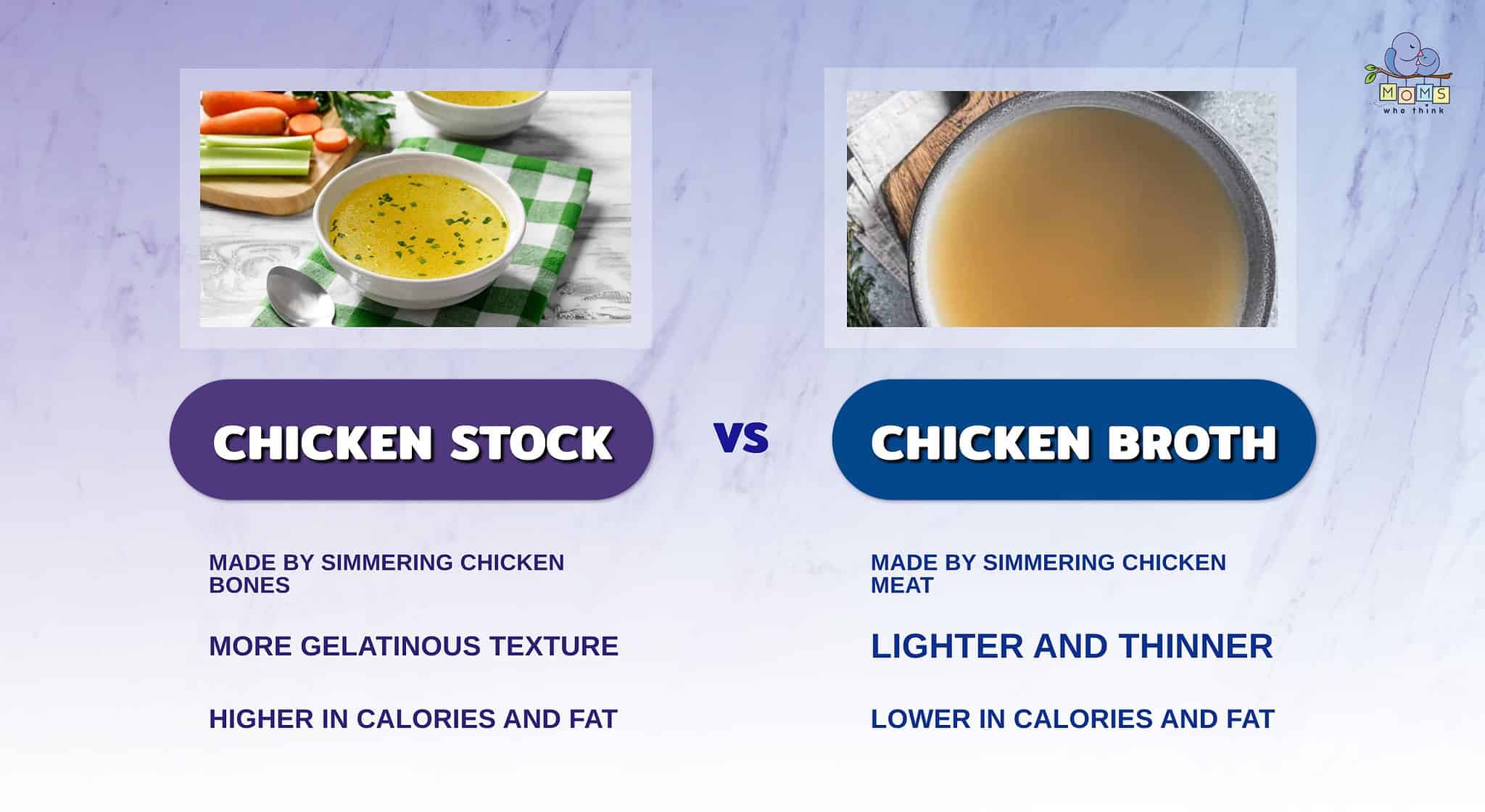
Picture this: you’re staring into your pantry like it’s a magic 8-ball, holding a carton of chicken broth and a box of chicken stock, wondering if swapping one for the other is a culinary crime or just a delightful shortcut. The truth is, yes, you can absolutely use chicken broth instead of chicken stock—and I’m here to tell you why, with all the drama of a soap opera and the science of a bored chemist at 2 a.m. Let’s dive into this broth-stock showdown, where the stakes are high, but the consequences are mostly just mediocre soup.
The Great Delicious Deception
First, let’s clear up the confusion that’s haunted home cooks since the dawn of bouillon cubes. Broth is made from meat (often with bones, but mostly meat), while stock is a bone-heavy brew that simmers for hours to coax out collagen and gelatin. Think of broth as the chatty, lightly-seasoned friend who shows up to the party early, and stock as the brooding, intense one who’s been marinating in its own thoughts for four hours.
Here’s the kicker: in most recipes, from soups to risottos, you can swap them without the kitchen police busting down your door. The difference is subtle—broth is usually saltier and more flavorful right out of the carton, while stock is a blank slate with a thicker texture. But unless you’re making a consommé for a Michelin star chef (and if you are, why are you reading this?), no one will taste the difference.
Must Read
When Broth Wins (And Stock Loses)
Imagine you’re making a simple chicken noodle soup for a cold, rainy Tuesday. Broth is your hero here, because it’s already seasoned and packed with chicken flavor, so you can skip the extra salt and get to cozy faster. I once used stock in a soup and ended up adding so much salt to compensate that my great-grandma’s ghost rose from the dead just to shake her head.
On the flip side, if you’re cooking something that needs a velvety, luxurious body—like a French onion soup or a rich gravy—stock is the heavy lifter. Stock’s collagen turns into liquid gold when it hits heat, giving you that silky mouthfeel that makes people think you’ve been secretly trained at Le Cordon Bleu. Broth, being leaner, would be like showing up to a black-tie gala in cargo shorts.
But here’s a weird fact: store-bought broth and stock are often the same thing. Seriously. Many companies slap different labels on identical liquid just to mess with us. A blind taste test I conducted (alone, in my kitchen, at 11 p.m.) revealed that two “premium” brands had the exact same ingredients list, but one cost a dollar more because it said “stock.” The audacity.
The Exceptions That Will Save Your Dinner
Before you go full mad scientist, know this: if a recipe calls for stock to make a pan sauce, don’t use broth unless you want a salt lick. Broth’s extra seasoning can turn a delicate sauce into a brine that makes olives look subtle. I learned this the hard way when I tried to make a red wine reduction with broth—my ex-boyfriend called it “aggressive soup.” He wasn’t wrong.
Another trap: cooking grains like risotto or quinoa. Stock’s richness adds a depth that broth can’t fake, especially if you’re using a low-sodium version. But guess what? If you only have broth, just water it down by half—add a splash of water to reduce saltiness—and you’ll get 80% of the way there. Is it perfect? No. Will anyone but you notice? Also no, because everyone’s too busy scrolling Instagram at dinner.
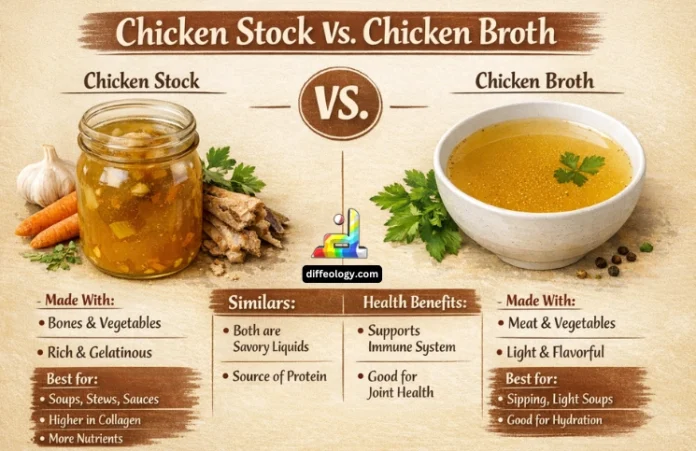 Difference Between Chicken Stock And Chicken Broth | Diffeology
For vegetarian dishes, broth is actually better since it’s lighter. Stock can be like wearing a parka to a summer barbecue—unnecessarily heavy. I once made a vegetable soup with stock and it tasted like ghost chicken, which upset my vegan friend and made my cat suspicious.
The Surprising Science (Because We’re Fancy Now)
Let’s get weird for a second: traditional chicken stock is a source of gelatin, which is literally boiled animal bones. This gelatin helps heal your gut, strengthen nails, and maybe even give you superpowers (okay, I made that last part up). Broth has less gelatin, so if you’re looking for a beauty hack, use stock. But if you’re looking for a quick dinner, broth is your ride-or-die.
Fun fact: the first commercial chicken broth was sold in 1934 by a company called College Inn, and people thought it was witchcraft. Now, we have so many choices that choosing between broth and stock feels like picking a Netflix movie—overwhelming, but it still ends with you eating popcorn on the couch.
The Final Verdict (Drumroll, Please)
So, can you use chicken broth instead of chicken stock? Yes, 9 times out of 10. Just keep an eye on the salt, and if the recipe is super delicate (like a consommé or a sauce that’s the star of the show), stick with stock or lower the salt in your broth. For everything else—soups, stews, casseroles, ramen—go wild. The culinary deities will forgive you.
And remember: if someone gives you grief about it, just tell them your bone broth has a PhD in flavor. They won’t question it. You’ll look smart, they’ll look confused, and dinner will be served. Now go forth and simmer with reckless abandon.
