How Do I Know When Lamb Is Cooked

So, you’ve got a beautiful piece of lamb staring up at you from the cutting board, and now the panic is setting in. Is it done? Is it still mooing? Or have you accidentally cr...
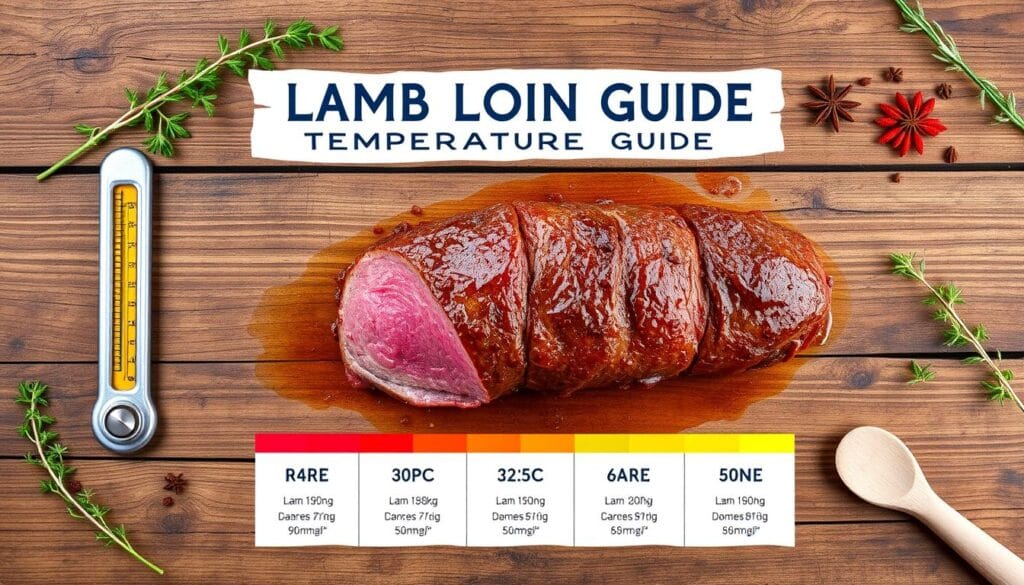
So, you’ve got a beautiful piece of lamb staring up at you from the cutting board, and now the panic is setting in. Is it done? Is it still mooing? Or have you accidentally created a new kind of beef jerky? Relax. I’ve got your back, and your dinner’s future, right here.
Let's be honest: guessing when lamb is cooked is like trying to guess if your Wi-Fi is going to drop mid-meeting. You think you know, but you’re probably wrong. The good news is, the lamb world is way simpler than your internet connection.
Don’t Trust the Clock
First rule of Lamb Club: never rely on cooking times alone. Your oven is a liar, your pan is a drama queen, and every piece of meat is a unique snowflake. You could follow a recipe to the second and still end up with a shoe sole.
Must Read
Instead, we’re going to use your fingers, a thermometer, and a bit of good old-fashioned common sense. Think of it as lamb detective work, but way tastier than solving a mystery about missing socks.
The Almighty Meat Thermometer (Your New Best Friend)
This is the gold standard—the GPS for your lamb journey. Forget poking and prodding like you’re trying to diagnose a headache. A simple instant-read thermometer costs like a fancy coffee, and it will save you from emotional scarring.
Stick the probe into the thickest part of the meat, avoiding any bones (because bones are heat liars). Then, read the numbers. Here’s the cheat sheet for your lamb’s “mood”:
Rare (125°F / 52°C)
Your lamb is basically still blushing. The center is deep red, soft, and has the texture of a very expensive, very happy pillow. If you like your meat to whisper back at you, this is it.
Medium-Rare (130-135°F / 54-57°C)
This is the goldilocks zone of lamb. It’s warm, pink, juicy, and tastes like heaven hired a publicist. Most chefs will fight you for this level of doneness. It’s where dreams come true.
Medium (140-145°F / 60-63°C)
The center is a pale pink, like a sunset after a mild day. It’s still moist, but starting to firm up. If you’re feeding a picky aunt who’s scared of “blood,” this is your safe haven.
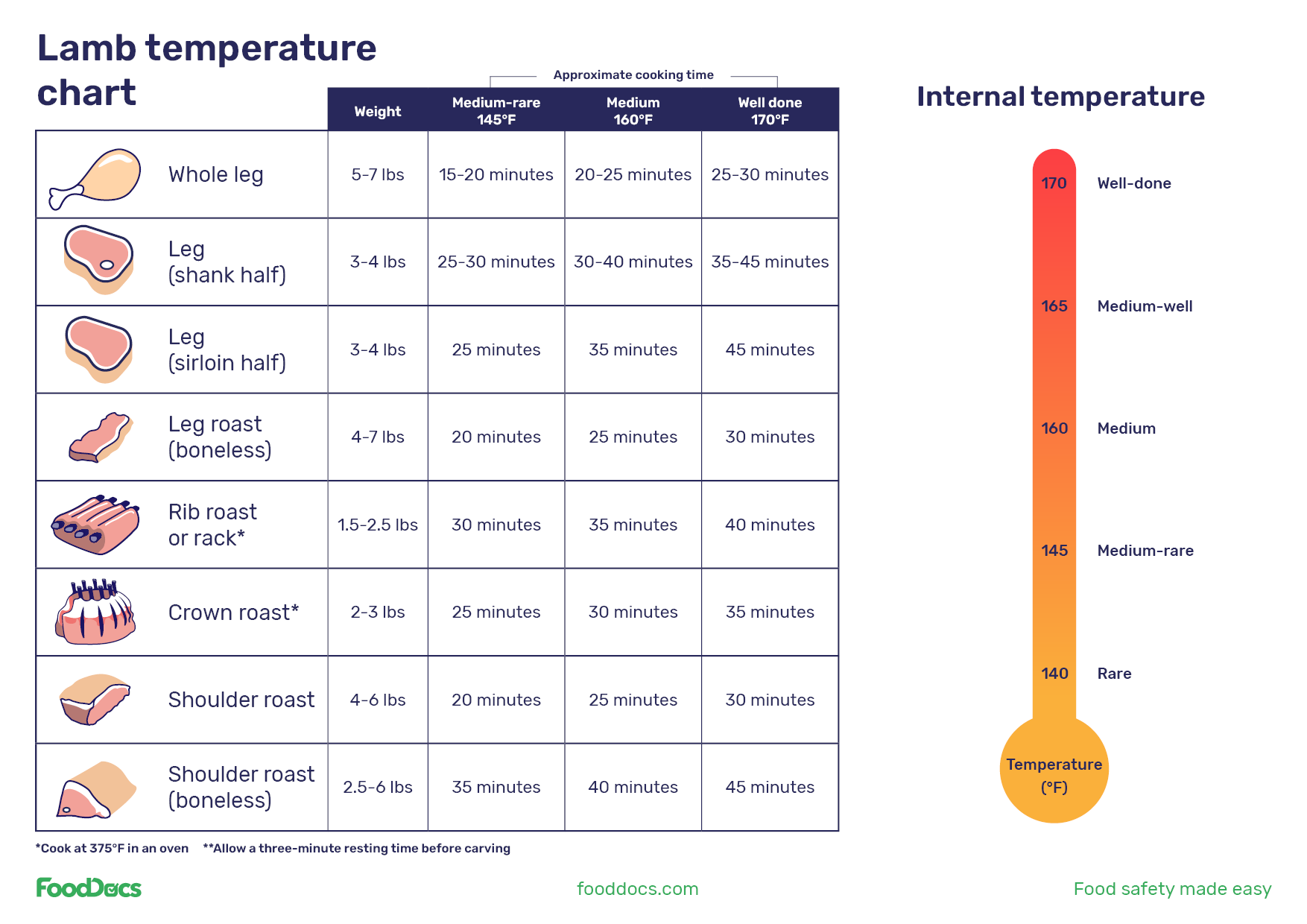 Lamb Cooking Temperature Chart
Medium-Well (150-155°F / 65-68°C)
Okay, you’re in the danger zone. The pink is mostly gone, and the meat is getting firmer. It’s not tragic, but it’s like wearing a tuxedo to a beach party—slightly wrong.
Well-Done (160°F+ / 71°C+)
Stop. Put the thermometer down and walk away. You’ve now entered the “why did you buy lamb” zone. It’s grey, chewy, and has the personality of a cardboard box. Please, for the love of all that is tasty, don’t do this to a nice leg of lamb. Save that for hockey pucks.
The “Hand Test” (For When You’re Brave and Out of Batteries)
Forgot your thermometer? No problem. You have a built-in meat detector: your hand. Touch your thumb to your pinky finger, and feel the muscle at the base of your thumb. That’s how well-done feels—hard as a rock.
Now touch your thumb to your ring finger. That’s medium-well. Touch your thumb to your middle finger. That’s medium. And finally, touch your thumb to your index finger. That soft, squishy pad? That’s medium-rare. The raw meat state is the relaxed, open hand—a total squish marshmallow.
Poke the lamb with your finger, then compare the firmness to your hand. It takes a bit of practice, but soon you’ll be a lamb-poking prodigy. Just wash your hands first, you animal.
The “Juice Test” (A Sneaky Trick)
When you cut into the lamb, look at the juices. If they run clear or slightly pinkish, you’re in the sweet spot. If they run red like a crime scene? It’s still raw. If they’re completely clear and the meat looks grey? Sorry, you’ve gone too far. Pour one out for the lost lamb.
But here’s the catch: always let your lamb rest. Like, for 10 to 15 minutes after cooking. This is non-negotiable. The meat needs a little nap to reabsorb its juices. If you slice it immediately, all that flavor runs onto the cutting board, and you’ll have a sad, dry dinner. Don’t be a juice-waster.
 How to Tell When Lamb Is Cooked | Boneless leg of lamb, Roast lamb leg
The “Color of the Inside” (The Final Clue)
If you’re a visual person, just look at the cross-section. A deep red center? Rare. A rosy pink center? Medium-rare, the champ. A faint pink? Medium. Any browner than a paper bag? You know what you’ve done.
And let’s not forget the smell. Cooked lamb smells like a warm hug from a shepherd. Overcooked lamb smells like a regrettable decision. Trust your nose—it’s usually smarter than your anxiety.
A Few Quick Pro-Tips (Because You’re Worth It)
If you’re cooking a roast or a whole leg, remember that the temperature will rise about 5°F while it’s resting. So pull it out of the oven when it’s 5 degrees below your target. It’s like the lamb is cooking itself a little bit while you prep your sides. Lazy lamb? We love that.
For chops or steaks, go by feel. They cook fast, so use the hand test or a quick thermometer poke. And please, season them like you mean it. Salt, pepper, garlic, rosemary—that’s the lamb’s favorite band.
The Uplifting Conclusion (You Did It!)
So there you have it. You now know more about lamb doneness than most fancy chefs on TV. Whether you choose the thermometer (the wise choice), the hand test (the brave choice), or the juice test (the messy but effective choice), you are now a certified lamb whisperer.
Remember, cooking lamb isn’t about perfection—it’s about intention. You intended to make something delicious, and you did. Even if you accidentally cook it to medium-well, guess what? You still made dinner. You still fed people. You still showed up. And that’s way more important than nailing a specific shade of pink.
So go forth, flip that chop, check that temp, and let that lamb rest. Then serve it with a big smile, a side of confidence, and the knowledge that you—yes, you—just cooked a meal that would make a shepherd weep with joy. You’ve got this. Now go eat.
