How Do You Make Regular Flour Into Self Rising Flour

So, you’re staring into your pantry, hoping to make fluffy biscuits, and all you see is a bag of regular flour. Panic sets in. You check the baking aisle of your brain, and it...
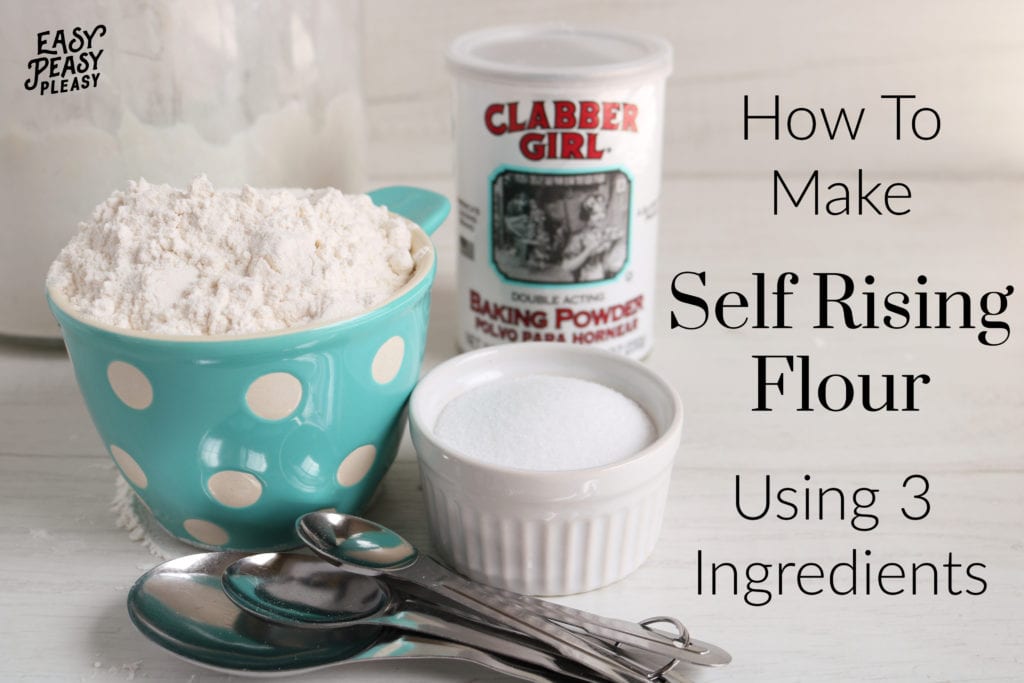
So, you’re staring into your pantry, hoping to make fluffy biscuits, and all you see is a bag of regular flour. Panic sets in. You check the baking aisle of your brain, and it’s empty. Self-rising flour? It sounds like a magic trick or a flour that has a better career than you. Relax, my friend. You are about to perform kitchen sorcery with just two common ingredients.
Here’s the big, beautiful secret: flour is like clay, and leavening agents are the tiny, invisible construction workers. That’s the science, but we’ll skip the boring lab coat stuff. The real magic is that you can turn plain flour into its self-rising cousin in about 45 seconds flat. It’s so easy, it feels like cheating—and it probably is.
The Cheat Code to Baking Glory
You need exactly two things, and you probably have them already: baking powder and salt. That’s it. No unicorn tears, no special pilgrim-era flour blends. Just the white powder that makes things poofy and the white powder that your doctor tells you to cut back on.
Must Read
For every one cup of regular, all-purpose flour, you’re going to add 1½ teaspoons of baking powder and ¼ teaspoon of salt. Memorize this. Tattoo it on your forearm if you must (kidding—please don’t; baking powder isn’t a good ink). This ratio is the golden ticket, the key to the kingdom, the… you get it.
Now, here comes the critical part: whisk it like you mean it. No, not like a Victorian lady fanning herself. You need to get that baking powder distributed so evenly that every single flour molecule gets a pep talk. Use a fork, a whisk, or even your clean hands. If you just dump it in and don’t mix, you’ll get a biscuit that’s radioactive in one bite and a flat tire in another.
The "Wait, What About the ‘Self-Rising’ Part?"
You might be thinking, “But store-bought self-rising flour is a thing—it has a different vibe!” And you’re right, but mostly it’s just a marketing convenience. The actual difference is that real self-rising flour often uses a softer wheat, but for 99% of our baking needs (biscuits, pancakes, simple cakes), regular all-purpose flour works flawlessly. Your biscuits won’t know the difference. They’ll just be happy to exist.
Here’s a surprising fact: baking powder is actually a liar. It contains two acids. One acts at room temperature, and the other only wakes up when you heat it. So when you add liquid to your "homemade self-rising" flour, the first acid throws a tiny party. Then, when that batter hits the hot oven, the second acid screams, “OPEN THE DOOR, I NEED TO EXPAND!” and that’s what makes your cake rise. It’s a chemical double-cross, and it’s beautiful.
Another weird truth: if you live in a humid place like Florida or the UK (yes, the UK counts as humid, it’s basically a damp sponge with royalty), your baking powder can lose its mojo after six months. So don't keep that box of baking powder next to your bubbling swamp of a sink. Store it in a cool, dry place, or it’ll be as useful as a chocolate teapot.
 Easy Beer Bread Recipe, No Added Yeast - ~Texas Homesteader~
The Grocery Store Conspiracy (Or Lack Thereof)
Why do they even sell separate self-rising flour? It’s a little like selling pre-buttered toast. You could buy it, but it’s way more fun and cheap to do it yourself. Plus, you control the salt level. Store brands sometimes go overboard with the salt, making your grandmother’s recipe taste like a salt lick for goats.
Oh, and here’s a pro tip you didn’t ask for: Never use self-rising flour for yeast breads. If you do, your sourdough will act like a confused superhero and probably punch a hole in your oven. Yeast wants a blank canvas; baking powder wants to throw a confetti cannon. They do not play well together.
If you’re going for something extreme—say, a cake with the structural integrity of a moon bounce—you can even double the baking powder for certain recipes. But don’t get cocky. You might end up with a soufflé that flies across the kitchen. And not in a good way. In a "I need a mop and therapy" way.
The "Emergency Batch" Method
Let’s say you only have self-rising flour in the pantry (because you bought it by accident in 2019) and you need regular flour. Can you reverse the spell? Sort of. You’d have to add extra regular flour to dilute the baking powder, but that’s guesswork. It’s like trying to un-bake a cake. Easier to just buy new flour and start over. Throwing money at a problem is sometimes the adult thing to do.
So next time you’re in a baking crisis, remember: you are a flour warlock. You take the humble, unassuming plain flour and turn it into a powerful, self-reliant baking agent. You are saving yourself a trip to the store, $2.50, and the existential dread of forgetting the baking powder entirely.
In summary: one cup of flour, one and a half teaspoons of baking powder, a quarter teaspoon of salt. Mix. Boom. You made rich-people flour out of broke-people ingredients. Now go make something. And don’t forget to preheat the oven. That’s a whole other tragedy.
