How Much Are Tube Fares In London

Let’s be real: figuring out how much a Tube ride actually costs can feel like decoding a cryptic London riddle. One day you tap in with a contactless card and pay £2.80, the n...
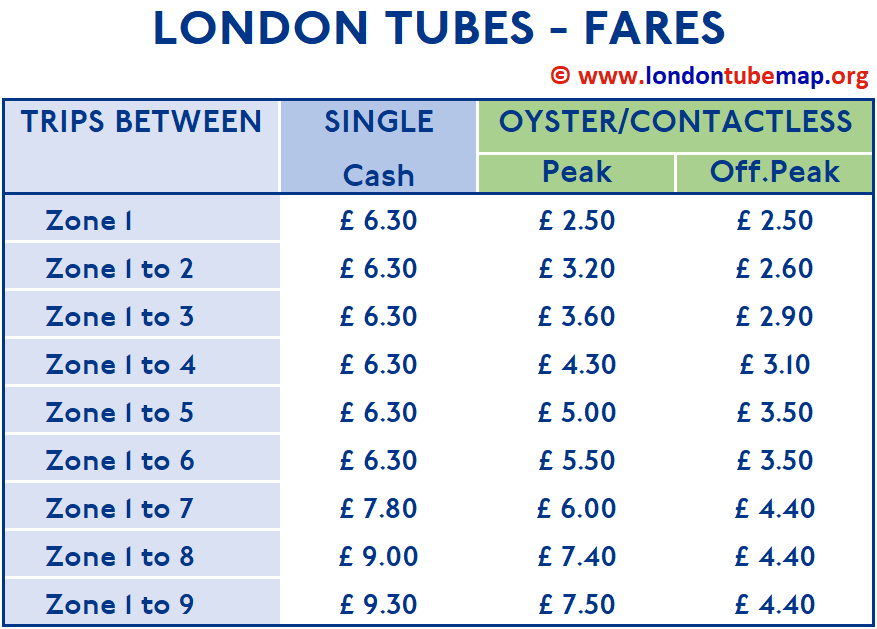
Let’s be real: figuring out how much a Tube ride actually costs can feel like decoding a cryptic London riddle. One day you tap in with a contactless card and pay £2.80, the next you’re staring at a peak-time charge that makes you question your life choices. But fear not—this is the city that invented the Underground, and with a little know-how, you can ride like a local without breaking the bank.
The Basics: Pay-As-You-Go vs. The Oyster Card
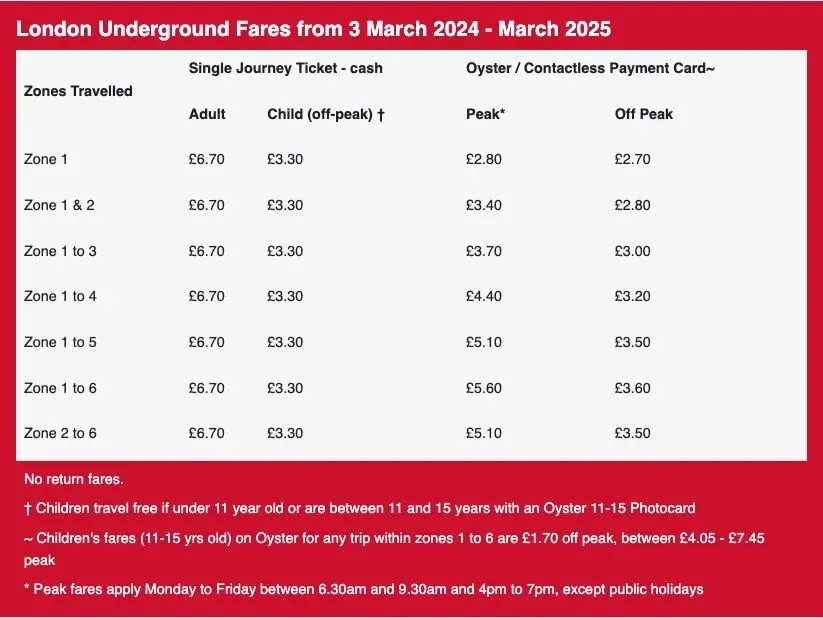
If you’re a visitor or a new Londoner, your first move is to get an Oyster card or simply use a contactless debit or credit card. The system is smart—it automatically calculates the cheapest fare for your journey, whether you take one ride or ten. For most single journeys within Zone 1 (the very center), you’re looking at around £2.80 off-peak and £3.00 peak—that’s 7 a.m. to 9:30 a.m. and 4 p.m. to 7 p.m. on weekdays.
Here’s the fun part: if you only travel within Zones 1 and 2, the daily cap kicks in at about £8.50. So after three or four rides, the rest of your day’s travel is free. It’s like the universe saying, “Yes, you can have that extra pastry.”
Must Read
The Peak vs. Off-Peak Tango
Timing is everything in London—both for catching a show and for catching the Tube. A journey from Zone 1 to Zone 6 (think Heathrow or outer suburbs) costs around £5.60 off-peak but jumps to £6.70 during peak hours. That’s a full pint of craft beer you just saved by leaving ten minutes later.
Fun fact: the late-night Night Tube on Fridays and Saturdays has its own flat fare of about £2.80 for any single journey, no matter the distance. It’s the city’s way of saying, “Go ahead, dance until 3 a.m.—we’ll get you home.”
The Secret Sauce: Daily and Weekly Caps
Here’s where the system gets delightfully nerdy. Every time you tap in and out, Transport for London (TfL) tracks your total spend. Once you hit the daily cap—£8.50 for Zones 1-2, up to £14.40 for Zones 1-6—you stop paying. If you’re a commuter, the weekly cap (Monday to Sunday) works the same: tap enough, and after about five return journeys, the rest is free.
Practical tip: Always use the same card or device for all your travel. If you swap between an Oyster and a contactless card, the system won’t link your trips, and you won’t get the cap. That’s just TfL being politely strict.
 Getting Around London: Your Essential Guide | Carpe Diem Tours
The Off-Peak Loophole
If you can, avoid the Tube between 7:30–9:00 a.m. and 5:00–6:30 p.m. Not only will you save money (up to 20% on some routes), but you’ll also dodge the “human sardine” experience. Plus, off-peak times mean you can actually breathe and pretend you’re in a slow-motion music video.
Cultural note: real Londoners have a love-hate relationship with the “Mind the Gap” voice. That polite, slightly robotic warning is iconic—and it’s been sampled in songs, movies, and even wedding vows. Yes, really.
Fun Little Facts to Impress Your Friends
Did you know that the Tube’s shortest journey is just 0.1 miles between Leicester Square and Covent Garden? The fare is still standard, but you could walk it in under two minutes—so don’t be that tourist. Also, the longest single continuous tunnel is on the Central line from White City to Leytonstone, stretching nearly 17 miles underground.
Another gem: if you have a Railcard (like a 16-25 or Two Together), you can link it to your Oyster card for a third off off-peak fares. That turns a £5.60 trip into £3.73—enough for a cheeky coffee at a Pret A Manger.
 London Tube All Day Pass | The Tube
The Contactless Magic Trick
Here’s the modern cheat code: Apple Pay, Google Pay, or any bank card with the contactless symbol works exactly like an Oyster card. No need to queue for a top-up. The system even tracks your balance online via the TfL app, so you can see “You saved £2.40 today!” and feel like a financial genius.
One warning: don’t use your phone case that has multiple cards in it—the reader might charge you twice. That’s a rookie mistake that costs you a sad, extra fare.
A Short Reflection on Daily Life
In the end, Tube fares are more than just numbers—they’re the soundtrack to our daily rhythm. That frustrating £3 peak charge is the price of rushing to a meeting, the £2.80 off-peak ride is the reward for taking a lazy Sunday brunch. We swipe in, we swipe out, and somewhere between the roar of the train and the shuffle of shoes, we’re all just trying to get from here to there.
So next time you tap your card, remember: you’re not just paying for a ride. You’re buying a moment of connection, a chance to read your book, and maybe—just maybe—a seat if the Tube gods are smiling. And if not? Well, that’s what standing room and a good podcast are for.
