How To Calculate Net Current Assets

Let’s be real—finance talk can feel like a foreign language sometimes. But you don't need a degree to understand a simple, powerful number: Net Current Assets. Think of it as...
Let’s be real—finance talk can feel like a foreign language sometimes. But you don't need a degree to understand a simple, powerful number: Net Current Assets. Think of it as the financial cushion between you and a surprise expense, whether that's a busted fridge or a business needing cash.
Imagine your friend Sarah, who just got her first paycheck. She has $200 in her wallet (assets), but she owes her roommate $50 for pizza (liabilities). After she pays that pizza debt, she’s left with $150 that’s truly hers to use. That, my friend, is the core idea of net current assets.
So, what exactly is "Net Current Assets"?
It’s the money a company (or you) has that’s quickly available after paying off immediate debts. We’re talking cash, inventory you can sell, and money people owe you—minus what you owe in the next 12 months. It’s your liquid freedom.
Must Read
If that sounds like a math problem, don’t worry. It’s simpler than figuring out a restaurant tip with three friends who split a dessert. Let’s break it down with a story you can actually use.
The Formula (That You Won’t Memorize—And That’s Okay!)
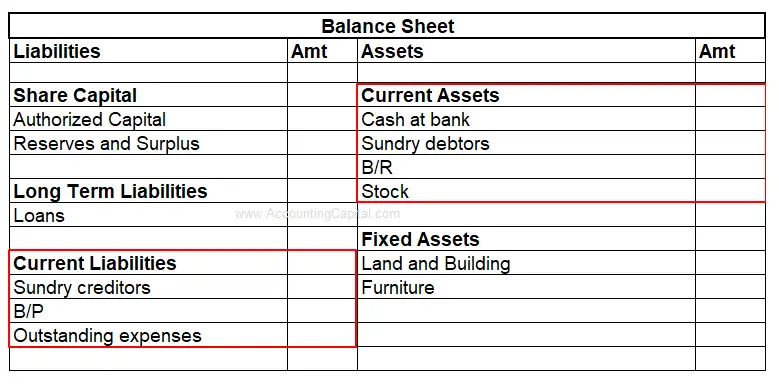
Here’s the secret handshake: Current Assets – Current Liabilities = Net Current Assets. "Current" means anything that can turn into cash or needs to be paid within a year. Think of your wallet, your checking account, your Venmo balance—that’s your current assets.
Now, think of your credit card bill, this month’s rent, or that loan from your cousin. Those are your current liabilities. Subtract the boring stuff from the good stuff, and you get your net current assets—your true spending power.
Let’s use a real-world example. Picture Tom, who runs a small bakery. He has $5,000 in the bank, $2,000 worth of flour and sugar (inventory), and $1,000 people owe him for catering. That’s $8,000 in current assets.
But Tom owes $3,000 to his flour supplier and $1,500 on his business credit card. That’s $4,500 in current liabilities. So, $8,000 – $4,500 = $3,500 in net current assets. He’s got a cozy cushion to buy a new mixer or handle a slow week.
Why Should You Care? (It’s Not Just for Spreadsheet Geeks)
Knowing your net current assets is like checking your pulse before a big race. It tells you if you’re about to collapse into debt or if you can sprint ahead. If your number is positive, you’re liquid—you can handle surprises.
 Net Current Asset Value Per Share (NCAVPS): A Method To Value Stocks
If it’s negative, you’re living on borrowed time (and money). That’s like driving a car with the gas light on and no spare tire. It’s stressful, and it means you might need to sell something fast just to keep moving.
Think back to the last time your car needed a $600 repair. Did you have the cash, or did you panic? People with positive net current assets just swipe their card. Everyone else plays the "sell my guitar" game.
The "Jar of Cookies" Analogy
Imagine a jar of cookies on your counter. Each cookie is $1 you can spend. You have 20 cookies (assets), but you promised 8 cookies to your neighbor (liabilities). Your net cookies? 12. Those 12 are what you can eat, trade, or save.
Now, if your neighbor suddenly demands 25 cookies, you’re in trouble. That’s a negative net current asset position. You’d have to bake more cookies instantly (sell something) or borrow from another neighbor. Not fun, right?
So, calculating this number is basically counting your cookies before you promise a party. It keeps you from overcommitting and waking up hungry.
How to Calculate Yours (Step-by-Step, No Calculator Required)
Grab a piece of scrap paper (or your phone notes). Write down everything you have that can become cash in a year: cash in bank, money in your PayPal, stuff you could sell fast, and money owed to you. Add that up.
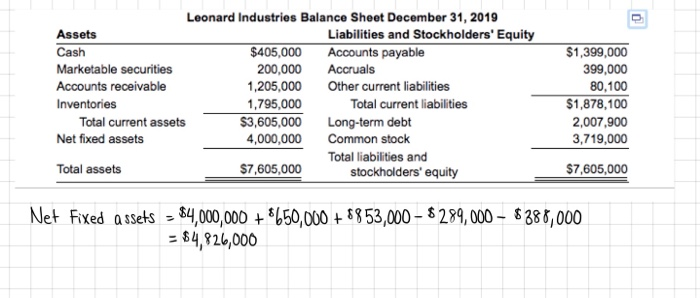 Net Working Capital Formula Example Calculation Ratio
Next, write down everything you must pay in a year: credit card balances, rent, utility bills, loan payments, that library fine you keep forgetting. Add those up.
Now, do the subtraction: Your Current Assets – Your Current Liabilities. The result is your net current assets. If it’s positive, do a little dance. If it’s negative, take a breath—that’s your signal to spend less or earn more in the near future.
For a business, it works the same way. The owner just uses bigger numbers and fancier terms like "accounts receivable." But it’s still just how much wiggle room they have before the wolves at the door.
The Warm Fuzzy Feeling
I know a woman named Clara who checks her net current assets every Sunday morning with her coffee. She calls it her "financial flossing"—annoying but necessary, and it keeps her teeth (and wallet) healthy. She once told me, "Knowing I have $1,200 of free cash helps me sleep better than a weighted blanket."
That’s the real magic. This number isn’t about being rich. It’s about feeling safe in your own skin, knowing you can handle life’s little curveballs. It’s the difference between "I need a loan" and "I’ve got this."
So next time you see your bank balance, don’t just look at the big number. Subtract what you owe from what you have. That little difference is your true power—your net current assets. It’s the money you can actually use to buy joy, pay emergencies, or just order pizza without guilt.
Go ahead. Do the math. It takes two minutes, and it’s the kindest thing you can do for your future self. After all, you deserve to know exactly how many cookies you really have.
