How To Calculate The Ratio Between Two Numbers

Let’s be honest for a second: the word ratio might sound like something you left behind in a dusty math classroom, right next to a broken protractor and a vague sense of dread...

Let’s be honest for a second: the word ratio might sound like something you left behind in a dusty math classroom, right next to a broken protractor and a vague sense of dread. But stick with me. Ratios are actually the secret sauce of everyday life—the quiet little math trick that helps you compare two things without needing a calculator or a PhD.
Think about the last time you made a cup of coffee. You scooped out a spoonful of grounds and poured in two spoonfuls of water, right? That, my friend, is a ratio. You just didn't call it that. You were saying, “Hey, for every one part coffee, I want two parts water.” That’s the core of it: a ratio is simply a way to show how much of one thing there is compared to another.
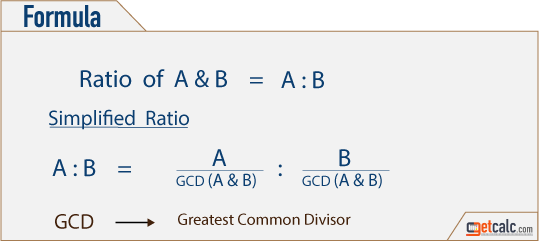
So, how do you calculate it? The process is laughably simple. You take the first number, put a colon in the middle, and then stick the second number after it. For that coffee, the ratio is 1:2. That’s the whole formula. But real life isn't always that neat, so let's walk through a few examples that feel like Friday afternoon.
Must Read
The Pizza Slice Test
Imagine it’s pizza night. You and your friend order a large. You’re starving, but you’re also trying to be fair. You eat 8 slices and your friend eats 4 slices. To find the ratio of your slices to theirs, you just write 8:4. That’s the raw, honest truth.
But here’s the fun part: you can simplify a ratio just like you simplify a fraction. Think of it as cleaning up the numbers so they make more sense. What number goes into both 8 and 4? Yes, 4. Divide both sides by 4. You get 2:1. You ate two slices for every one slice they did.
Now you have a story. “I’m a 2:1 pizza machine,” you can joke, which sounds a lot more relatable than “I ate eight slices.” It turns a messy number into a clear, friendly comparison.
When Life Gets Measly (But Still Mathy)
Not every ratio has to involve food. Let’s say you have a 20-minute commute, but your friend has a 60-minute commute. The ratio of your time to their time is 20:60. Simplify that by dividing by 20, and you get 1:3. You spent one minute for every three minutes they spent.
 Numbers to Ratio Calculator
Suddenly, your traffic jam doesn’t feel so bad, does it? Ratios give you perspective. They let you hold two numbers up to the light and see how they stack up. This is why you should care: it’s not about getting a gold star in math class. It’s about making sense of your world.
It’s the same with your savings. If you earn $2,000 a month and save $500, the ratio of savings to income is 500:2000. Simplify by dividing by 500, and you get 1:4. You save one dollar for every four you earn. Now you can actually see if that’s a good habit or if you need to tweak it.
The Secret Trick: Reading It Out Loud
Here is the warm, fuss-free method to never mess this up. Just read the ratio as a sentence. If you have a ratio of 3:5, say to yourself: “For every 3 of the first thing, there are 5 of the second thing.” That’s it. No magic. No division anxiety.
Try it with something silly. You have 3 dogs and 2 cats. The ratio of dogs to cats is 3:2. Read it: “For every three dogs, there are two cats.” Your living room is officially a ratio statement. You can even reverse it: the ratio of cats to dogs is 2:3. The order matters, but only as much as you want it to.
That’s the beautiful part: you are the boss of the ratio. You decide what to compare and in what order. It’s your story to tell.
 Calculate Ratio Between Two Numbers In Excel - Printable Forms Free Online
Why It’s Actually Your Friend
I know it sounds like I’m overselling a simple math thing, but really—ratios are the difference between feeling overwhelmed by numbers and feeling in control. When you bake, a ratio of 1:2 (butter to sugar) tells you if the cookies will be soft and chewy. When you budget, a ratio of 2:1 (needs to wants) tells you if you’re living smart.
And when you’re trying to split a bill with your sister who ate way more appetizers than you, a ratio of 3:1 (her plate to yours) gives you a solid, unarguable reason to pay less. It’s math with a spine.
You don’t need to be a mathematician. You just need to notice two numbers and put a colon between them. That’s the entire toolkit. The simplification? That’s just for fun, to make it prettier.
So next time you pour a drink, or feed your pets, or get stuck in traffic, try whispering to yourself: “What’s the ratio here?” It might feel a little nerdy. But it will also make you smile, because you’ll suddenly see the invisible perfect little comparison hiding in plain sight.
Congratulations. You now know how to calculate a ratio. Go compare something nice.
