How To Make A Flip Book

You’ve seen it in movies: a crazy professor flips through a stack of paper, and a cartoon dinosaur dances across the pages. That, my friend, is a flip book, and you can make o...

You’ve seen it in movies: a crazy professor flips through a stack of paper, and a cartoon dinosaur dances across the pages. That, my friend, is a flip book, and you can make one without a lab coat or a science degree. Seriously, it’s like magic you can hold in your sweaty little hands, and it’s easier than explaining why you’re still watching that reality TV show.
First, let’s crush a myth. You do not need fancy art supplies. I’ve seen people make flip books on napkins during boring meetings, and they were better than most blockbuster sequels. All you need is a stack of paper—sticky notes are perfect because they’re already glued and scream “look at me”—plus a pen, a pencil, and about fifteen minutes of patience. That’s less time than you spend choosing a Netflix show.
The Science of "Why This Works"
Here’s the shocker: your brain is a dirty liar. When you see a series of images that change slightly, your brain refuses to admit they’re separate pictures. It shouts “motion!” like a drunk fan at a sports game. This trick is called persistence of vision, and it’s the same illusion that makes cartoons move and makes you think you saw a ghost in the mirror at 3 AM (you didn’t).
Must Read
Fun fact: the first flip book was invented in 1868 by a man named John Barnes Linnett. He called it a “kineograph,” which sounds like a fancy dinosaur. Today, you can make one that’s better than his, and you don’t even need a top hat or a monocle. Progress!
Step One: Pick Your Star
Draw something stupid and simple. A bouncing ball. A stick figure waving. A cat falling off a table—always a crowd-pleaser. Do not, I repeat, do not try to draw a realistic horse on your first go. You will cry, and the paper will get soggy, and then you’ll have a sad, wet horse that doesn’t gallop.
Draw your first image on the last page of your stack. That’s the bottom of the book. If you start on the top page, your animation will run backwards, and your cat will defy gravity in the most confusing way possible. Trust me on this—I learned the hard way and made a bird that flew into the ground.
Step Two: The "Almost the Same" Game
Now, place a new piece of paper on top of your first drawing. You should see the lines through the paper if you hold it up to a light or a window. Trace the first drawing almost exactly, but move your character just a little bit—like a quarter inch. It’s like playing telephone with your own art.
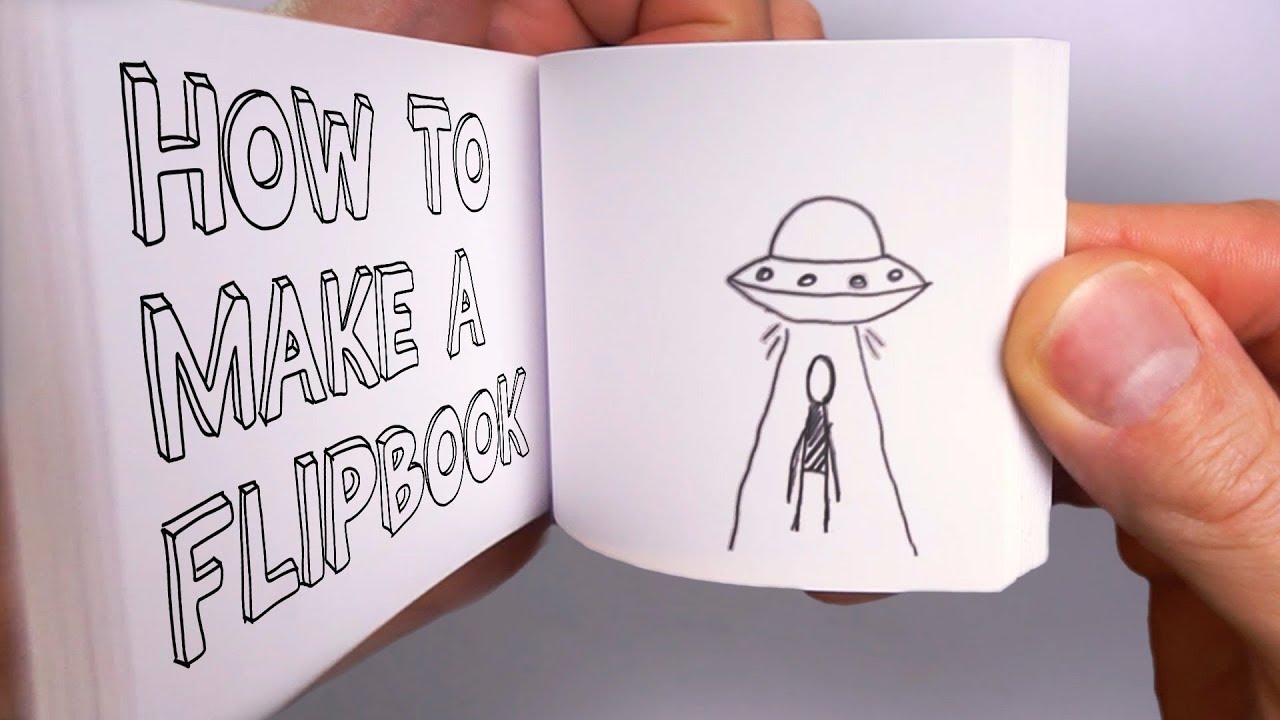 How to MAKE A FLIPBOOK - YouTube
Keep stacking and tracing, layer by layer. You want about 20 to 30 pages for a decent flip. More pages = smoother animation, but also more chances for your hand to cramp up like a claw. If you draw a snail racing a cheetah, the cheetah should move a full inch between frames, while the snail moves a millimeter. That’s comedy gold.
Step Three: The Big Flip
Pinch the bottom corner of the stack gently. Now, flip the pages from the front to the back, letting them slide under your thumb. If your movie plays backwards, you’re flipping from the back to the front. Stop that. Flip the other way.
If your stick figure looks like it’s having a seizure, you moved it too much between frames. If it doesn’t move at all, you are a copy machine, not an animator. Adjust your third frame so the change is subtle, like a yawn, and then speed up the flip. You’ll see it: life, in your hands, on cheap paper.
Pro Tips from Someone Who Has No Life
Use a binder clip to hold your pages together if your thumb gets tired. Your thumb is not a tool; it’s a fleshy stick, and it deserves a break. Also, film your flip book with your phone in slow motion. It makes your cartoon look ten times more professional, and you can send it to your friends as “work from me, an artist.”
 Ideas For A Flipbook _ How To Draw a Quick and Easy Flip Book – CGNPEB
Want to blow minds? Add a loop. Draw the first frame again at the end, so your cat falls off the table, then teleports back to the top, and falls forever. It’s a metaphor for your life—and infinitely entertaining.
And here’s the weirdest fact: Pixar animators still use flip books to test their ideas. That’s right. Before computers rendered a trillion polygons for Finding Nemo, some guy in a hoodie was doodling a clownfish on sticky notes. You are now in that lineage, minus the hoodie and the million-dollar salary.
What to Do When It Goes Wrong
You will mess up. Everyone does. My first flip book was a stick figure that tried to wave but instead turned into a squiggly mess because I sneezed. Solution? Call it abstract art. Stick it on your fridge, pour yourself a coffee, and start again. The paper is cheap. Your pride? That’s a bit pricier, but still recoverable.
Remember: the best flip books are born from mistakes. A slightly crooked line becomes a cartoon character’s goofy wiggle. A smudge looks like a magic puff of smoke. You are not failing; you are embracing the chaos of a universe that runs on 24 frames per second.
So grab some paper, draw a dot, and make that dot hop across the page like it’s late for a meeting. You’ll feel like a god—a clumsy, caffeine-fueled god of little paper movies. And that’s way better than watching another cat video on YouTube, because this cat? It moves at your command. Bow to the flip book.
