How To Make Tomato Sauce From Tomato Paste For Pasta

So, you’re staring at a can of tomato paste, wondering if you can turn this humble red brick into a luscious pasta sauce. The answer is a resounding yes—and it’s actually one...
So, you’re staring at a can of tomato paste, wondering if you can turn this humble red brick into a luscious pasta sauce. The answer is a resounding yes—and it’s actually one of the coolest kitchen tricks you’ll ever learn. Think of tomato paste as the secret concentrate of summer tomatoes, just waiting to be unlocked with a little water and patience.
Why bother? Because you’re about to create a sauce with deep, intense flavor that most jarred sauces can only dream of. It’s like the difference between a black-and-white sketch and a full-color painting—you get to be the artist. Plus, you probably already have tomato paste lurking in your pantry, right?
The Magic of the Sauté
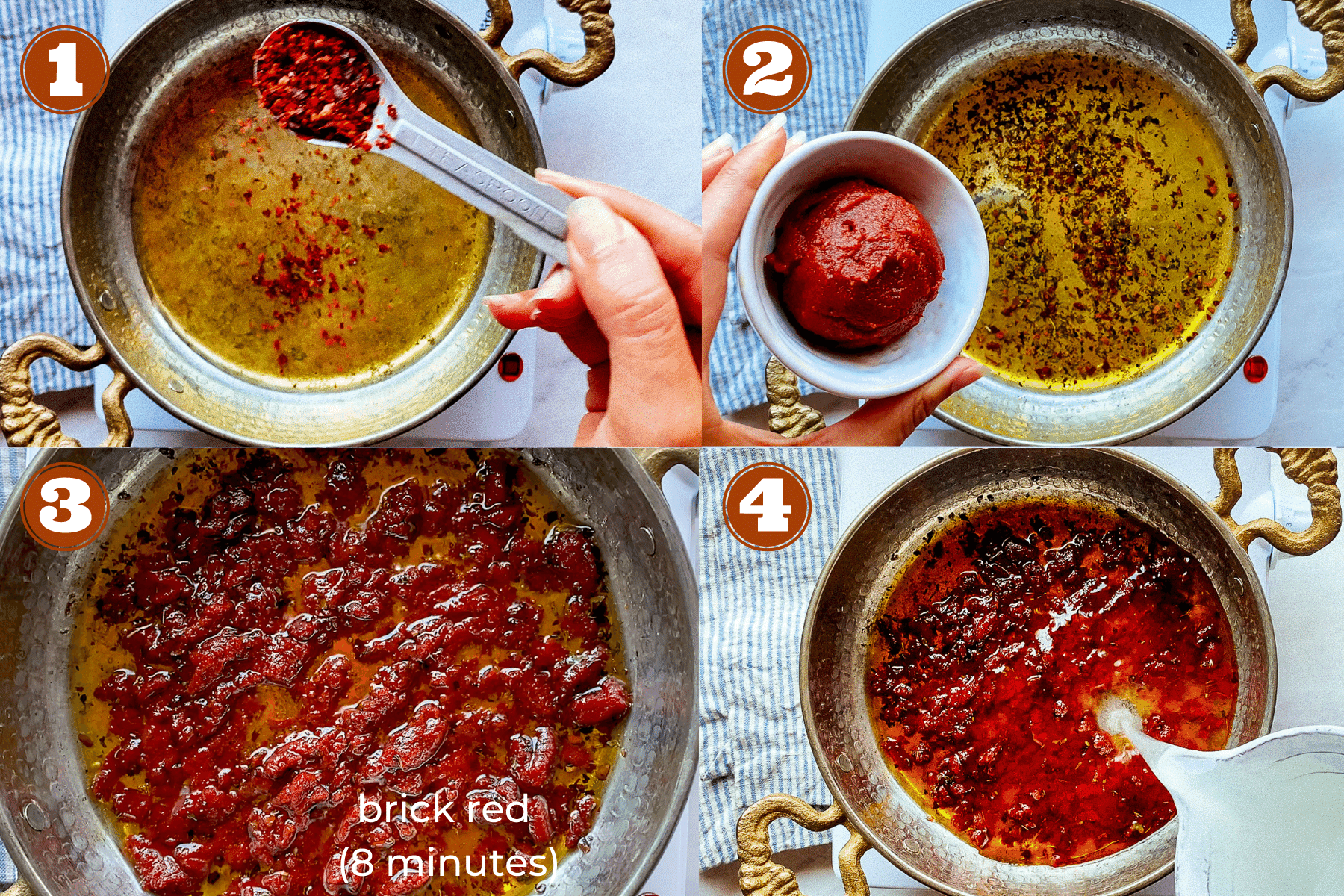
First, ditch the idea of just mixing paste with water and calling it done. We’re building flavor here. Start by heating a glug of olive oil in a pan over medium heat—enough to coat the bottom like a shiny pond. Toss in a clove or two of minced garlic (or a pinch of garlic powder if you’re lazy) and let it sizzle for about 30 seconds.
Must Read
Now, here’s the fun part: add the tomato paste directly to the hot oil. Stir it around for a minute or two until it darkens slightly and smells like roasted tomatoes. This is called “frying the paste,” and it’s like waking up a sleepy flavor bomb—you’ll actually smell the sweetness and umami bloom. It’s like the difference between a plain potato chip and a perfectly roasted one.
Building the Sauce Body
Once your paste is fragrant and a bit darker, it’s time to add liquid. Use water, vegetable broth, or even the pasta water you’ll save later—about 1 cup of liquid for every 3 tablespoons of paste. Whisk it in until smooth, and you’ll see a thick, rusty-orange sauce start to form.
Don’t stop there—this is where the curiosity kicks in. Add a pinch of sugar to balance acidity (yes, even if you’re “not a sugar person”), a sprinkle of dried oregano, and maybe a tiny dash of red pepper flakes for warmth. Stir, taste, and ask yourself: “What does this need?” Maybe salt, maybe a splash of balsamic vinegar—be your own flavor detective.
The Secret to Silky Finish
Now, let the sauce simmer gently for 10 to 15 minutes. This isn’t just a waiting game—it’s where the paste’s natural thickness relaxes into something silky. Think of it like letting a good stew “marry” on the stove—the flavors stop being strangers and start hugging.
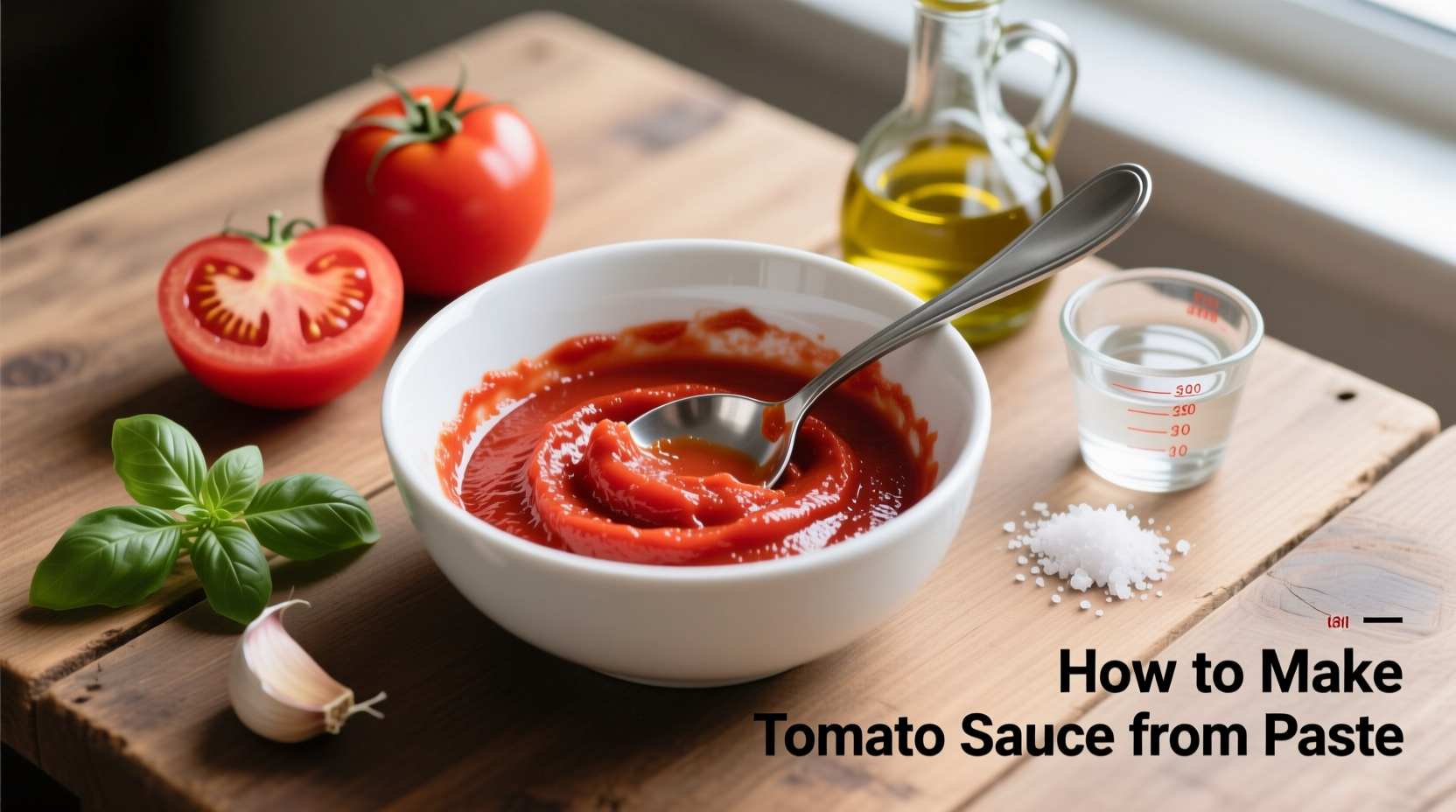 How to Make Tomato Sauce from Paste: Simple Steps
During the last minute, toss in a knob of butter or a drizzle of olive oil for richness. It’s like adding a velvet blanket to your sauce. Then, stir in your cooked pasta and a splash of the starchy pasta water—that’s the liquid gold that makes everything cling perfectly.
Why This Feels Like a Hack
This method is basically a cheat code for quick, restaurant-quality pasta without opening a jar of preservatives. It’s also incredibly reliable—no chopping endless onions or waiting hours for tomatoes to break down. You’re effectively turning a concentrated paste into a full-blown sauce in under 20 minutes. How cool is that?
And let’s be real: you’re in control. Want it more garlicky? Add more. Prefer a smoky twist? Drop in a pinch of smoked paprika. This is your canvas, and tomato paste is your affordable paint. It’s like having a tiny, powerful flavor brick that can become anything you dream up.
When Life Gives You Paste…
So next time you see that little can of tomato paste, don’t groan—get excited. You’ve got the foundation for a meal that tastes like you’ve been slaving away all afternoon, when really, you just threw a few things together. It’s almost embarrassing how easy this is, and yet, your dinner companions will probably ask, “Where did you learn to cook like this?”
Just smile and tell them it’s a family secret—or let them in on the fun. Because honestly, the best kitchen tricks are the ones that make you feel like a genius without the stress. Now go ahead, grab that paste, and turn it into something magical. Your pasta is waiting.
