How To Tell If A Dog Is Depressed

Alright, grab your mug. Let’s talk about that sad-eyed beast sprawled across your floor like a furry, four-legged rug. Is your dog just tired, or is something deeper going on?...
Alright, grab your mug. Let’s talk about that sad-eyed beast sprawled across your floor like a furry, four-legged rug. Is your dog just tired, or is something deeper going on? I’m talking about dog depression.
Yes, it’s a real thing. And no, it’s not just you projecting human feelings onto a creature that eats out of the trash. Dogs get the blues, too. So how do you tell the difference between a lazy afternoon and a genuine canine crisis?
The Classic “No Thanks” to Play
First up: the toy test. Does your dog look at that squeaky squirrel like it’s a piece of broccoli? You know, the toy they used to chew for hours? If they just sigh and turn away, alarm bells should ring.
Must Read
I’m not talking about one “meh” day. We all have those. But a consistent refusal to engage with their favorite trigger—ball, tug rope, that sad, disembodied squeaker—is a major red flag.
They’re basically saying, “What’s the point?” That’s not a dog being cool. That’s a dog being depressed.
The Sleep Olympics
Dogs sleep a lot. Labradors practically invented napping. But depression sleep is different. It’s deep, non-responsive hibernation mode. They might sleep 14 to 18 hours a day and still look exhausted.
Look at the quality of the sleep. Are they twitching? Chasing dream rabbits? Or are they just a limp, breathing bag of fur? A depressed dog often sleeps with a “heaviness” that feels off.
And here’s the kicker: waking them up feels like a chore. You get that slow blink, a heavy sigh, and zero attempt to move. That’s not restful; that’s escapism.
The Appetite Rollercoaster
Food is a dog’s love language. So when they turn their nose up at kibble? Something is wrong. Depression can cause a loss of appetite—even for chicken or cheese. Hello? The emergency bacon is right there!
On the flip side, some dogs do the opposite. They eat like they’re trying to fill a void. If your dog suddenly goes from a graceful eater to a Hoover vacuum, that’s emotional eating. Dogs get that, too.
 How Can You Tell If Your Dog Is Depressed
Pay attention to the how. Are they licking the bowl clean but then immediately walking away? That’s not hunger; that’s a robotic habit.
The Hidden Language of Ears and Tail
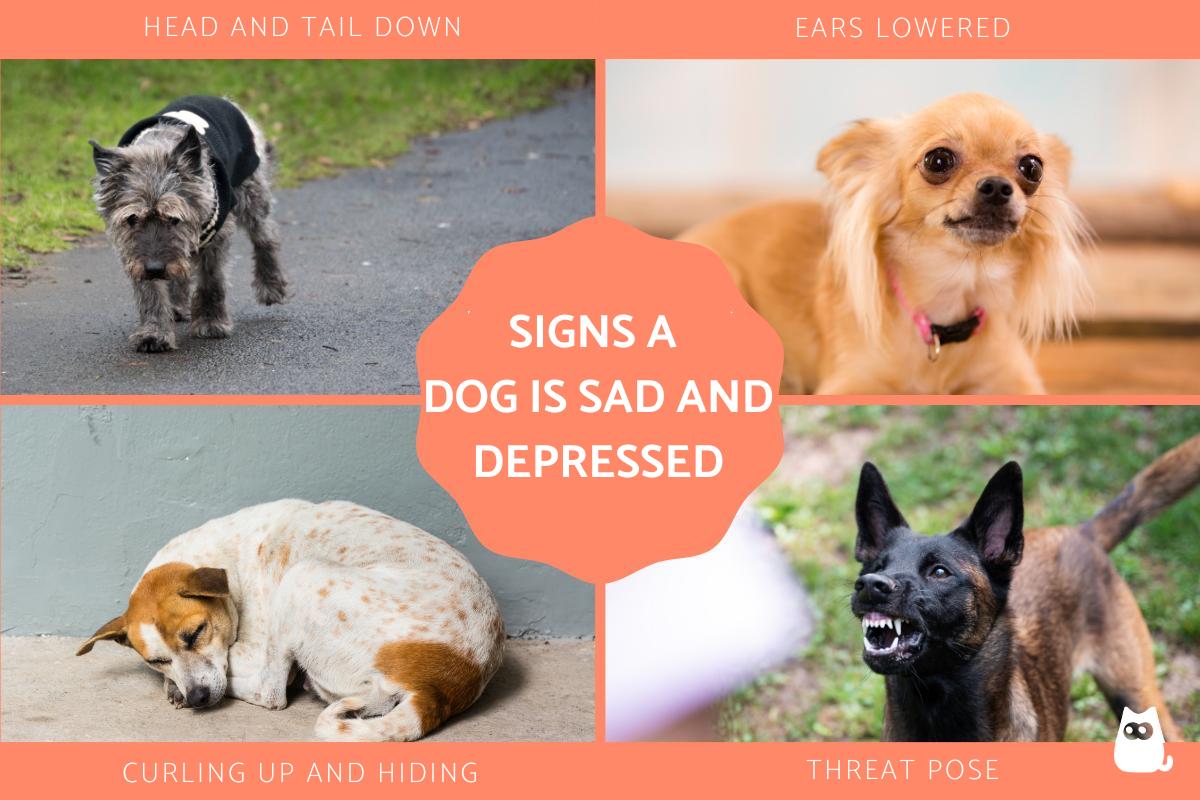
You know that joyous, helicopter tail wag? The one that could power a small fan? If your dog’s tail is permanently lowered or tucked, that’s a sad signal. A depressed dog loses their “waggle.”
Check the ears, too. Normally, they perk up at interesting sounds. A depressed dog’s ears are often pinned back or flat against the head, even when nothing scary is happening. It’s like they’re trying to block out the world.
And eye contact? Depressed dogs often avoid it. They’ll look away or stare at the wall. It’s heartbreaking, honestly. They’re not ignoring you; they’re disconnected.
The Destructive Behavior Plot Twist
Here’s the weird part. Sometimes depression looks like anger or chaos. A dog that suddenly chews up your shoes, digs holes in the sofa, or barks at nothing isn’t being “bad.” They might be trying to stimulate themselves to feel something—anything.
It’s like when you’re sad and binge-watch bad TV for the noise. A depressed dog might destroy your pillows because the silence is too loud. Don’t punish them; investigate.
This is especially common after a move or the loss of a household pet. Grief hits dogs hard. They don’t understand where the other dog went, so they chew to process it.
:max_bytes(150000):strip_icc()/do-dogs-get-depression-1112512_FINAL-136f8533d32546718fe9eb7ada6d8b5c.png) How To Tell If A Dog Is Depressed at Phyllis Fetter blog
How To Tell If A Dog Is Depressed at Phyllis Fetter blog
The “I Don’t Care” Pose
You call their name. No response. You rattle the leash. Not a twitch. You open the front door, and they don’t even lift their head. That’s profound apathy, and it’s the core of depression.
A healthy dog is curious. They want to sniff, explore, and investigate. A depressed dog acts like the world is made of wet cardboard. It’s not laziness; it’s a chemical shutdown.
If your dog used to greet you like you were a returning war hero and now just blinks at you, that’s not a grudge. That’s a cry for help.
What You Can Do (Without a Psych Degree)
First? Don’t panic. And do not assume it’s the end of the world. This is often fixable. Start with a vet visit. Rule out pain, thyroid issues, or other medical causes. Depression can mimic arthritis or illness.
Then, be a gentle detective. Increase playtime—even if they resist. Go for short, new walks. Smell is a dog’s antidepressant. Let them sniff a new tree for ten minutes. It works weirdly well.
Consider a new routine. Dogs thrive on predictability, but too much repetition bores them. Mix it up. A car ride to a new park can be a miracle. And never underestimate the power of a good, long belly rub. Physical touch releases oxytocin—for both of you.
Finally, give them time. Depression in dogs lifts slowly, like a fog. Be patient. And if it doesn’t lift after a few weeks? Talk to a vet behaviorist. Medication is a last resort, not a failure.
In the end, you know your dog. Trust your gut. That look in their eyes? It’s not just “having a bad day.” It might be a little soul asking for help. And hey, you’ve got the coffee. You’ve got the patience. Go be their sunshine.
