How To Work Out Net Assets

So, you’ve heard someone say “net assets” and you nodded along, right? Maybe you even offered a confident grunt, like a caveman discovering fire. But deep down, you’re thinkin...
So, you’ve heard someone say “net assets” and you nodded along, right? Maybe you even offered a confident grunt, like a caveman discovering fire. But deep down, you’re thinking: “What in the world does that actually mean?” Don’t worry, I’ve been there. Let’s fix that over this imaginary coffee.
First off, net assets is just a fancy way of saying “what you’d truly own if you sold everything and paid off your debts.” Imagine liquidating your life. You sell your car, your couch, your secret stash of emergency snacks. Then you pay the credit card, the mortgage, and that IOU for pizza you owe your roommate. Whatever cash is left? That’s your net assets.
Now, for a business, it’s basically the same idea—just with fewer pizza debts. You take everything the company owns (assets) and subtract everything it owes (liabilities). The number you get is the net assets. It’s the financial equivalent of checking if you’ve got enough sandwich left after the seagulls have had their go.
Must Read
Why Should You Care?
Because net assets tell you if a company is a house of cards or a real brick-and-mortar deal. If net assets are positive, the company has more than it owes. That’s good. It’s like having a credit card balance that’s smaller than your savings account—feels nice, doesn’t it?
If net assets are negative? Uh-oh. That means the company owes more than it owns. It’s the financial equivalent of wearing a tuxedo made of debt. You might look fancy from a distance, but you’re one gust of wind away from a wardrobe malfunction.
Investors love net assets. Creditors love them more. Even your nosy aunt would love them if she understood them. It’s the bedrock of financial stability—or the red flag of impending doom. There’s no in-between.
The Super Simple Formula
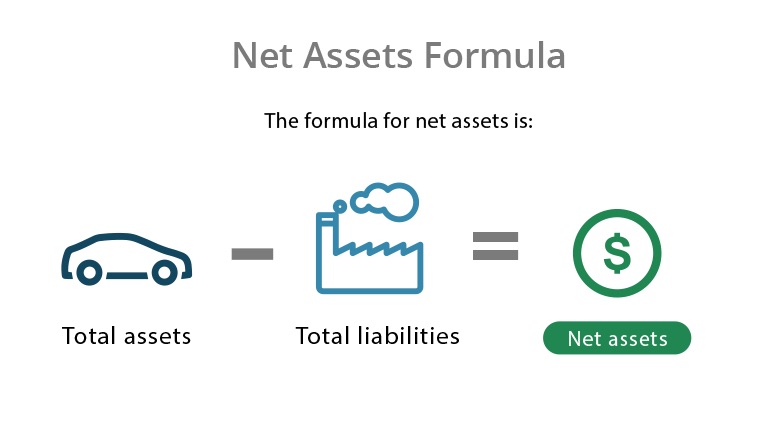
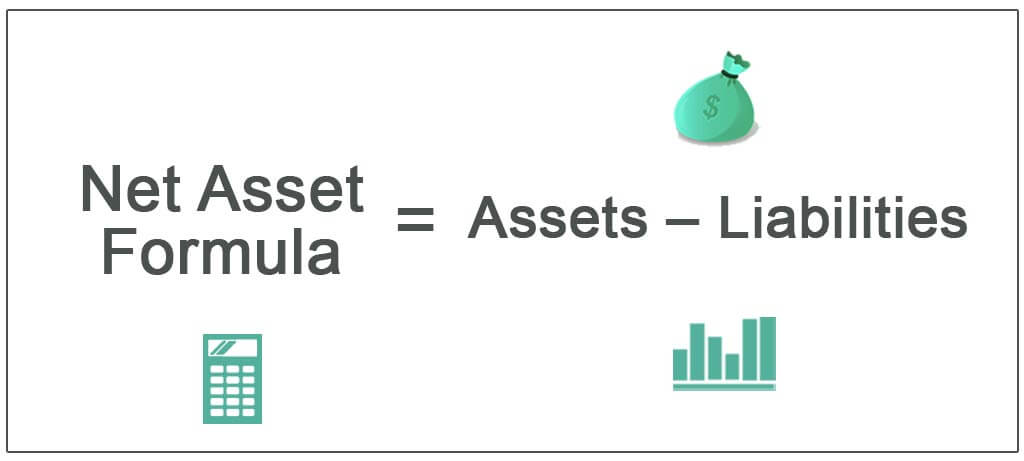
Here’s the magic spell: Net Assets = Total Assets – Total Liabilities. Say it with me now. Total Assets. Minus. Total Liabilities. You’ve just performed financial wizardry.
Total assets include cash, property, equipment, and even that weird patent for a self-wiping toilet. Total liabilities are things like loans, unpaid bills, and that lawsuit you didn’t see coming. Subtract the scary stuff from the nice stuff. The result is net assets.
Easy, right? Too easy? That’s because most finance jargon is just math with a tie on. Don’t let them fool you with big words.
 Net Assets (Definition, Examples) | What is Net Assets?
Wait, Is It the Same as Equity?
Ah, great question—you've been paying attention. For a company, net assets is basically the same as shareholders’ equity. They’re twins, just dressed differently. Equity is what’s left for owners after all debts are paid. Net assets is the same number, but from a “what’s really here” perspective.
But here’s the twist: if the company has intangible assets (like goodwill from buying another company), net assets can get fuzzy. It’s like counting a unicorn in your garage—sure, it’s on paper, but can you sell it? Probably not.
So, some financial folks calculate tangible net assets. That’s net assets minus intangible stuff. It’s the “cold, hard reality” version. Like taking off Instagram filters and seeing the real thing.
Let’s Do a Silly Example
Imagine you run a lemonade stand. Your assets: a pitcher ($5), a table ($10), and a dream (priceless). Total assets: $15. Liabilities: you owe your friend $3 for lemons. Total liabilities: $3. Net assets? $12. Congrats, you’re a tycoon!
Now imagine you bought a fancy electric juicer on credit for $50. Assets: same pitcher, table, plus juicer ($55 total). Liabilities: $50 juicer debt + $3 lemon debt = $53. Net assets? $2. You’re still okay, but your margin for error is thinner than a slice of cucumber.
See how it scales? One bad purchase can flip your net assets from “yay” to “yikes.” That’s why businesses obsess over this number.
 Total Net Assets Formula | Total Liabilities / Total Assets: What Is It
How Do You Calculate It in Real Life?
Grab a financial statement—a balance sheet is your best friend. Look for the section that says “Total Assets.” Write it down. Then find “Total Liabilities.” Write that down too. Subtract liabilities from assets. Boom. You’ve got net assets.
If you don’t have a balance sheet, you can guess. But guessing is like trying to bake a cake by smell—possible, but usually messy. Always get the real numbers. Trust me, your accountant will thank you.
And if the number is negative? Don’t panic. It might be temporary. Some companies borrow a ton to grow (like Amazon did for years). But if it’s negative for too long, that’s a red flag waving in a hurricane. Run.
Final Thought: You’re Already a Pro
You’ve just learned to calculate net assets. That’s more than half the world knows. You could now walk into a boardroom, snap a pencil in half, and say “Let’s talk about solvency” without blushing. Well, maybe a little blush.
Remember: net assets are the foundation. They’re not exciting like cash flow or flashy like revenue growth. But without a solid foundation, your skyscraper of a business is just a very expensive pile of rubble. So go forth, subtract those liabilities, and know exactly what you’re worth—snacks and all.
Now, refill your coffee. You earned it. And maybe, just maybe, check your own personal net assets? No pressure. But also... kinda fun, right?
