Is Standing Rib Roast And Prime Rib The Same Thing

Last Christmas, my uncle Bob showed up with a glorious, bone-in roast that he’d been bragging about for weeks. He plopped it on the table and announced, “This is my world-famo...

Last Christmas, my uncle Bob showed up with a glorious, bone-in roast that he’d been bragging about for weeks. He plopped it on the table and announced, “This is my world-famous prime rib!” I took one bite, and it was undeniably delicious—but also undeniably confusing. Because just last month, he served me something he called “standing rib roast,” and it looked exactly the same. So, what gives? Are they the same thing, or is my uncle just messing with my head?
Let’s cut right to the bone here: yes, standing rib roast and prime rib are essentially the same cut of beef. They both come from the primal rib section—the beautiful, fatty area between the chuck and the loin. Think of it like a celebrity and their stage name: same person, different billing.
But here’s where it gets tricky, and where your dinner party bragging rights come into play. The term “prime rib” actually implies something more than just the cut. It traditionally refers to the cooking method—roasted slowly, often bone-in, and served as a showstopper at a restaurant or holiday table.
Must Read
On the other hand, “standing rib roast” is the butcher’s term for the exact same piece of meat. The word “standing” comes from the old-school way of roasting it upright on the rib bones (like it’s standing at attention, you know?). So, if you buy a standing rib roast and cook it properly, congratulations: you just made prime rib.
Wait, So There’s No Difference?
Not exactly, and this is where the irony kicks in. The word “prime” in “prime rib” does not automatically mean USDA Prime grade. That’s a huge misconception. “Prime” is often used as a fancy marketing term in restaurants, even if the meat is actually graded Choice or Select.
Imagine ordering “Prime Rib” and paying $80 for a plate of Select-grade meat. Ouch. That’s like ordering a “Champagne Cocktail” and getting a glass of sparkling apple juice. You see the potential for heartbreak?
So, legally speaking, the USDA only uses the word “prime” for the top tier of marbling. But on a menu, “Prime Rib” is just the name of the dish. Your standing rib roast is the canvas; your choice of grading (Prime, Choice, or Wagyu) is the paint.
Here’s a fun little secret: the bone makes a massive difference. Whether you call it standing rib or prime rib, the bone-in version (aka the “rack”) is the holy grail. It acts as a natural heat shield, keeping the meat juicier and more flavorful. Remove the bones, and you get a “ribeye roast”—which is also delicious, but a little less dramatic.
The Great Debate: To Rub or Not to Rub?
You’ll see people online duking it out over whether a standing rib roast needs a heavy spice crust. My opinion? Don’t overthink it. A simple blend of salt, pepper, garlic, and maybe some rosemary is all you need. The fat cap does the heavy lifting.
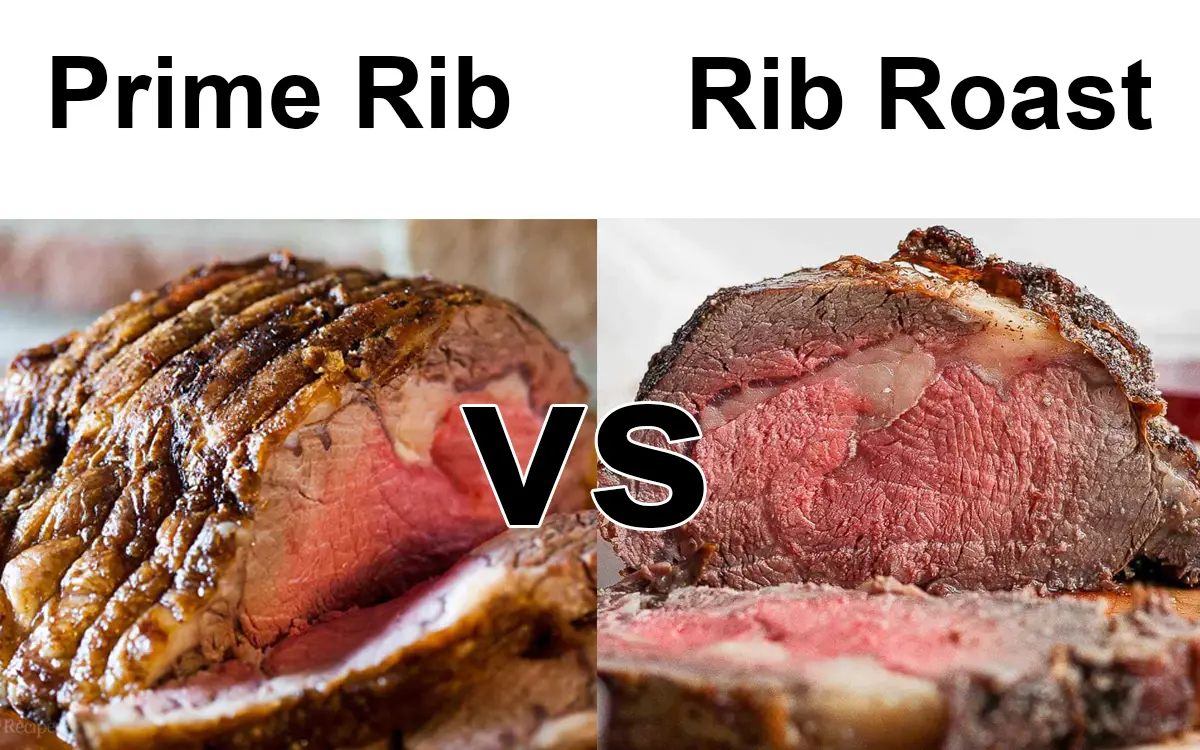 Prime Rib Vs Rib Roast (6 Difference Between Prime Rib and Rib Roast
Why? Because the beef itself is the star. If you cover a perfectly marbled rib roast in a complex 12-herb paste, you’re basically putting a tuxedo on a supermodel. She already looks good, buddy. Let the beef taste like beef.
Side note: have you ever had a dry, mediocre prime rib at a chain restaurant? That’s not because the cut is bad—it’s because they cooked it poorly. A standing rib roast is expensive, so restaurants often slice it thin to hide the fact it’s been sitting in a warmer for three hours. Criminal.
So, Which Term Should You Use at the Butcher?
If you walk into a butcher shop and say “I want a prime rib,” they’ll probably hand you a standing rib roast. They know what you mean. But here’s a pro tip: ask for a “bone-in rib roast”. It’s clearer and avoids any confusion about grade or cooking method.
A butcher once told me, “Prime rib is what you call it after you cook it. Before that, it’s a roast.” That stuck with me. It’s like calling a caterpillar a butterfly before it has wings. You see the logic?
Now, here’s the uncomfortable truth: some snobby foodies will tell you they’re completely different. They’ll argue that “prime rib” must be roasted with the bones on, while a “standing rib roast” can be boneless. These people are usually the same ones who correct your pronunciation of “gyros.” Just smile, nod, and enjoy your meat.
At the end of the day, a standing rib roast and prime rib are like two sides of the same shiny, juicy coin. One is the raw ingredient, the other is the iconic dish. But they share the same DNA—that luscious, marbled, oven-scented magic that makes a holiday meal unforgettable.
So, next time uncle Bob pulls out his roast, you can say, “Looks great, Bob—but is it Prime grade or just a beautiful standing rib?” He’ll either love you for knowing your stuff, or he’ll ban you from the carving knife. Either way, you get to eat the rib.
