Rob Brydon's Honky Tonk Road Trip

Imagine swapping the drizzle of a Welsh winter for the golden haze of a Tennessee afternoon, with nothing but a vintage microphone and a restless curiosity for company. That’s...

Imagine swapping the drizzle of a Welsh winter for the golden haze of a Tennessee afternoon, with nothing but a vintage microphone and a restless curiosity for company. That’s the premise of Rob Brydon’s Honky Tonk Road Trip, a travelogue that feels less like a documentary and more like a postcard from your funniest mate. It’s Brydon at his most relaxed: charming, improvisational, and utterly besotted with American roots music.
The show follows the Welsh comedian and actor as he drives from Nashville to Memphis, and then down to New Orleans, searching for the soul of country, blues, and rock ‘n’ roll. This isn’t a polished, high-budget production; it’s a rambling, petrol-stained adventure where the best moments happen in dive bars and dusty backyards. You get the sense that the producers just handed him the keys to a car and said, “Go find some magic.”
Brydon’s charm is his genuine awe. He’s not a music scholar, but a devoted fan who happens to have a world-class gift for mimicry. Watching him try to keep up with a Nashville session guitarist or butcher a Johnny Cash lyric is pure, unscripted gold. It’s the kind of content that makes you want to immediately book a flight, learn a chord, or at least pour yourself a proper bourbon.
Must Read
The Route: A Pilgrimage for the Soul
The journey is a masterclass in Southern geography. He starts at the Ryman Auditorium in Nashville, the “Mother Church of Country Music,” where the ghosts of Hank Williams and Patsy Cline still whisper from the wooden pews. From there, it’s a straight shot down Highway 40 to Memphis, a city built on the delta blues and the sweat of Sun Studio.
In Memphis, he visits the Sun Studio, where Elvis, Johnny, and Jerry Lee Lewis all recorded their first hits. Brydon’s reaction to standing where the “Million Dollar Quartet” once jammed is the exact opposite of cynical; his eyes go wide, and he instinctively breaks into a perfect Elvis impression. It’s not a performance; it’s an involuntary reflex.
The final leg takes him to New Orleans, a city that operates on its own humid, syncopated clock. Here, the honky-tonk piano gives way to brass bands and second-line parades. Brydon’s natural rhythm shifts, and he’s soon trying to keep up with a jazz funeral, a man made of rubber and pure joy.
Why It Works: The Gentleman’s Road Trip
What sets this apart from other celebrity travel shows is the pace. Brydon never rushes. He stops at a roadside diner for a meatloaf plate, chats with the waitress about her grandkids, and lets the music find him. It’s an antidote to the hyper-curated, Instagram-ready travel content that floods our feeds.
There is a delightful tension between his very British politeness and the raw, unapologetic energy of American roots music. When a bluesman in a juke joint calls him “a skinny English boy,” Brydon doesn’t bristle; he claps and laughs. This is travel as a conversation, not a lecture.
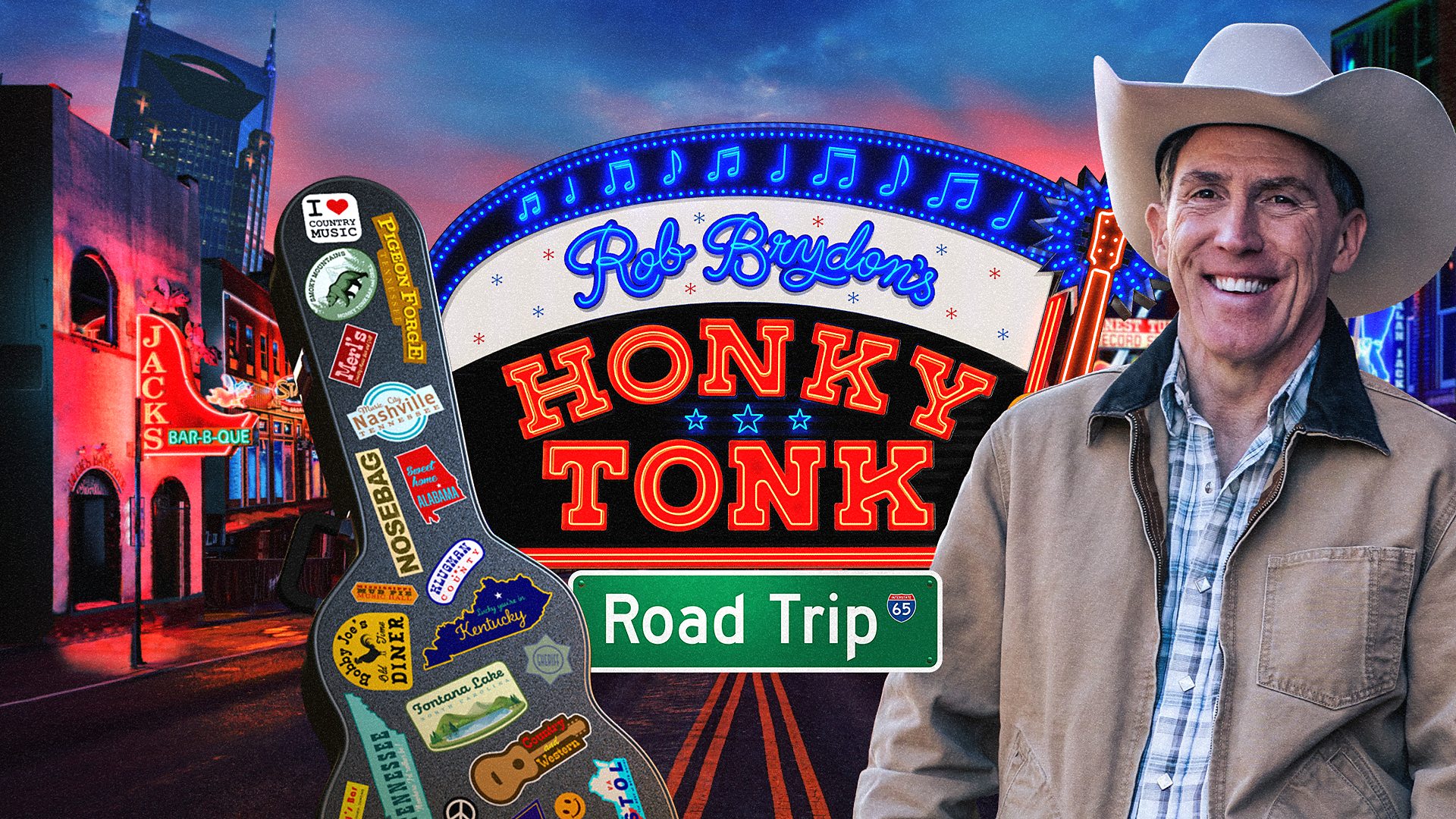 Rob Brydon's Honky Tonk Road Trip - TheTVDB.com
He also brings a surprising vulnerability. In one poignant scene, he tries to write a song about his late father, only to get stuck on a single chord. It’s a quiet moment that reminds you that even polished comedians use music to process things that words alone can’t handle.
Practical Tips from the Honky Tonk Highway
If this show inspires you to rent a car and point it south, here are a few things to keep in mind. First, book a walking tour of the Ryman—the guided audio tour lets you hear actual performances from decades past, which is a spine-tingling experience. In Memphis, avoid the tourist traps on Beale Street after 11 p.m. and instead hit Wild Bill’s Juke Joint for the real deal.
Second, don’t skip the side roads. Brydon pulls over for a sign advertising “World’s Largest Peanut” and finds a family-run farm with a banjo player on the porch. The magic of the American South is often in the spaces between the cities, where the billboards are rusty and the stories are tall.
Third, pack a small notebook. You will hear lyrics that sound like they came from a Flannery O’Connor story, or meet a bartender who claims to have written a hit for Dolly Parton. These stories are better than any souvenir you can buy in a gift shop.
Cultural Footnotes
The show is peppered with delightful trivia. Did you know that the term “honky-tonk” likely comes from the sound of a piano being banged on in a wooden bar? Or that the original Sun Studio recording board still has scratch marks from Elvis’s belt buckle? Brydon shares these facts between sips of coffee and bites of fried pie.
 Rob Brydon's Honky Tonk Road Trip Season 1 Episodes List - Next Episode
He also makes a subtle nod to the Great British Bake Off audience by sampling a “meat-and-three” plate, only to realize it’s a vegetable plate with a side of fried okra. His cultural confusion is our entertainment. It’s like watching a man discover fire for the first time, but the fire is a hot sauce called “Slap Ya Mama.”
One particularly fun sequence involves him trying to order a “Negroni” at a dive bar in Mississippi. The bartender stares at him blankly, then pours a glass of sweet tea with a shot of whiskey. Brydon sips it, shrugs, and says, “I think we’ve created something new.”
The Daily Life Connection
After watching Rob Brydon’s Honky Tonk Road Trip, you might feel a pang of envy for his freedom. But the real takeaway isn’t about quitting your job to drive a vintage Cadillac across the Delta. It’s smaller and more attainable.
The lesson is in the art of the detour. How often do we drive past the weird little sign, ignore the unplanned conversation, or rush through a moment that asks to be savored? Brydon teaches us to say “yes” to the greasy spoon, the off-key karaoke, and the stranger who wants to show you a chord progression.
So this weekend, put on some Hank Williams, open a map, and drive somewhere you’ve never been—even if it’s just the next town over. Find a corner where the music is live and the people are friendly. Let your own honky-tonk road trip begin in the smallest of ways. Because adventure, as Brydon proves, is less about the destination and more about the rhythm you find along the way.
