The Biggest Diamond In The World

So, you think you’ve seen a big diamond? That rock on your finger? Cute. The biggest diamond ever found isn’t a ring; it’s basically a planet with a bad attitude. Meet the Cul...
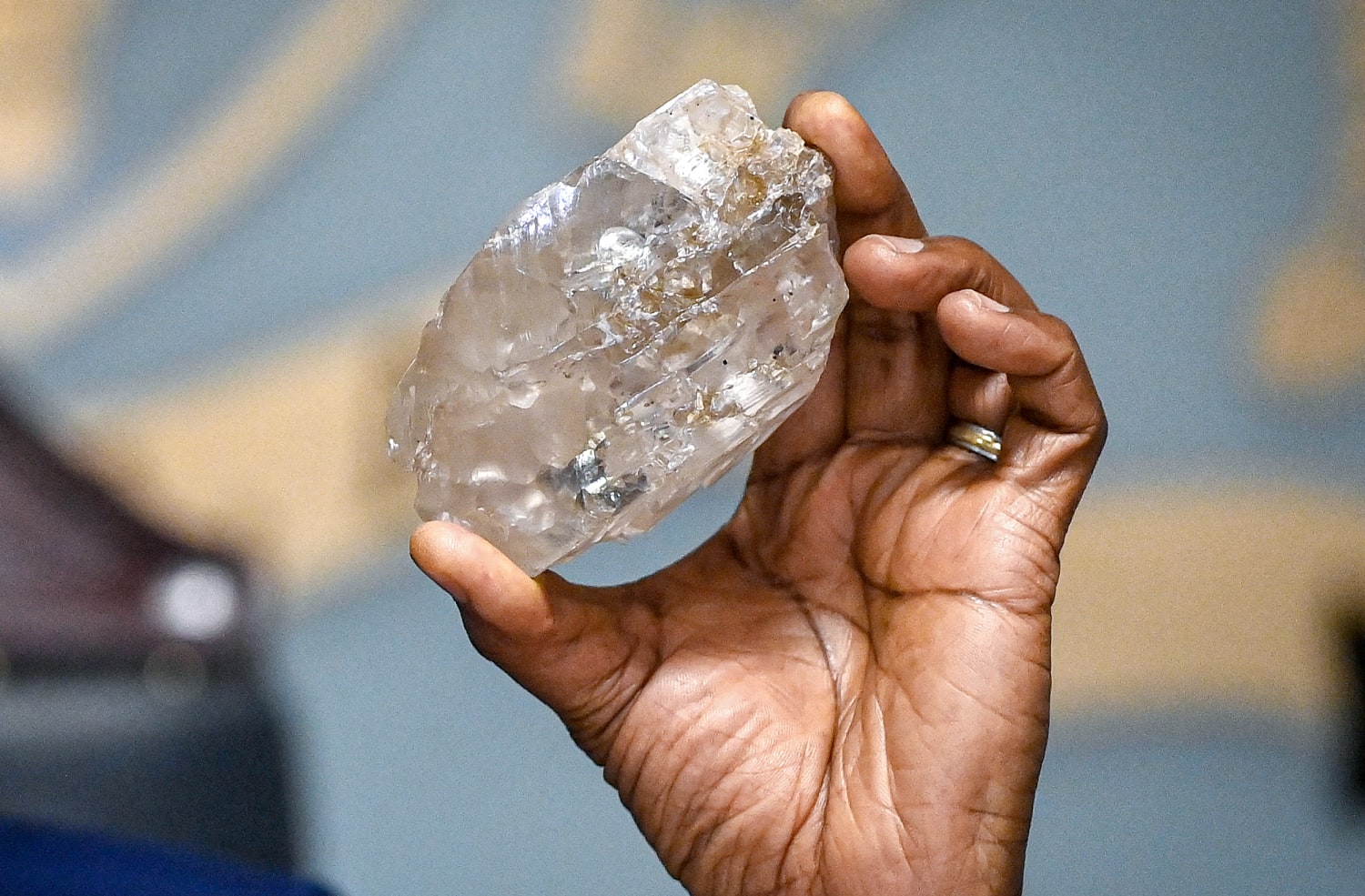
So, you think you’ve seen a big diamond? That rock on your finger? Cute. The biggest diamond ever found isn’t a ring; it’s basically a planet with a bad attitude. Meet the Cullinan Diamond, a brute that weighed a staggering 3,106 carats—that’s about 1.33 pounds of pure, uncut chaos. To put that in perspective, it’s heavier than a standard bag of sugar, and if you threw it at someone, you’d be charged with assault with a deadly gem.
The Discovery: A Hole in the Ground and a Big Surprise
It all started in 1905 at the Premier Mine in South Africa. A mine manager, Frederick Wells, was making his rounds when he saw something glittering in the wall. He wasn’t looking for the world’s biggest diamond; he was probably just avoiding the heat. But there it was: a crystal the size of a fist, staring back at him like a cosmic sneeze.
Wells didn’t scream or faint, which shows incredible self-control. He just plucked it out with a pocketknife, because apparently, that’s how you handle a universe-class treasure. The diamond was so huge that no one believed it was real at first. People thought it was a piece of glass, a joke, or maybe a really clear rock a giant dropped on his way to work. The mine owner, Sir Thomas Cullinan, had to send it to London via a decoy package on a steamship, guarded by detectives, while the real diamond was mailed in a simple box by parcel post. Yes, they literally put it in the mail, like a sweater from grandma.
Must Read
The Cutting: Keep Calm and Start Sweating
Now, imagine you’ve got a diamond the size of a brick. What do you do? You hire the best cutter in the world, Joseph Asscher, a man with steady hands and nerves of steel. He studied the Cullinan for six months, planning his first cut down to the millimeter. On February 10, 1908, in a room with a single, dramatic light, he placed a chisel on the stone and tapped it with a rod. The steel chisel snapped in half. Nothing happened. Asscher nearly fainted, but he held it together, grabbed a second chisel, and tapped again. The diamond split perfectly. Then he passed out. Yes, the man fainted from the pressure, which is the most relatable thing about this entire story.
The final result? The Cullinan was cleaved into nine major gems and 96 smaller brilliants. The biggest chunk, the Star of Africa I, weighs 530.2 carats and is now stuck to the top of the British Sovereign’s Scepter. You know, for when the Queen needs to wave a giant ice cube at parties. Another piece, the Star of Africa II, sits in the Imperial State Crown, making it the world’s most expensive headband.
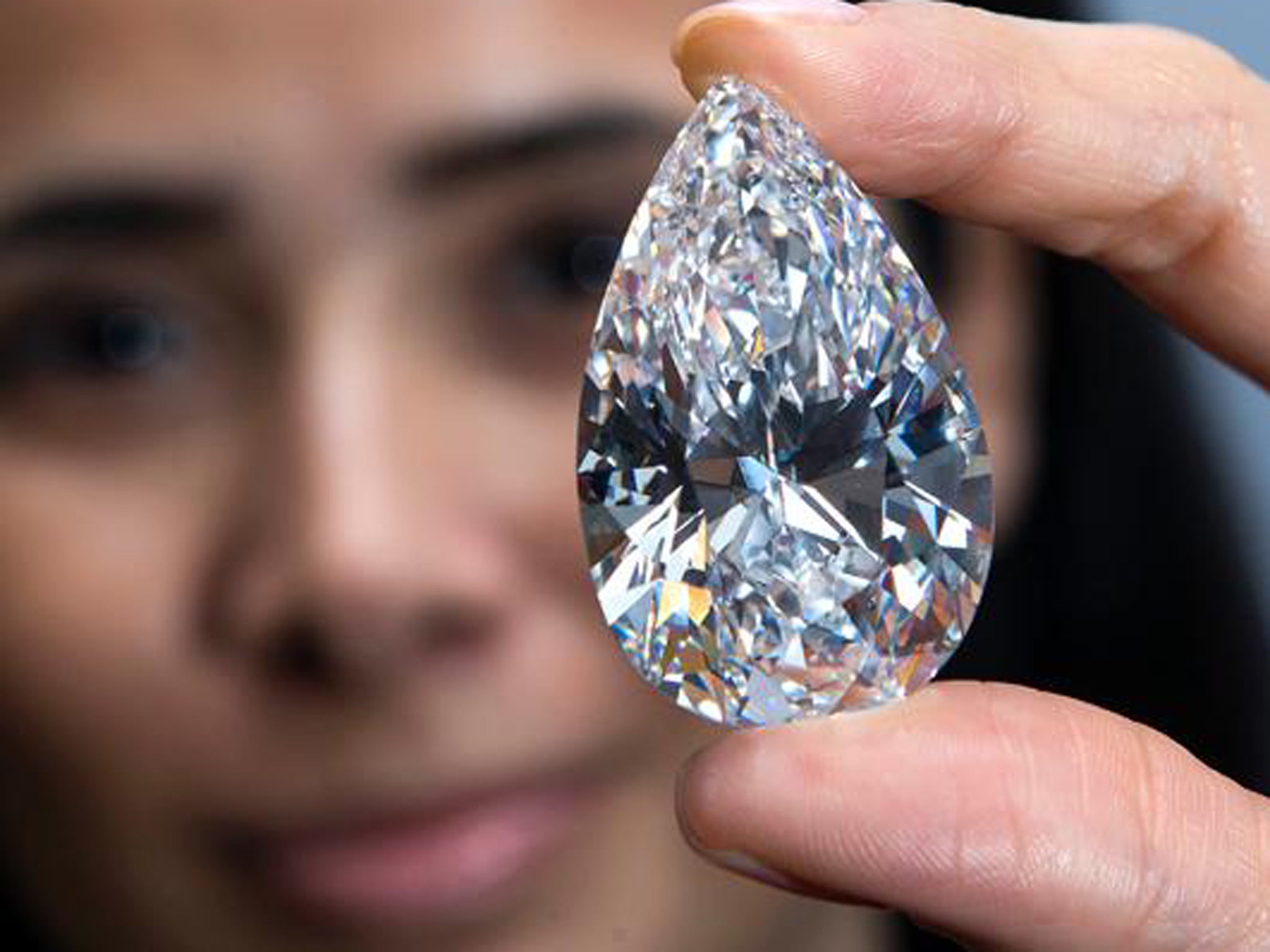 What Does The Biggest Diamond In The World Look Like at Frances Sanders
Surprising Facts to Astound Your Friends
Here’s the crazy part: the Cullinan was given to King Edward VII as a birthday present. Not stolen, not bought—gifted. The Transvaal government bought the stone and handed it over, hoping it would smooth over tensions after the Boer War. Talk about a peace offering that doubles as a backache. The King was terrified to accept it, fearing it would be seen as greedy. So, the British government agreed to cut and polish it for free, and the King got to keep the tiny shavings. Royal privilege: even the dust is yours.
Also, the Cullinan is not the biggest diamond in the universe. That honor belongs to a star called BPM 37093, a white dwarf star nicknamed “Lucy” after the Beatles song. It’s a diamond the size of the Moon, weighing 10 billion trillion trillion carats. The Cullinan is a pebble; Lucy is a celestial engagement ring for a galaxy. Sadly, you can’t put Lucy in a crown, mostly because it would melt your face off.
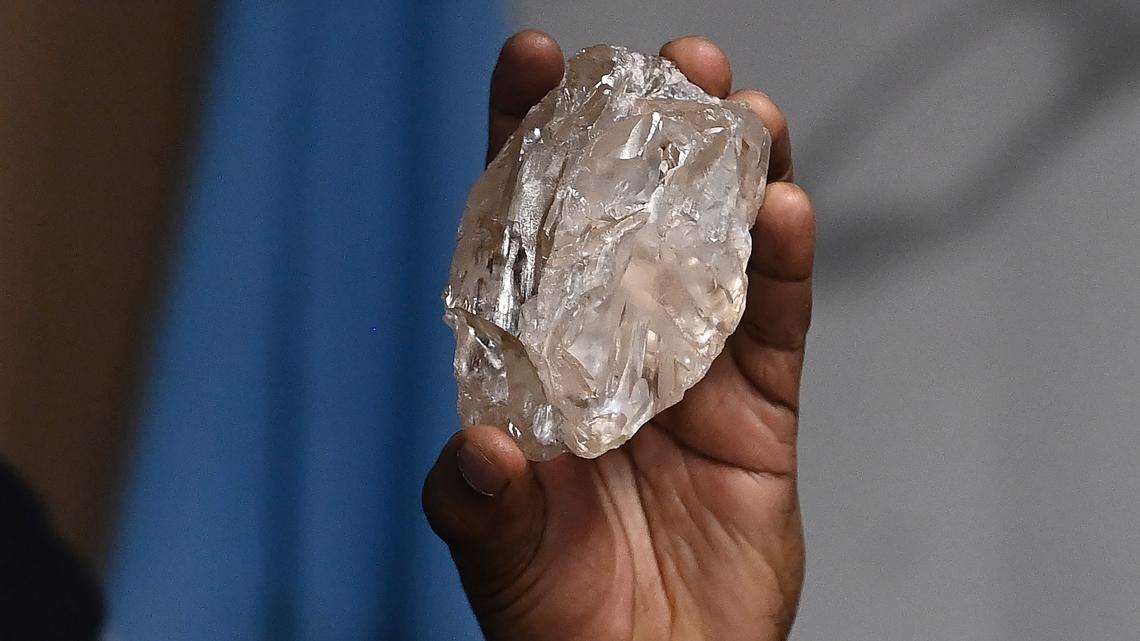 This diamond is the largest found in over a century | wthr.com
The Legacy: A Giant Rock with a Big Ego
Today, the Cullinan’s pieces are the crown jewels of the United Kingdom. They’re kept in the Tower of London, behind bulletproof glass, with guards who have zero sense of humor. If you visit, you’ll see the Star of Africa glowing like a headlight. Your brain will scream, “That’s not a diamond, that’s a headlight.” And you’d be half right.
But here’s my favorite detail: the original rough diamond, the one that started it all, is rarely shown to the public. Why? Because it’s boring. It looks like a cloudy, greasy lump of quartz. No sparkle, no shine. The Cullinan is a lesson in potential: you can be the biggest, heaviest, most absurd rock on Earth, but beauty takes a beating. It took a man fainting and a steel chisel snapping to make it pretty. So next time you complain about a haircut, remember: at least you didn’t need a fainting Dutchman to get the job done.
In the end, the Cullinan Diamond is proof that the universe has a sense of humor. It’s big, it’s absurd, and it now sits on a stick that a monarch uses to threaten small dogs. If you ever feel unremarkable, just think: you are not a 1.33-pound lump of carbon that got mailed across an ocean. And that, my friend, is a pretty good start.
