What Is The Difference Between Broth And Bouillon

You’re standing in the grocery aisle, a box of broth in one hand and a pack of bouillon cubes in the other. They look like they could be cousins, maybe even twins. But veteran...

You’re standing in the grocery aisle, a box of broth in one hand and a pack of bouillon cubes in the other. They look like they could be cousins, maybe even twins. But veteran cooks will tell you there’s a real difference, and it’s not just about the price tag. Let’s break it down like a lazy Sunday afternoon conversation.
What is Broth, Really?
Broth is the old soul of the kitchen. It’s a simmered liquid, usually made from meat, bones, and aromatics like onions and celery. The process is simple: you toss everything into a pot, cover it with water, and let it gently bubble for a few hours.
Strain out the solids, and you’re left with a golden or amber liquid that’s loaded with flavor. It’s not as thick as stock (which gets its body from bones), but it’s more of a direct, meaty taste.
Must Read
The Secret Life of Bouillon
Bouillon is essentially dehydrated broth. It comes as a cube, a powder, or a paste, designed to be dissolved in hot water. The word itself comes from the French verb bouillir, meaning “to boil,” which is funny because you rarely boil it yourself.
To make bouillon, manufacturers cook down broth until it’s a concentrated, shelf-stable block. They often add salt, MSG (yes, it’s natural and safe), and a few stabilizers to keep it from turning into a brick of sludge.
So, What’s the Actual Difference?
The core difference is convenience versus control. Broth is a whole food you’ve seasoned yourself; bouillon is a shortcut with a fixed flavor profile. Think of broth as a hand-knitted sweater and bouillon as a warm, reliable fleece from the store.
Broth often contains gelatin from bones, giving it a subtle richness. Bouillon cubes have that same savory note, but they’re usually built around a base of salt and yeast extracts to mimic that depth.
One isn’t “better” than the other—they just belong in different situations. Broth is your centerpiece; bouillon is your sidekick.
A Cultural Lens on the Debate
In Japan, dashi is the king of broths, made from kombu seaweed and bonito flakes. Nobody uses bouillon cubes for a proper miso soup. Meanwhile, in the Caribbean, a Maggi cube (a famous bouillon brand) is practically a national treasure in rice and stew recipes.
In France, a homemade bouillon pot used to be a permanent fixture on the stove—a lazy alternative to making fresh stock every day. That tradition is basically a DIY version of what we buy in boxes today.
Practical Tips for the Modern Kitchen
Use broth when the liquid is the star of the dish. Think soups, risottos, or a simple sipping bowl with ginger and turmeric. The flavor is cleaner and less salty, so you control the seasoning.
Use bouillon when you need a quick hit of savory flavor for braising, stewing, or adding to a pan sauce. Just remember: crumble it first to ensure even dissolving, and go easy on extra salt.
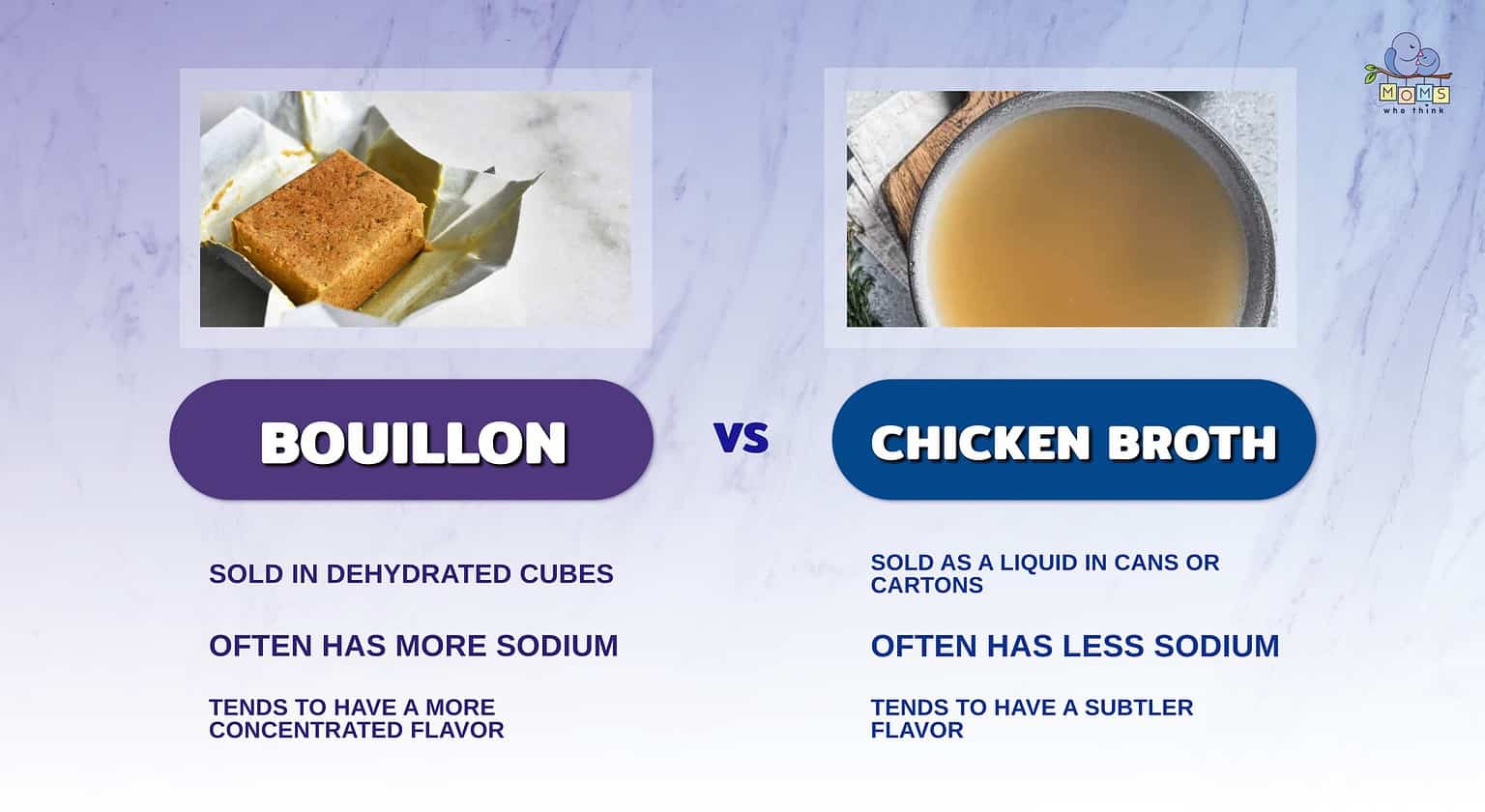 Bouillon vs. Chicken Broth: How They're Different & Nutrition Comparison
Pro tip: Keep a jar of vegetable bouillon paste in your fridge. It’s less dusty than cubes and mixes instantly into hot water—like a health potion for weeknight pasta.
Fun Facts to Drop at Dinner
The first commercial bouillon cubes were invented by the Swiss company Maggi in 1908. They were originally marketed as a way to “strengthen the blood” for factory workers. That marketing is outdated, but the convenience is timeless.
Broth has a shorter shelf life—about a week in the fridge after opening. Bouillon cubes, meanwhile, can survive a nuclear winter. Seriously, they last years in a cool, dry place.
If you’re vegan, be careful: many “beef” or “chicken” bouillons still contain traces of the real thing. Look for vegetable-specific bouillon, which is usually made from mushroom, celery, and tomato powders.
Can You Swap One for the Other?
Absolutely, but adjust the sodium. One bouillon cube dissolved in a cup of boiling water equals about one cup of broth—in theory. In practice, the cube will be saltier, so dilute it with an extra quarter cup of water.
If a recipe calls for 4 cups of broth and you only have cubes, use 4 cubes and 4 cups of hot water. Let them dissolve fully before adding to the pot. No one wants a gritty grain in their velvety soup.
My favorite hack? Use broth for dishes where you sip (like a clear consommé or pho), and bouillon for dishes where you mix (like a lentil stew or gravy).
A Short Reflection for Daily Life
In the end, the difference between broth and bouillon is a gentle reminder that we don’t always have time to simmer our lives from scratch. Some days you’re a slow-cooked pot of flavor, rich and intentional. Other days you’re a perfectly good cube, doing a solid job in a hurry.
Both are valid. Both feed you. The only real sin is forgetting that a little salt goes a long way—in your soup, and in how you treat yourself.
So next time you reach for that box or cube, smile. You’re not just making dinner; you’re choosing your vibe for the evening. And that, my friend, is a beautiful thing.
