What Temperature Should A Chicken Be Cooked To

Alright, let’s talk chicken. You know, that glorious bird that can go from amazing to armor-plated in about 60 seconds flat. We’ve all been there—cutting into a breast and won...
Alright, let’s talk chicken. You know, that glorious bird that can go from amazing to armor-plated in about 60 seconds flat. We’ve all been there—cutting into a breast and wondering if we’re about to eat a delicious meal or a science experiment gone wrong. So, what’s the magic number?
The Golden Rule (It’s Not 165°F… Well, It Is, But Let Me Explain)
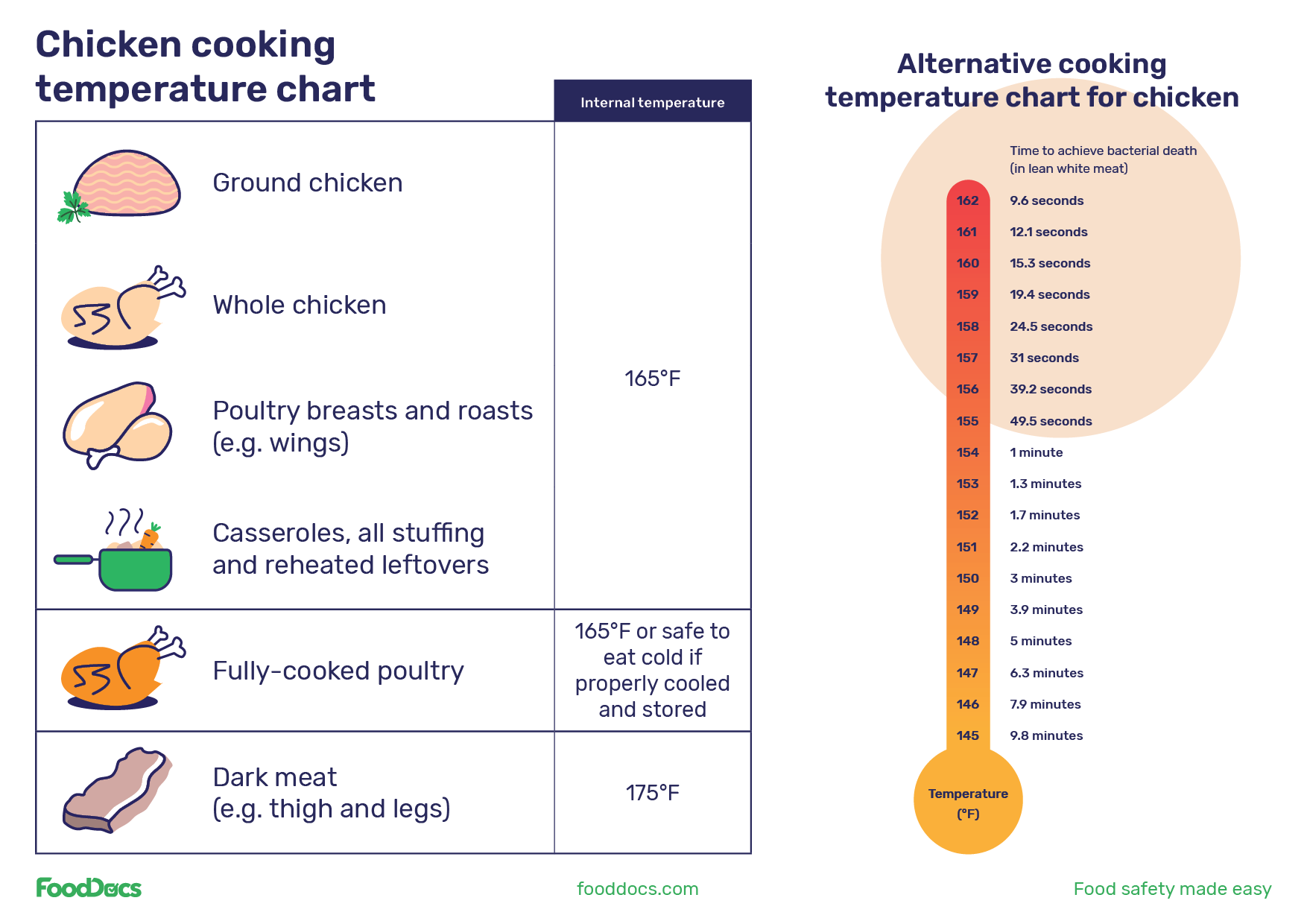
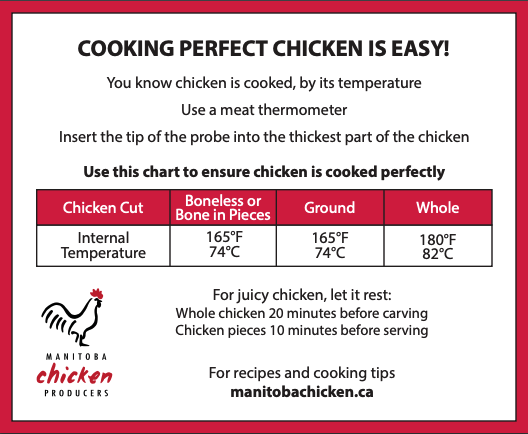
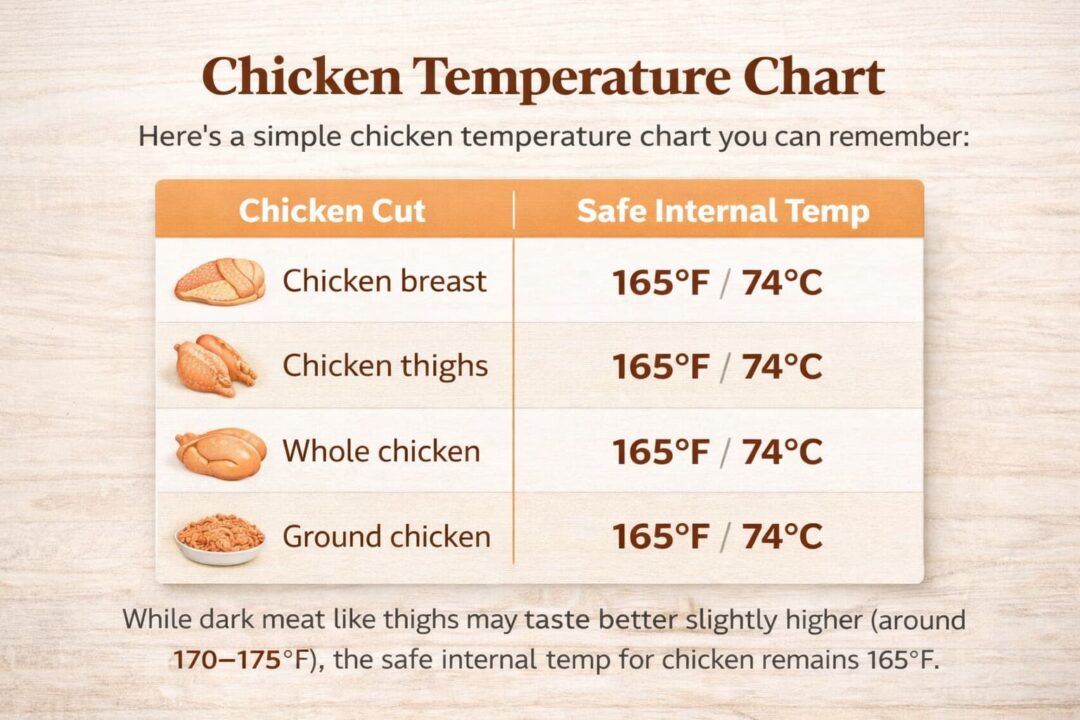
The official word from the USDA—those lovely folks who keep us from salmonella surprise parties—is 165°F (74°C). That’s the internal temperature where bacteria like Salmonella and Campylobacter throw in the towel. But here’s the juicy secret: 165°F is the absolute safety floor, not always the flavor ceiling.
If you pull a chicken breast at exactly 165°F, it’s safe. But it might also be about as moist as a desert tumbleweed. The real trick is knowing that time plus temperature is your true best friend.
Must Read
The "Holding Time" Hack (Or, How to Get Juicy, Not Leather)
Here’s the nerdy-but-helpful bit: you can cook chicken to 155°F and hold it there for about 45 seconds, and it’s just as safe as 165°F. The heat kills the bacteria over time, not just at one instant. Think of it like a slow dance, not a slamming door.
So if you’re making a thick chicken breast, aim for 155-160°F, then let it rest on the counter for 5-10 minutes. That carry-over cooking will push it to 165°F without making it taste like a cardboard shoe. Your dinner guests will think you’re a wizard.
White Meat vs. Dark Meat: The Drama of the Chicken
Let’s be real: breast meat and thigh meat are basically cousins who don’t get along. White meat (breasts, tenderloins) is lean and delicate. It dries out faster than a funny joke in a silent library. For these parts, aim for 160-165°F max.
Dark meat (thighs, drumsticks, wings) is the cooler, more forgiving relative. It’s got more fat and connective tissue, which means it actually loves a bit of heat. Cook thighs to 175-190°F—yes, really! At that temp, the collagen melts into gelatin, making it spoon-tender and ridiculously juicy.
Don’t be scared of that higher number for dark meat. It’s like the chicken saying, “I’m a little rough, but I’m worth the effort.” Trust the process.
 How to Properly Cook Chicken | Manitoba Chicken
How to Check (Without Playing Chicken Roulette)
Please, for the love of all that is crispy, use an instant-read thermometer. Guessing by color is like navigating a minefield with a blindfold and a wish. Pink doesn’t always mean undercooked (smoked chicken can look pink), and white doesn’t always mean safe.
Stick the thermometer into the thickest part of the meat, avoiding the bone (the bone lies, like a politician). Wait 5 seconds for the reading to stabilize. If it’s not there yet, that’s okay—your chicken isn’t judging you. It’s just not ready for its close-up.
What About Ground Chicken? (The Risky Business)
Oh, ground chicken. You’re delicious ($.25 meatball who?), but also a bit messy. Because grinding surface area equals more bacteria mixing potential, ground chicken must hit 165°F everywhere. No exceptions. No “I’ll just pink it up with ketchup.” Nope.
Think of it like this: if you wouldn’t eat the raw dough, don’t eat the undercooked ground bird. But once it hits 165°F, you’ve got a blank canvas for tacos, patties, or secret-ingredient meatloaf. You’re the hero here.
The Leftover Hangover (Or, How to Reheat Like a Boss)
Leftover chicken is a gift from yesterday’s you to today’s you. But reheating it? That’s where dreams go to die or get resurrected. Reheat chicken to at least 165°F again, but don’t nuke it into oblivion. Use a little broth, a drizzle of oil, or a covered pan to bring back the joy.
Microwaves are the enemy of texture—use them wisely, or you’ll end up with chicken that’s simultaneously hot and cold, like a winter pool party. A low oven (350°F) or a pan with a lid is usually your best bet.
 Chicken Internal Temp: The Secret to Safe, Perfect Chicken - Foodiosity
The "Wait, I Forgot the Thermometer!" Panic Plan
If your thermometer is in the dishwasher or you’re at a picnic with only a fork and a dream, use the touch test. Press the thickest part of the chicken with your finger. If it feels firm with a little give (like the fleshy part of your palm between thumb and forefinger), it’s probably done. But honestly? That’s a guess, not science. You’re better off cutting into the thickest part and checking if the juices run clear.
If the juices are pink or cloudy? Back in the pan, soldier. If they’re clear? You’re probably fine. Still—buy a $10 thermometer. Your future self will high-five you.
When In Doubt, Brine It Out
A quick brine (even just 30 minutes in salt water) changes everything. It helps the meat stay moist even if you go a few degrees over. Salt is basically chicken therapy. It also adds flavor, which is never a bad thing unless you’re using expired pickle juice—which is, weirdly, also pretty good. Don’t ask.
The Uplifting Conclusion
So here’s the truth: 165°F is your safety net, but 155°F plus a rest is your flavor playground. You’ve got the knowledge now. You are armed with numbers, patience, and a sense of humor. You’re not just cooking chicken—you’re conducting a tiny, delicious orchestra where every note is moist and safe.
Go forth, brave chef. Roast that bird. Pan-sear that thigh. Grill that breast with confidence. And when your friends ask, “How’d you get this so perfect?” just smile, wink, and say, “It’s all about the temp, baby.” Then take a bite, close your eyes, and remember: you’ve got this. The chicken believes in you.
Now go eat something wonderful. You deserve it. 🍗✨
