What Temperature Should Turkey Breast Be Cooked At

Okay, friend. Let’s talk turkey. The breast, specifically. That big, beautiful, lean hunk of white meat that can either make you a holiday hero or a dry, sad villain. We’ve al...
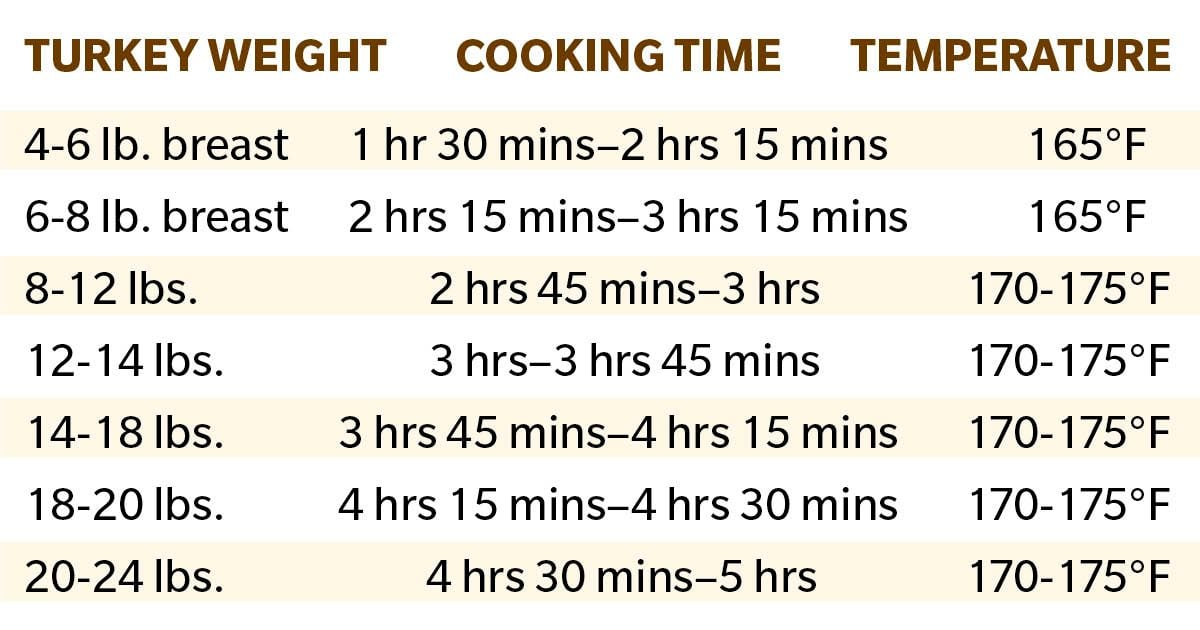
Okay, friend. Let’s talk turkey. The breast, specifically. That big, beautiful, lean hunk of white meat that can either make you a holiday hero or a dry, sad villain. We’ve all been there. You slice into it, hoping for juicy perfection, and instead you get sawdust. The horror.
The first question is temperature. Not the oven temp, silly. Well, yes, that too. But really, the internal temperature is your one true north. It’s the difference between a standing ovation and a silent, chewing pity party.
The Golden Number: 165°F (or is it?)
The USDA says 165°F. Full stop. That’s the magic number for safety. Salmonella doesn’t stand a chance, and you won’t give anyone a trip to the ER. But here’s the secret whisper among chefs: that’s a little high for a perfectly juicy breast.
Must Read
Think about it. By the time the thickest part hits 165°F, the thinner parts are already over 170°F. That’s the desert zone. You’re basically eating dry, flavorless clouds. Don’t do it. Not without a plan.
The "Pull Early" Trick (Please Try This)
Here’s the pro move: pull the turkey breast out of the oven when the internal temp hits 155°F to 158°F. I know. I see your raised eyebrow. Hear me out.
Carryover cooking is real magic. That breast will continue to cook for another 10 to 15 minutes while it rests. It will cruise right up to 165°F on its own, but it will have stayed juicier the whole time. The juices don’t get a chance to pack their bags and leave.
So, your target for the oven probe thermometer is 155°F. Trust the process. Your future self, chewing happily, will thank you.
Okay, But What About the Oven Temp?
Ah, right! The actual oven temperature. You can’t just toss it in at 450°F and hope for the best you lunatic. Well, you could, but the outside would burn before the inside wakes up.
I’m a fan of the 325°F sweet spot. It’s low enough to cook evenly, but high enough to get that gorgeous golden skin. If you want crispy skin (and who doesn’t?), blast it at 425°F for the last 20 minutes. But only if you’re brave.
Another option? 350°F if you’re short on time. It works. It’s a little more aggressive, so check your temps early. A boneless breast will cook faster than a bone-in one. Bones are like little heat shields. Remember that.
Brining: The Unsung Hero
We haven’t even talked about brining. Is it a hassle? Yes. Is it worth it? Absolutely. A wet brine (salt, sugar, water) or a dry brine (salt rub, fridge, 24 hours) changes the game.
Brining helps the meat hold onto moisture even if you accidentally wander into 170°F territory. It’s like an insurance policy for your dinner. Plus, it makes the meat taste more like turkey, which is the whole point.
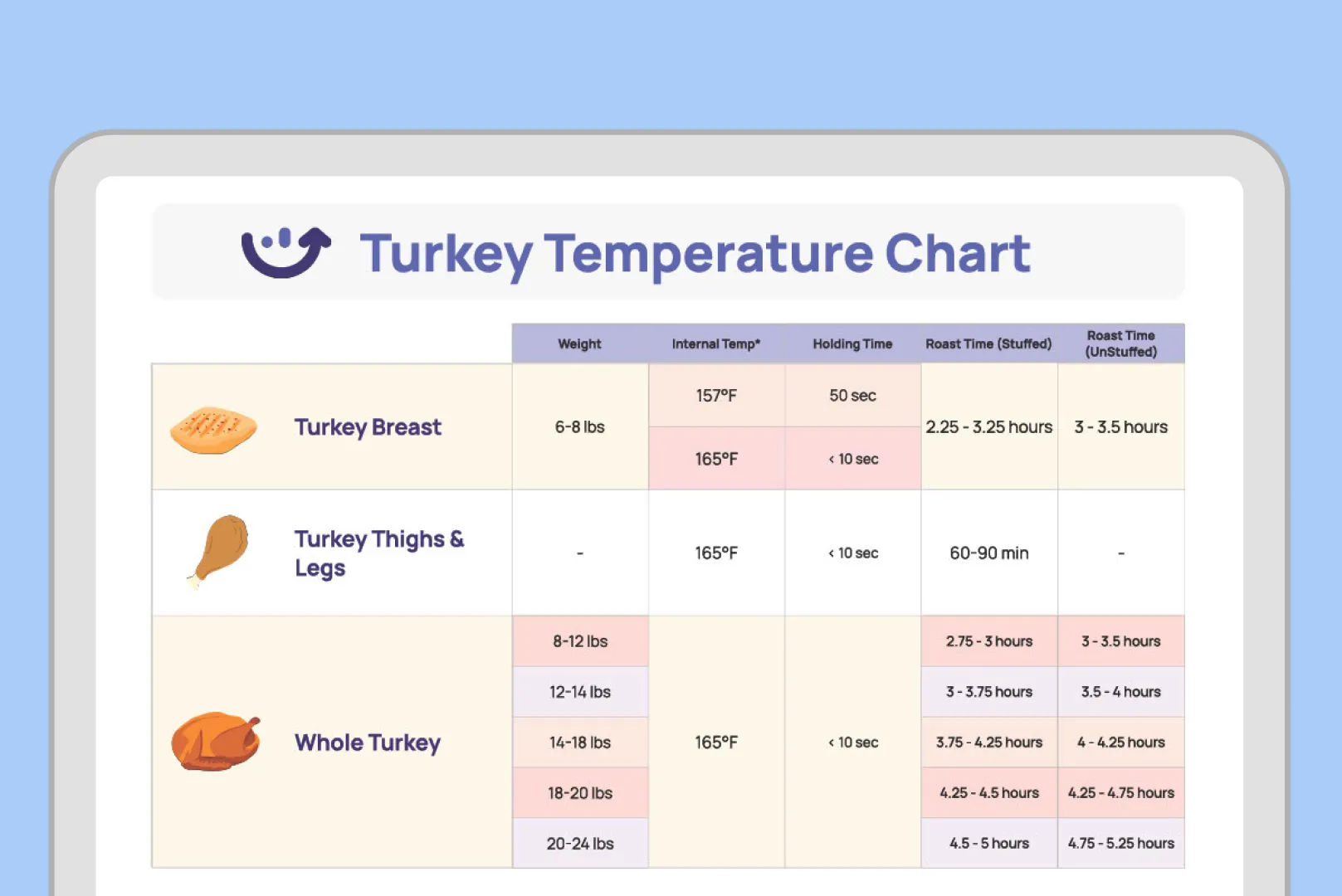 Turkey Temperature Chart | Free Tools by Xenia
If you don’t brine, at least salt the breast generously the night before. You’ll thank me when you take that first bite. You’re welcome.
Tools of the Trade (Don’t Wing It)
You need a good instant-read thermometer. Not the one from 1992 that’s in your junk drawer. A digital one. Thrust it into the thickest part of the breast, avoiding the bone. That is how you know.
Don’t rely on timing. Timing is a liar. "Oh, a five-pound breast takes 90 minutes!" Sure, if your oven is calibrated by a drunk gnome. Trust the temp, not the clock.
Also, let it rest. For at least 15 minutes. Tent it loosely with foil. If you slice it right away, all those hard-won juices will flood your cutting board. What a waste. Let them settle back into the meat.
What About Stuffing?
If you’re cooking a whole turkey breast, are you stuffing it? Stop it. Stuffing the cavity is a one-way ticket to food poisoning city. The stuffing has to reach 165°F too, and by then the breast is a hockey puck.
Cook your stuffing separately. In a dish. With extra butter. It’s better. It’s safer. And you can eat it straight from the pan at 2 AM. No judgment.
The Final, Uncomfortable Truth
So, what temperature? For the oven: 325°F. For the meat: aim for 155°F before you let it rest. Let it coast to 165°F on its own. That’s the cheat code.
Is it scary? A little. You’re breaking the "rules." But rules are for people who like dry turkey. You are not that person. You are a turkey whisperer now. Go forth and roast.
And if you mess up? Eh. Gravy fixes almost everything. Almost. Happy cooking, you absolute legend.
