What's The Difference Between A Kilometer And A Mile

Let’s be honest—kilometers and miles are kind of weird, right? We all know they measure distance, but why do we have two different systems in the first place? It’s like having...
Let’s be honest—kilometers and miles are kind of weird, right? We all know they measure distance, but why do we have two different systems in the first place? It’s like having two different sizes of coffee mugs when all you want is a caffeine fix.
So, what’s the real difference? Grab your imaginary coffee and let’s chat it out.
The math of it
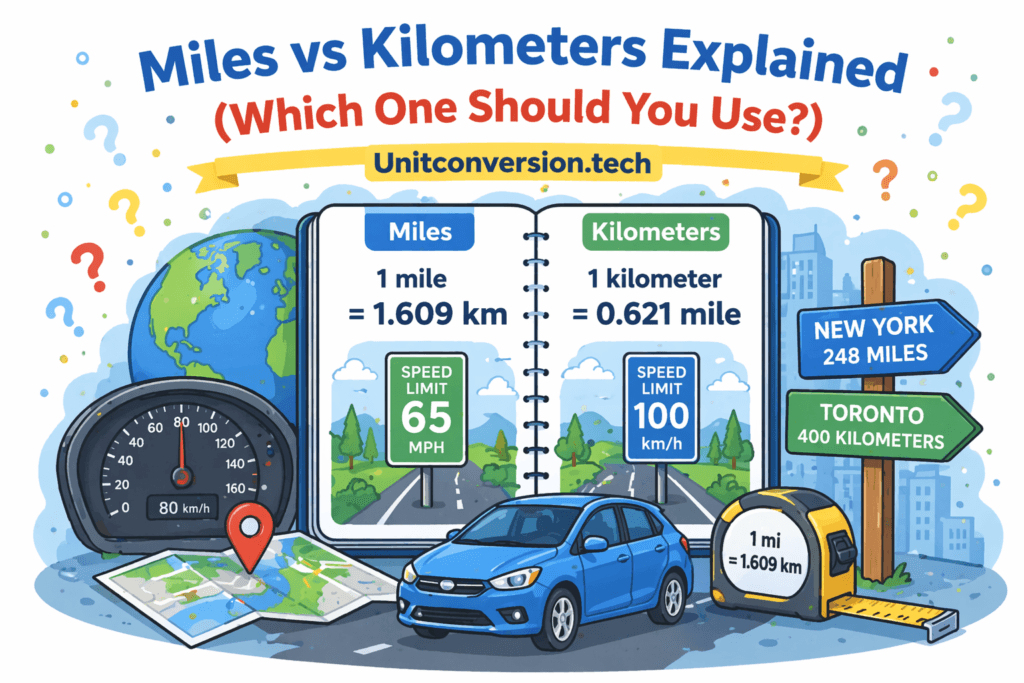
Here’s the nitty-gritty: one mile equals about 1.609 kilometers. That’s not a nice, round number, is it? It’s like someone decided to make life just a little bit more complicated.
Must Read
Meanwhile, one kilometer is roughly 0.621 miles. Still not pretty. Basically, a mile is longer—by about 60%.
If you’re driving 100 miles, that’s roughly 161 kilometers. And if you’re biking 10 kilometers? That’s just over 6 miles. See? Annoying, but doable.
Why two systems exist
The mile comes from ancient Rome. Seriously. Romans used “mille passus,” which meant a thousand paces. One pace was about five feet. So a mile was roughly 5,000 feet back then. Fun fact: Today, it’s exactly 5,280 feet. Why the change? Blame the British and their obsession with precise land measurement.
Kilometers, on the other hand, are French. Surprise, surprise. The metric system was born during the French Revolution. They wanted something clean and rational—based on the Earth’s circumference. A kilometer is one ten-thousandth of the distance from the North Pole to the equator. Very fancy. Very European.
Most of the world uses kilometers now. The United States, Liberia, and Myanmar are the stubborn holdouts. You know who else? The UK, but only for road signs. They’re complicated.
Everyday life: miles vs. kilometers
Let’s talk about running. If you’re an American and you say, “I ran 5 miles today,” that sounds impressive. It’s about 8 kilometers. If you’re in Europe and say, “I ran 5 kilometers,” that’s only 3.1 miles. Same number, very different flex.
Driving is where it gets hilarious. In the U.S., a 20-mile commute feels like a short trip. In Canada, a 20-kilometer drive feels like you’re going to the moon. Spoiler: 20 kilometers is only 12.4 miles. Your Canadian friend is just dramatic.
And speed limits? In the U.S., you see 65 mph. In Europe, you see 100 km/h. That 100 km/h is actually only about 62 mph. So Europeans drive slower on paper but faster in spirit. Mind games.
 Kilometer in Math – Definition, Example, Unit, Facts
Quick conversion tricks (so you don’t look silly)
Want a rough conversion? Multiply miles by 1.6 to get kilometers. Or divide kilometers by 1.6 to get miles. Easy enough, right? But let’s be real: who has time for that when you’re late?
Here’s a cheat: 5 miles is about 8 kilometers. 10 miles is 16 kilometers. 100 miles is 160 kilometers. Memorize those three. You’ll sound like a geography genius at parties.
Another trick: half a mile is roughly 800 meters. That’s four laps around a standard track. Now you know why Olympic runners look so tired.
When the confusion gets real
Ever watch a European movie where someone says, “The village is 50 kilometers away”? Your brain does mental gymnastics. Is that far? Not far? Answer: 50 kilometers is 31 miles. That’s a solid Saturday bike ride. Unless you’re American—then it’s a trip to the next town over.
NASA once crashed a Mars orbiter because one team used miles and another used kilometers. True story. A $125 million mistake. So yeah, knowing the difference saves lives—and spacecraft.
Which one should you use?
If you live in the U.S., stick with miles. You’ll confuse fewer people, and gas stations won’t judge you. Probably. Everywhere else, go with kilometers. It’s cleaner, and you’ll fit in with the cool global crowd.
But honestly? Use whatever makes you happy. Just know that if you mix them up on a road trip, you might end up in Canada when you meant to go to Mexico. Rookie move.
So next time someone asks, “What’s the difference between a kilometer and a mile?” you can smile, sip your coffee, and say: “About 0.6 of a mile, but also a whole lot of history.” Then watch them nod, confused. That’s the fun part.
