Whats The Difference Between Kosher And Iodized Salt

Let’s be honest: you’ve probably stood in the spice aisle, staring at two boxes of salt, totally confused. One says “Kosher,” the other says “Iodized,” and they both look like...

Let’s be honest: you’ve probably stood in the spice aisle, staring at two boxes of salt, totally confused. One says “Kosher,” the other says “Iodized,” and they both look like, well, salt. You grab whichever one is cheaper, and life goes on. But the truth is, these two salts are surprisingly different, and knowing the difference can actually make your cooking better and your life a little easier.
First, a little salt chemistry (the fun kind)
Both kosher salt and iodized salt are mostly sodium chloride—the stuff that makes food taste like itself. But the shape of their crystals is where the real story begins. Iodized salt is made of tiny, uniform cubes that pack together tight, like a bunch of tiny dice in a box. Kosher salt has big, irregular, flaky crystals that look more like tiny snowflakes or pyramids.
Why the shape matters for your fingers
If you’ve ever watched a chef cook on TV, you’ll notice they pinch salt from a bowl and sprinkle it from high above the pan. That’s almost always kosher salt. Because the flakes are big and light, you can actually feel how much you’re grabbing between your thumb and fingers. Iodized salt is so fine that you end up with a tiny, dense pile—and it’s way easier to over-salt your dinner.
Must Read
The iodine thing: a tiny health hero
Iodized salt gets its name from one tiny addition: iodine. Back in the 1920s, doctors realized many people weren’t getting enough iodine, which is crucial for your thyroid. So they started adding it to table salt. It’s a public health win, like putting vitamin D in milk. If you don’t eat much seafood, seaweed, or dairy, iodized salt can be a quiet helper for your body.
Does kosher salt have iodine? Nope—and here’s why
Most kosher salt is pure—just salt, no additives. That’s part of its charm for chefs. But because it’s missing iodine, you won’t get that extra thyroid boost. That’s totally fine if you eat a balanced diet or take a multivitamin. My grandmother swears by kosher salt for everything, and she’s 88, so it’s not a crisis. Just something to keep in mind if you rarely eat fish or eggs.
The taste test: can you really tell the difference?
Honestly, if you taste a single grain of each side by side, they’re both salty. But because iodized salt crystals are smaller and denser, they dissolve faster on your tongue. That can make iodized salt taste a tiny bit “sharper” or more metallic to some people. Kosher salt dissolves more slowly, giving you a softer, more gradual saltiness. Most home cooks won’t notice the difference in a soup, but sprinkle them on a tomato slice, and you’ll feel it.
A story from my kitchen (the day I ruined the chicken)
One time, I was making a roast chicken and blindly grabbed the iodized salt instead of my usual kosher. I did my normal “pinch and sprinkle” move, but because the crystals are so small, I ended up with twice as much salt on the skin. The skin tasted like a salt lick. My husband politely asked, “Is this a new recipe?” It wasn’t. That’s when I learned that measuring matters—a teaspoon of kosher salt is actually about half as salty as a teaspoon of iodized salt because the flakes take up more space.
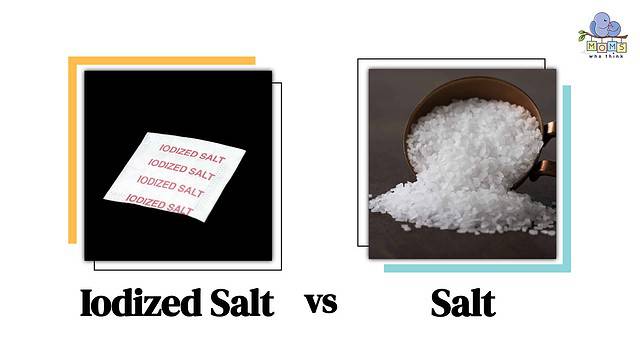 Kosher vs. Iodized Salt: Two Unique Differences & Which is Healthier
When to use each one (no stress, I promise)
Think of kosher salt like your general-purpose tool. Use it for seasoning pasta water, roasting vegetables, salting meat before cooking, and just about anything where you can see what you’re doing. It’s forgiving and fun to use. Iodized salt is perfect for baking (where you need it to dissolve quickly into dough) or for everyday table use, like shaking onto popcorn or a baked potato. Neither is “wrong”—they just have different jobs.
What about the word “Kosher”? Does it mean it’s blessed?
Great question! The name “kosher salt” actually comes from its traditional use in the Jewish practice of koshering meat. The big flakes were perfect for drawing out blood from meat, which is part of the kosher process. Today, most kosher salt isn’t actually certified kosher (check the label if that matters to you), but the name stuck. It’s a little like calling something “French bread” even if it was baked in Ohio.
The bottom line: just pick one and be happy
Here’s the honest, easy-going truth: you don’t need to replace your whole salt collection. If you only have iodized salt, your food will be perfectly fine—just use a little less. If you only have kosher salt, your food will be more forgiving and easier to season. The most important thing is to taste as you go and not stress over which box you grabbed. Salt is salt, but knowing these tiny secrets can turn a bland meal into a delicious one.
So next time you’re at the store, smile. You now know that kosher salt is the flaky, chef-friendly friend, and iodized salt is the reliable, health-conscious buddy. They can both live in your cupboard without fighting. And if you ever accidentally swap them, just laugh it off—we’ve all been there. Now go sprinkle something with confidence.
