What's The Internal Temperature For Chicken Breast

Okay, let’s talk chicken. Specifically, let’s talk about that dreaded moment when you cut into a beautiful, golden-brown breast, only to find it’s either a shocking shade of p...
Okay, let’s talk chicken. Specifically, let’s talk about that dreaded moment when you cut into a beautiful, golden-brown breast, only to find it’s either a shocking shade of pink or, equally tragic, a dry, sad piece of leather. The answer, my friend, lies in one magical number: the internal temperature. And I promise, this is way less stressful than trying to assemble IKEA furniture.
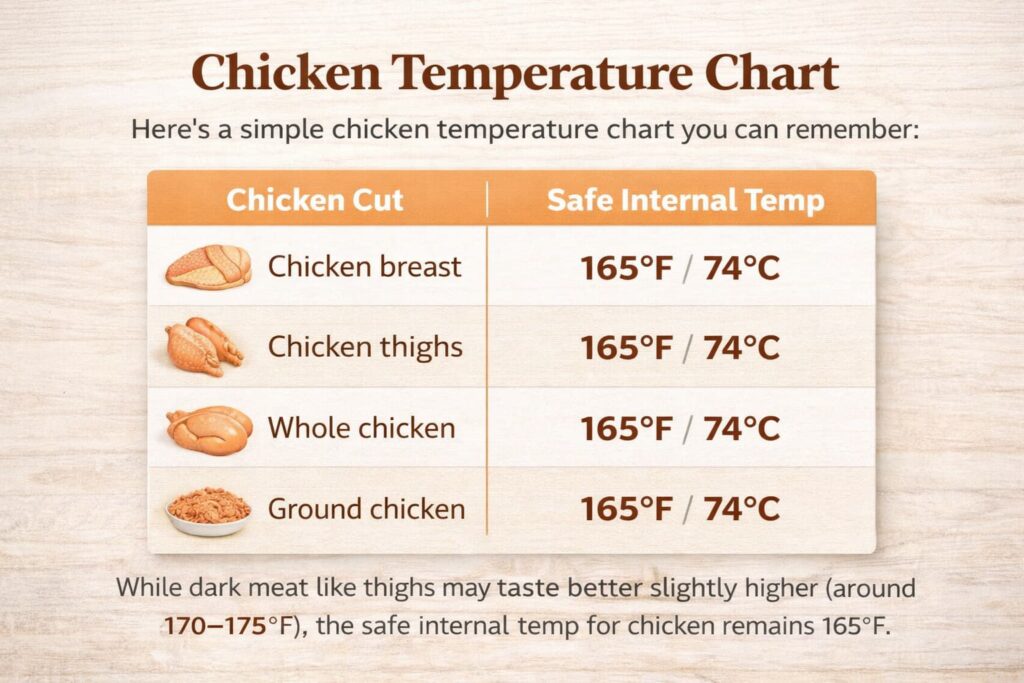
The USDA (those very serious people who keep our food safe) says the magic number for chicken breast is 165°F (74°C). That’s it. That’s the ticket to a juicy, safe, and delicious dinner. Think of 165°F as the finish line for your chicken—cross it, and you’ve won the race against salmonella.
Now, why 165°F? Well, at that temperature, harmful bacteria like Salmonella and Campylobacter basically throw a tiny, sad little party… and then immediately die. It’s the scientific equivalent of a “game over” screen for germs. You want that screen. No one wants to play “Guess the Food Poisoning Symptom” later that night.
Must Read
But here’s the thing: carryover cooking is your secret weapon. When you pull your chicken off the heat at exactly 165°F, it will continue to cook for a minute or two. That means it can actually rise to 170°F or more, which is a one-way ticket to Drytown, USA. So, pull it off when it hits about 160-162°F.
The Tools of the Trade (AKA, Don't Be a Hero)
You need a meat thermometer. I know, I know, you think you can just poke it with a fork and guess. You cannot. Your eyes are not calibrated. Your fork does not have a digital display. Buy a simple instant-read thermometer. It costs less than a fancy coffee drink, and it will save your dinner.
Stick the probe into the thickest part of the breast. Avoid the bone if you have a bone-in breast, because bones conduct heat and will give you a fake reading. It’s like lying to yourself, and we don’t do that here. We are honest, thermometer-wielding champions.
Pro tip: If you’re cooking multiple breasts, check the biggest one. If it’s safe, the rest are probably safe, too. Unless you have a mutant tiny chicken breast hiding in the pan. Watch out for those. They play tricks.
The “Is It Done?” Panic Attack: Solved
What if you cut into the chicken and it’s still a little pink near the bone? Stay calm. Color is not a reliable indicator of doneness. Especially with young chickens or those brined in certain ways, the meat can stay pinkish even when fully cooked. Trust the thermometer, not your eyes. Your eyes are also bad at guessing how much you’ve spent on Amazon this month. See? They can’t be trusted.
Here’s another hot tip: if your chicken breast is really thick, pound it to an even thickness before cooking. This prevents that awful scenario where the thin end is a burnt crisp and the thick end is still raw and wobbly. A rolling pin, wine bottle, or even a heavy skillet works great. Plus, it’s a surprisingly satisfying stress reliever. Thanks for the therapy, chicken.
And what about resting time? Yes, you must let the chicken rest for about 5 minutes after it comes off the heat. This lets those juices redistribute so they don’t all run out onto the cutting board like tears after a bad rom-com. Resting is not a suggestion; it’s a law of deliciousness.
 Chicken Internal Temp Chart: Safe Cooking Temperatures Guide
Let’s Bust Some Myths (Because Myths Are Silly)
Myth one: “My grandma always cooked chicken until it was hockey-puck dry, and I survived.” Okay, first, my condolences to your grandmother’s oven. Second, surviving and enjoying are two different things. We’re here for enjoyment. We’re here to thrive, not just survive. Juicy chicken is your birthright.
Myth two: “If I cook it to 165°F, it’s automatically dry.” That’s only true if you hold it there for a long time. Think of it like a sunburn: a little bit of sun is nice; sitting in the sun for eight hours is a disaster. Get to 165°F, then leave it alone. Your chicken will be moist and tender.
Myth three: “You can tell by looking at the juice.” No, you can’t. Clear juice can appear even in undercooked chicken, and pink-tinged juice can appear in fully cooked chicken. Stop looking at the juice. It’s a liar. A charismatic, shiny liar. Look at your thermometer.
What Happens If You Go Over?
Let’s be real. You will accidentally hit 175°F sometimes. It happens. The chicken police do not come to your house and shame you. It will be a bit drier, but it’s still edible. Slather it in a good sauce—teriyaki, BBQ, a generous pat of compound butter—and no one will know. We’ve all been there. I’ve been there. I’ve served “lemon-herb sawdust” once or twice. We learn. We grow. We buy better thermometers.
A quick reference for your phone: Oven at 400°F, a standard 6-ounce boneless breast is usually done in 20-25 minutes. Grill on medium-high heat? About 6-8 minutes per side. But again, the thermometer is the boss of you, not the timer. The timer is just a helpful little friend who lives on your stove.
The Uplifting Conclusion (You Deserve This)
So, my friend, the secret to perfect chicken breast is not a secret at all. It’s a number. 165°F (or 160°F with carryover cooking). That’s it. That’s the whole magic spell. You now possess the knowledge to never, ever serve dry chicken again. You are a culinary hero. You are a kitchen wizard. You are the person everyone wants to invite over for dinner.
Go forth. Grill. Roast. Sauté. Thermometerize. You’ve got this. And when you bite into that perfectly cooked, succulent piece of chicken, remember: you didn’t just cook a meal. You conquered the poultry. Now go eat and be happy. You earned it.
