Where Does Airplane Toilet Waste Go

Have you ever been sitting on a plane, flushed the toilet, and then immediately wondered: where does all that stuff actually go? You’re not alone. It’s one of those weird ques...
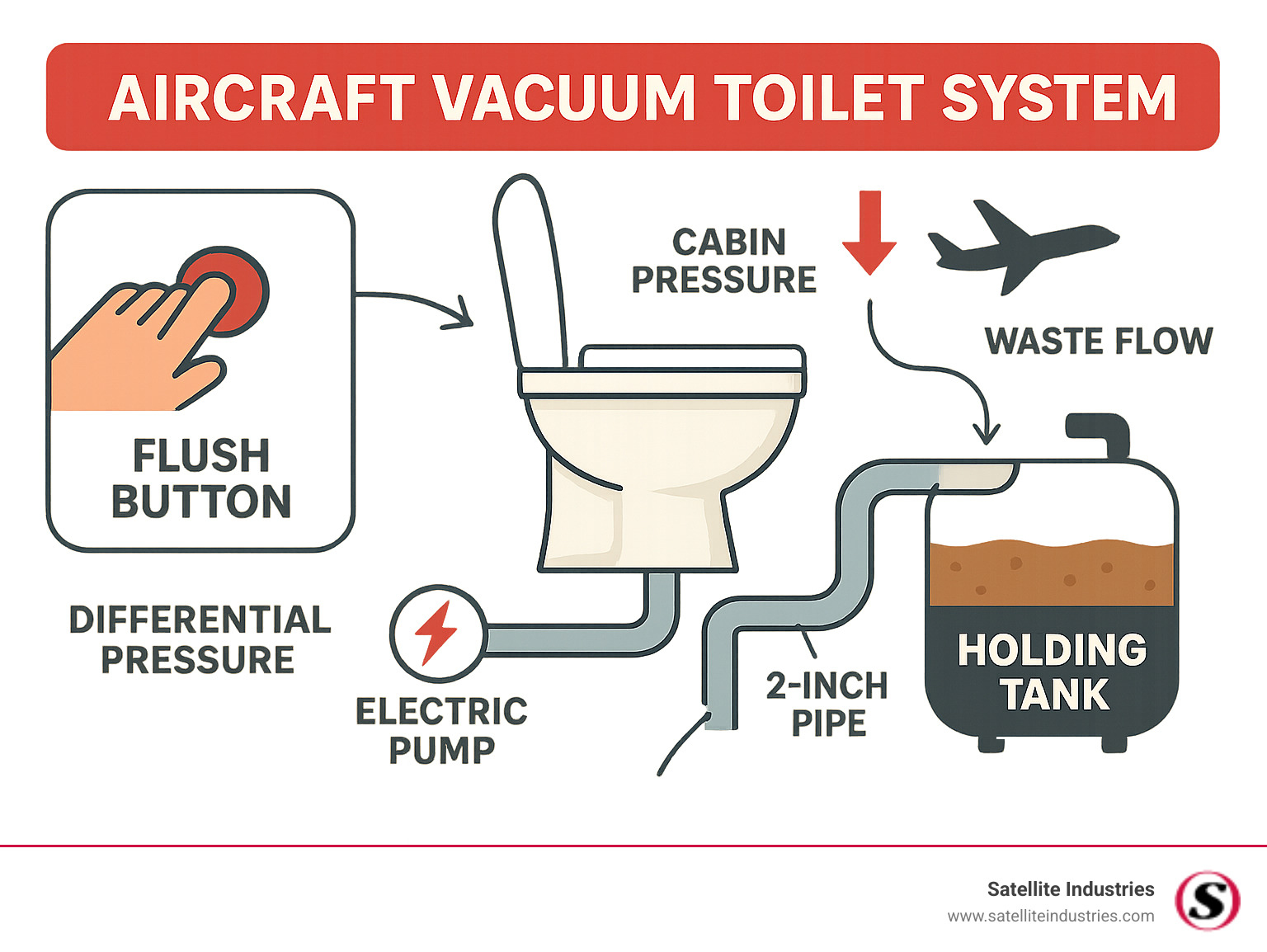
Have you ever been sitting on a plane, flushed the toilet, and then immediately wondered: where does all that stuff actually go? You’re not alone. It’s one of those weird questions that pops up at 35,000 feet, and the answer is way cooler than you’d think.
No, it does not just fall out of the plane
Let’s bust the biggest myth first. That old story about “blue ice” falling from the sky? It’s not how the system works these days. Modern airplanes don’t just dump waste mid-flight. That would be a mess—and a huge safety hazard.
Instead, everything you flush goes into a sealed tank. It stays there, safe and sound, until the plane lands. Think of it like a giant, flying camper van—but with way better plumbing.
Must Read
The magic of the vacuum flush
You’ve probably noticed the toilet makes a loud, dramatic whoosh when you flush. That’s not just for show. Planes use a vacuum system because water is heavy, and carrying gallons of it would waste fuel. Instead, a powerful suction pulls the waste into the tank using air pressure.
It’s basically a giant, high-tech straw. And just like a straw, it relies on differences in pressure to work its magic. Pretty clever for a bathroom at 500 miles per hour.
What happens when the plane lands?
Here’s the really interesting part. After the flight, a special truck called a “honey wagon” (yes, that’s its real name) pulls up to the plane. A worker hooks a hose to the tank, and everything gets sucked out. It’s like a septic service, but for a flying metal tube.
That waste is then taken to a treatment facility. There, it goes through the same process as the stuff from your home toilet. It’s filtered, treated, and cleaned until the water is safe to release back into the environment. The solid parts are processed separately.
 Where Does Airplane Toilet Waste Actually Go? - YouTube
Why you won’t see blue ice anymore
Okay, but what about those old stories? Back in the 1980s and 90s, some older planes did have a leakage problem. A blue, frozen mixture of waste and deodorizing fluid could sometimes escape from a faulty seal. As the plane descended, the ice would melt and fall to the ground.
It was rare and never a big chunk, but it made for great headlines. Today, the tanks are sturdy and the seals are much better. Unless something goes catastrophically wrong, the only thing falling from the sky is rain.
A fun comparison: airplane vs. RV
If you’ve ever emptied an RV toilet tank, you know it’s a messy, hands-on job. Airplane waste systems are a lot like that, but on a much bigger scale. The main difference? You don’t have to dump the plane’s tank at a campground. A trained crew does it for you, in about 15 minutes.
And here’s a wild fact: an average long-haul flight can collect over 100 gallons of waste. That’s enough to fill a small bathtub—several times. Imagine the smell if it weren’t sealed properly.
 Do airplanes dump human waste in flight 60 photos - Morilly.com
What about sustainability?
Here’s a cool twist: some airports are turning that waste into energy. Through a process called anaerobic digestion, the organic material can be broken down to produce biogas. That gas can then be used to power airport vehicles or even generate electricity.
So, the stuff you flush might one day help a baggage cart run. It’s a weird but wonderful example of circular thinking. Your bathroom break is part of a tiny, flying ecosystem.
So, can you relax now?
Yes. The next time you hear that loud whoosh in the airplane bathroom, you can smile, knowing your waste isn’t falling on someone’s house. It’s safely stored, professionally handled, and sometimes even recycled into something useful.
It’s one of those hidden, behind-the-scenes systems that makes modern flight so amazing. And honestly? The fact that a whole waste management process happens silently under your seat is pretty awesome. Don’t you think?
