Where Does The Toilet Waste Go In A Plane

Let’s be honest—we’ve all had that moment. You’re sitting in the tiny airplane bathroom, trying to hover like a clumsy ninja, and you flush. Then comes the big question: where...
Let’s be honest—we’ve all had that moment. You’re sitting in the tiny airplane bathroom, trying to hover like a clumsy ninja, and you flush. Then comes the big question: where does that stuff actually go? It can’t just vanish into thin air, right?
Spoiler alert: it does not get dumped out mid-flight. That’s not a thing, despite what your weird uncle told you. The whole “blue ice falling from the sky” legend? Mostly a myth, though there have been a few rare, messy exceptions that made headlines.
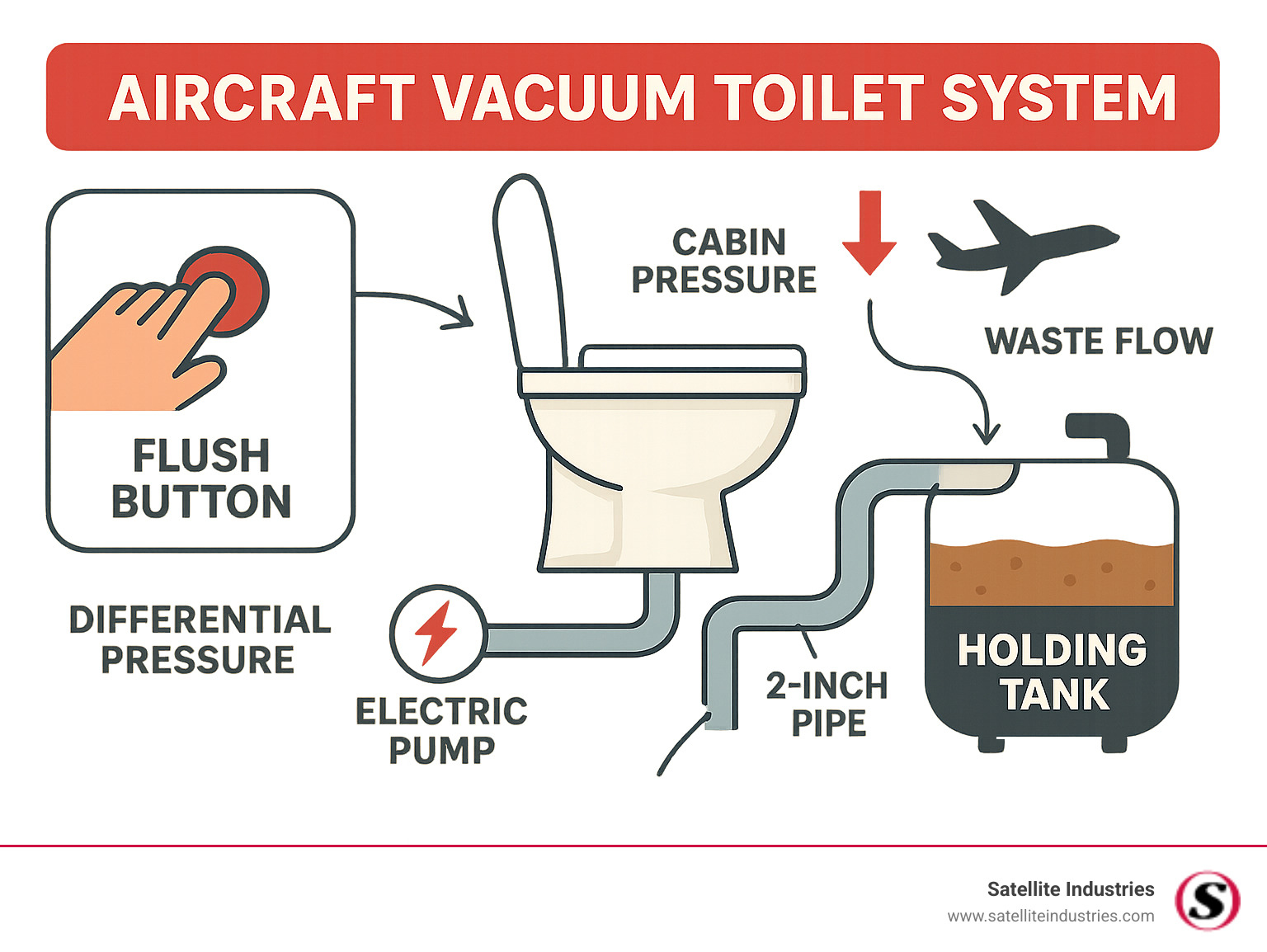
So, what really happens? Think of the plane toilet as a super-powered vacuum cleaner, not a magical disappearing toilet. When you flush, a loud, whooshing roar happens—that’s the sound of air pressure doing the heavy lifting.
Must Read
In aviation speak, it’s a vacuum waste system. A small amount of blue, antiseptic fluid helps things slide, but the real muscle comes from a powerful suction that pulls your deposit into a sealed tank. It’s like the ultimate toilet flush that even a Kardashian would envy.
That tank is tucked away in the plane’s belly, usually near the back. It’s a sturdy, pressurized container made to handle turbulence and extreme cabin pressure changes. Think of it as a very unglamorous, hidden treasure chest.
Now, here’s the funny part: you might feel a slight tug on your backside when you flush. That’s the vacuum doing its job. It’s not trying to steal your dignity—it’s just being efficient, like a very aggressive Roomba for human waste.
Once your contribution is in the tank, it sits there with everyone else’s. Yes, everyone else’s. The toilet on a plane is the great equalizer—first class or economy, your waste all ends up in the same place. Democracy in action.
So what happens when the plane lands? A shiny lavatory service truck pulls up to the plane, looking suspiciously like a giant Honey Wagon. A worker hooks up a hose, and whoosh—the whole tank gets pumped out into the truck.
That truck then drives to a specialized treatment facility. Your plane poop gets mixed with other airplane poop and processed like any other sewage. It’s not particularly glamorous, but it’s very, very practical.
 Where do airplane toilets flush to?
There’s a reason you never see this happen from the terminal window. Airlines are smart: they hide the messy part. You’re enjoying your pretzels while a professional is quietly cleaning up the evidence of 200 passengers’ travels.
I love the casual ignorance of it all. You walk off the plane, grab your carry-on, and never think twice about the fact that a team just emptied a tank full of four-hour-old turbulence angst. It’s a small miracle of modern engineering.
Let’s address the elephant in the room: the smell. Why doesn’t the cabin reek? Because the tank is sealed airtight, and the blue fluid does double duty as a deodorizer. It’s like Febreze for the underworld.
Also, the vacuum flush removes waste so fast that there’s barely any time for odors to escape. The system is designed to be faster than your embarrassment. You flush, you run, you forget.
One time, I was on a long-haul flight and the toilet stopped working. The crew put up a sign: “Lavatory Out of Service.” It sat there for four hours. I couldn’t stop imagining the pressure building up in that sealed tank, like a ticking time bomb of regret.
Of course, nothing happened. The crew just blocked it off, and the tank waited obediently until landing. It’s actually a very robust system—planes can go days without servicing if needed. But please, don’t test that.
Some people worry about germs from toilet plumes. Fair point. On a plane, the vacuum flushes downward into a sealed system, so there’s almost no aerosol splash-back. It’s actually more hygienic than your office bathroom.
 Do airplanes dump human waste in flight 60 photos - Morilly.com
Still, I always use a paper towel to open the latch. Call me paranoid, but I’ve seen that documentary. You can never be too careful with airplane lavatory handles.
Here’s a fun fact: during turbulence, the toilet system can sometimes gurgle or make weird noises. That’s the pressure equalizing, not a ghost from the septic tank. The plane is fine. You are fine. It’s just plumbing having a little panic attack.
The best part? The whole process is so efficient that the water used is only about a pint per flush. Compare that to your home toilet’s 1.6 gallons. Airplanes are practically water conservation superheroes—just not the kind you’d want to hug.
Let’s be real: nobody ever says “I wonder how the toilet works” during a smooth flight. We only think about it when something goes wrong. Like when you flush and nothing happens, and you have to awkwardly flag down a flight attendant.
That flight attendant will then reset the system by flipping a hidden switch in the galley. It’s like pressing Ctrl+Alt+Del on your toilet. And then boom—the vacuum roars back to life, and you’ve never been more relieved.
So next time you hear that whoosh, just nod. Smile a little. You’re part of a beautiful, messy system that keeps 35,000 feet of altitude smelling like an office. And someone, somewhere, will flush that tank clean for you.
Just don’t think about it too much while eating the peanuts. Some things are better left to the professionals—and the vacuum.
