Who Invented Post It Sticky Notes

Let’s be honest: your desk right now is probably a battlefield of scribbled reminders, coffee rings, and—if you’re lucky—a little square of yellow that’s holding your entire l...

Let’s be honest: your desk right now is probably a battlefield of scribbled reminders, coffee rings, and—if you’re lucky—a little square of yellow that’s holding your entire life together. That little square is the Post-it Note, and its origin story is almost too good to be true. It’s a tale of a failed invention, a choir singer with a problem, and a company smart enough to see a miracle hiding in a mistake.
The Man Who Made a "Bad" Glue
It all started in 1968 with a scientist named Dr. Spencer Silver, who worked for the 3M company. He was trying to create a super-strong, aerospace-grade adhesive, but instead he cooked up a goo that was weak. It stuck, but it could be peeled off without leaving a trace. His colleagues called it a solution without a problem.
Silver spent years roaming the 3M hallways, trying to convince anyone that this "repulpable" glue was amazing. People just smiled and nodded, secretly thinking, "Let’s move on, Spencer." He never gave up, because he knew he had a weird little treasure in his pocket.
Must Read
Enter the Choir Singer
Fast forward to 1974, and meet Arthur Fry, another 3M employee and a frustrated choir singer in his church. He used scraps of paper to mark hymns in his hymnal, but they kept fluttering to the floor during services. One Sunday, he had an epiphany: "What if I used Spencer’s weak glue?"
Fry borrowed some of Silver’s strange adhesive and coated a bookmark. It stuck perfectly, held his place, and removed cleanly. He didn’t just solve his hymn problem; he saw a whole universe of possibility. Those little bookmarks soon evolved into the iconic yellow canary-colored notes we know today.
 The post-it-note was invented by accident
The Battle to Get Noticed
Here’s the kicker: 3M initially hated the idea. Market tests in the 1970s showed that people didn’t want to pay a premium for "sticky paper" they already had. Sound familiar? It’s the same skepticism that greets every brilliant, world-changing idea right before it explodes.
But Fry and Silver didn’t quit. They got 3M executives to use the notes, flooding their desks with them. The product became an obsession. In 1980, 3M launched them as "Post-it Notes" in a single test market... and stores sold out in days. Suddenly, the weird little glue was a billion-dollar idea.
Why This Story Matters to You
Think about it: a "failed" glue and a forgotten bookmark changed how the whole world communicates. Post-its empower you to be messy, to brainstorm wildly, and to leave happy little reminders for future you. They turn chaos into colorful, temporary order.
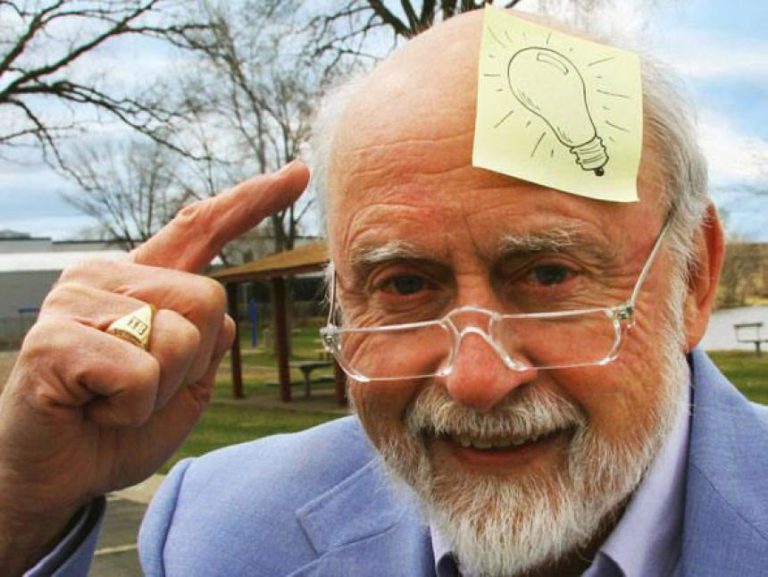 Who Really Invented Post-It Notes?
And let’s not forget the accidental genius here. The lesson isn’t about glue or paper—it’s about seeing what others dismiss. Spencer Silver saw magic in a goo that wouldn’t stick hard. Arthur Fry saw a solution in a problem everyone else ignored. How often do you ignore your own "weak glue" ideas?
Your Turn to Stick Around
So the next time you slap a bright green note on your monitor, give a little cheer for Silver and Fry. They remind us that failure is just a first draft, and that the best inventions often arrive in disguise. A sticky note isn’t just a scrap of paper; it’s a tiny act of rebellion against forgetting.
And here’s the uplifting truth: you have your own versions of Spencer’s glue and Arthur’s hymnal problem right now. The small, strange idea you’re embarrassed to share might be exactly what someone needs. So go ahead—be a little sticky. Embrace the quirks. And if you ever feel like your idea is just a weak, messy goop, remember: you might be holding a Post-it Note that’s about to stick to the world.
