Why Does Ramadan Change Each Year

Last year, my friend Amina texted me in a panic. She’d just realized Ramadan was starting in two days, and her freezer was full of baklava from last Eid. “I swear,” she said,...
Last year, my friend Amina texted me in a panic. She’d just realized Ramadan was starting in two days, and her freezer was full of baklava from last Eid. “I swear,” she said, “it was winter yesterday, and now it’s spring?” I laughed, but honestly—I felt her confusion. Ramadan doesn’t just sneak up on you; it dances across the calendar like a cat chasing a laser pointer.
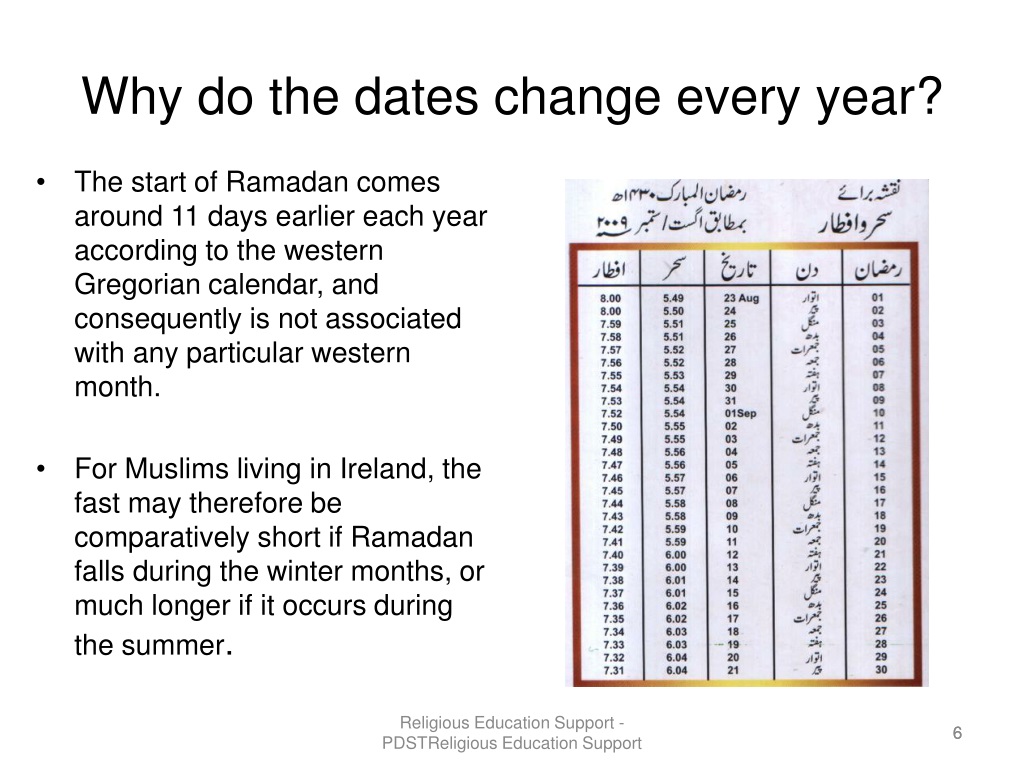
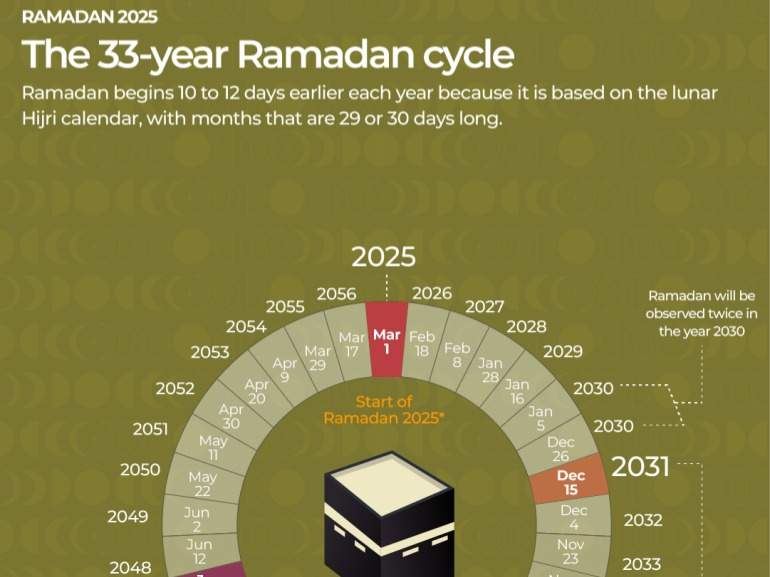
So, why does Ramadan change each year? (Spoiler: it’s not a conspiracy.) The short answer is that Islam uses a lunar calendar, which is about 11 days shorter than the solar calendar we use for birthdays and tax deadlines. That means the month of Ramadan—which is the ninth month in the Islamic Hijri calendar—moves backward through the seasons. One year it’s in the long, hot days of summer, and the next it slides into the crisp air of autumn.
A Quick History Detour (But Stay With Me)
The pre-Islamic Arabs used a lunar calendar too, but they’d mess with it by adding extra months to keep seasons in place. The Qur’an put a stop to that habit in Surah At-Tawbah (9:36–37), calling it “an increase in disbelief.” So Muslims went back to a pure lunar system, where each month begins with the sighting of the new crescent moon. And that’s where the fun starts: you can’t predict Ramadan with a wall calendar the way you do Christmas or New Year’s Eve.
Must Read
Imagine celebrating your birthday 11 days earlier every year. That’s basically what happens to Ramadan, and it’s a little chaotic—but also kind of beautiful. Because over a 33-year cycle, you’ll experience the fast in every season, from a foggy London winter to a scorching Cairo summer.
The Moon Is a Drama Queen
Here’s the kicker: even within a lunar year, the start of Ramadan depends on actual moon sighting. Not everyone agrees on when the crescent appears. (Oh, you thought family arguments about politics were bad? Try Muslim families debating if the moon is “visible enough” while squinting at a cloudy sky.) Some countries rely on naked-eye sightings; others use astronomical calculations. This is why Morocco might start fasting on a different day than Saudi Arabia—and your Pakistani aunt and your Egyptian cousin will text each other passive-aggressive “well, we started yesterday” memes.
So, practically speaking, Ramadan feels like a moving target. You plan a dinner party for June 5th—oops, check that: Ramadan is in April this year. You book a vacation to break the fast on a beach—oh wait, the fast is now 16 hours long in Iceland. That’s the irony of it: the month that teaches patience also tests your scheduling skills.
 How many days does Ramadan fasting last? Why does the number of days in
The Upside of the Great Shift
But here’s the real talk—and why I’ve grown to love this lunar chaos. Because Ramadan moves, it never becomes a routine. You can’t just “wing it” the way you do with Thanksgiving turkey. Every year forces you to re-adapt your body, your routine, your sleep cycle. One year you’re eating dates at 8 p.m. after a 12-hour fast; the next year you’re sitting down to iftar at 9:30 p.m., and the sun is still mocking you through the window.
And there’s a hidden fairness in this system. Imagine if Ramadan was always in December—Muslims in Sweden would fast for six hours (lucky them), while Muslims in South Africa would suffer through a 14-hour summer day every single year. But because the calendar rotates, everyone gets a turn with the short days and the long days. It’s like the universe’s way of saying, “You’ll learn empathy for both the cozy winters and the brutal summers.”
So, How Do You Track It?
Honestly? You don’t. Not with a normal calendar, anyway. Muslims rely on moon-sighting announcements from local mosques or Islamic authorities. Or, let’s be real—you check the WhatsApp group of the nearest halal butcher. (Pro tip: never trust a distant relative’s post about moon sightings; they’re usually wrong and they’ll swear by a cloud.) There are apps now, too, but even they can get wonky depending on your latitude.
 Ramadan 2025: Fasting hours and iftar times around the world
The real trick is to accept the uncertainty as part of the spiritual challenge. When you wake up on the morning of the 29th of Sha’ban (the month before Ramadan), you don’t know if tomorrow is the first fast day. You go to bed wondering. And the next morning, you might get a text at 5 a.m.: “Moon sighted. Ramadan starts today. Have a blessed fast!” And you scramble to find your empty fridge—just like Amina.
But that scramble is precisely the point. It reminds you that time itself is not under your control—only your intention is. And if you can’t laugh at yourself for eating a pre-dawn meal of leftover pizza because you forgot to buy dates, are you even fasting properly? (Don’t answer that. I’m guilty too.)
So, the next time someone asks you why Ramadan changes, tell them: the moon is a diva, the calendar has a mind of its own, and Muslims get to chase sunrise for 33 years until the cycle resets. And if they still look confused? Just hand them a date and say, “Enjoy the ride.”
