What Grit Sandpaper For Oak Hardwood Floors

So, you’ve decided to tackle a hardwood floor refinishing project. Bravo! You’re either incredibly brave or slightly insane—and honestly, most of life’s best projects start th...

So, you’ve decided to tackle a hardwood floor refinishing project. Bravo! You’re either incredibly brave or slightly insane—and honestly, most of life’s best projects start that way. You’ve got the drum sander, the earplugs, and a dream of a glossy, magazine-worthy oak floor. But then you hit the hardware store aisle, staring at a wall of sandpaper grit numbers, and suddenly, your dream feels like a nightmare.
Take a deep breath. Choosing the right sandpaper for oak isn’t just a chore—it’s your secret weapon for a job that actually feels fun. Think of it less like “work” and more like giving your floor a spa day. You get to be the aesthetician. So, what grit do you need? Let’s turn that confusion into your superpower.
The Sweet Spot: Starting Strong, Ending Smooth
Oak is a tough, proud wood—it’s not going down without a fight. You need to start with a grit that’s assertive but not aggressive. For a standard refinishing (removing old finish and light scratches), your starting gun fires at 36-grit or 40-grit. This is the heavy lifter, the brawn of the operation.
Must Read
If your floor is in decent shape but just tired, 60-grit is a gentler starting point. It’s like saying, “Hey, floor, let’s just exfoliate a little.” You’ll know you’re on the right grit when you see clean, raw wood dust, not just a pile of old varnish shavings. Messy? Yes. Satisfying? Absolutely.
The Middle Act: 60 to 80 Grit
Once you’ve stripped the old finish, you swap to 60-grit, then 80-grit. This is your sanding sweet spot. It erases the deep scratches left by the 36-grit while starting to smooth the surface. Oak has open grain, so you don’t want to get too fine too fast—or you’ll just polish the scratches in.
Think of this stage as the “second date” with your floor. You’ve already broken the ice, now you’re getting to know its personality. Pro tip: run your hand over the wood after each pass. If it feels rough like sandpaper, you need another pass. If it feels like a cat’s tongue, you’re making progress!
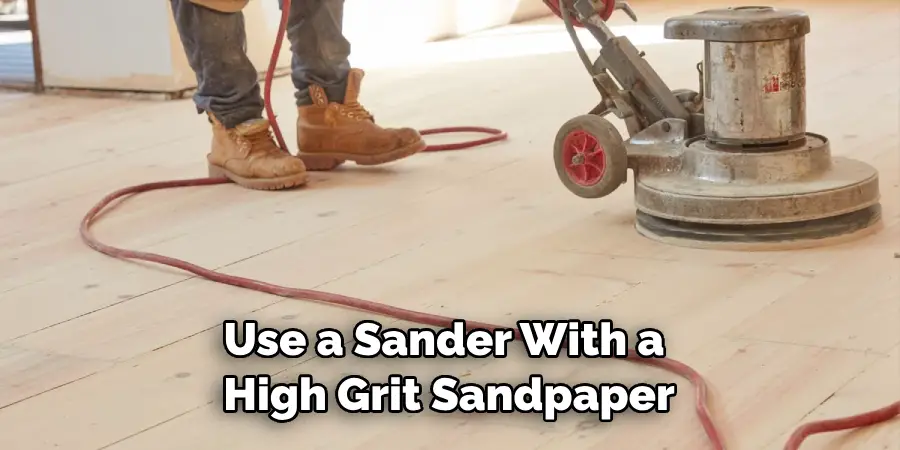 How to Remove Water Damage From Hardwood Floors | 10 Easy Steps
The Grand Finale: 100 to 120 Grit
For oak, stop at 100-grit or 120-grit. I know, I know—you want to go to 220-grit because that’s what you do for furniture. Don’t do it. Oak’s open pores need a little “tooth” to grip the stain or finish. Sanding too fine makes the wood slick, so your new finish peels off like a bad sunburn.
This final grit is where the magic happens. You’ll see the grain pop, the color warm up, and your floor start to gleam even without a coat of anything on it. That feeling? That’s the dopamine hit you’ve been chasing. You’ve officially graduated from “DIY rookie” to “floor whisperer.”
Rhetorical Asides & Life Lessons
Are you noticing a pattern here? Sandpaper isn’t just about roughness. It’s about progression—moving from chaos toward calm. Life kind of works that way, doesn’t it? You start with the heavy stuff (the 36-grit of problems), then you gradually refine your approach until everything feels smooth.
And let’s be real: sanding a floor is louder than a rock concert, messier than a toddler’s birthday party, and dustier than a Western movie. But when you run your hand over that 120-grit finish? You’ll feel like a wizard who just conjured a mirror out of a tree stump. It’s literally magic you can touch.
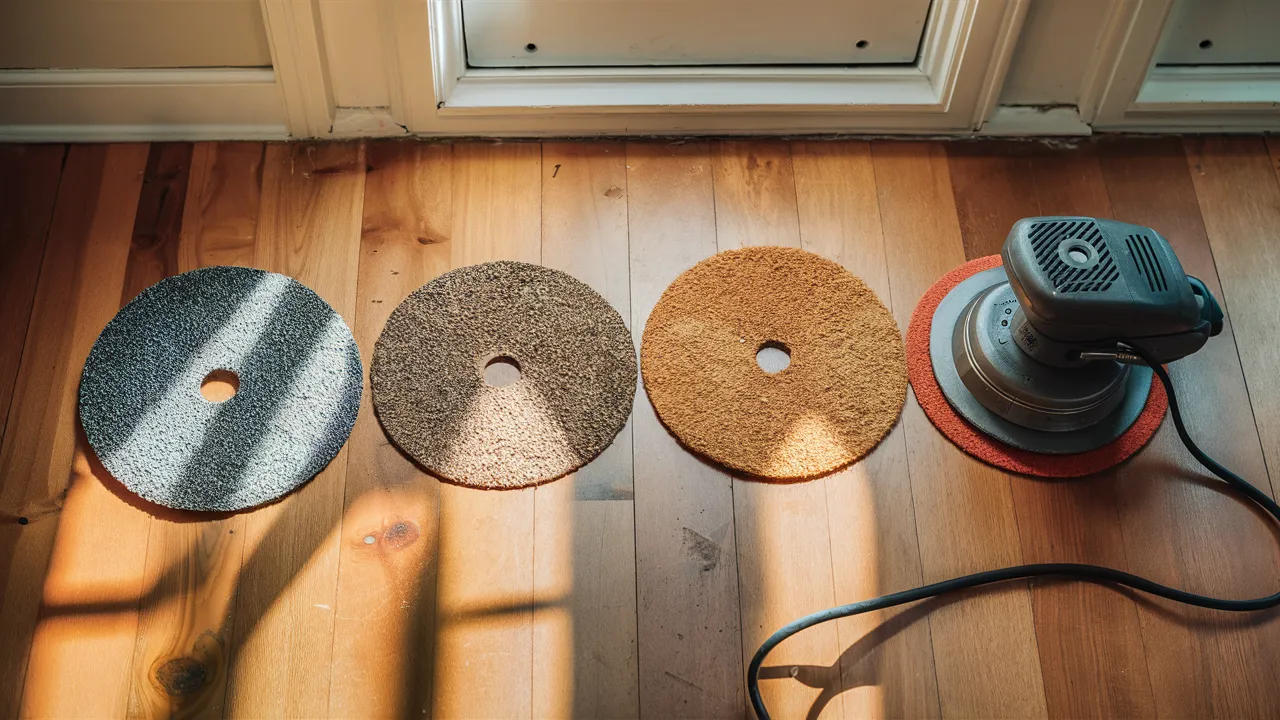 Guide to Sanding Hardwood Floors with Orbital Sander - Opple House
Your Toolkit for Victory
Here’s your cheat sheet: 36-40 grit for stripping, 60-80 grit for smoothing, 100-120 grit for finishing. Buy a few extra sheets of each—you’ll clog them with dust, and running out midway is floor-sanding’s version of hitting the emergency brake on a rollercoaster.
And for goodness’ sake, vacuum between grits. Loose dust is the enemy of a smooth finish. Sweep, vacuum, then wipe with a tack cloth. Your floor will thank you by looking like a million bucks instead of a dusty afterthought.
Uplifting Finale (You Got This!)
You are about to transform a tired, scratched floor into the hero of your home. And all it took was a little grit—pun absolutely intended. Remember, each sandpaper change is a tiny victory. You’re not just removing old finish; you’re polishing a space that holds your laughter, your footsteps, your life.
So go ahead, fire up that sander. Make some dust. Get a little silly with it. The floor is your canvas, and that little roll of sandpaper is your paintbrush. You are exactly the person for this job—confident, capable, and now armed with the knowledge that grit numbers are just your friends in disguise. Now go make your floor sing.
