How Does Berkshire Hathaway Make Money? The Business Model Nobody Talks About

Let’s be honest: when you hear “Berkshire Hathaway,” you probably picture Warren Buffett in his glasses, sipping a Cherry Coke, and owning half of America. It feels like a clu...
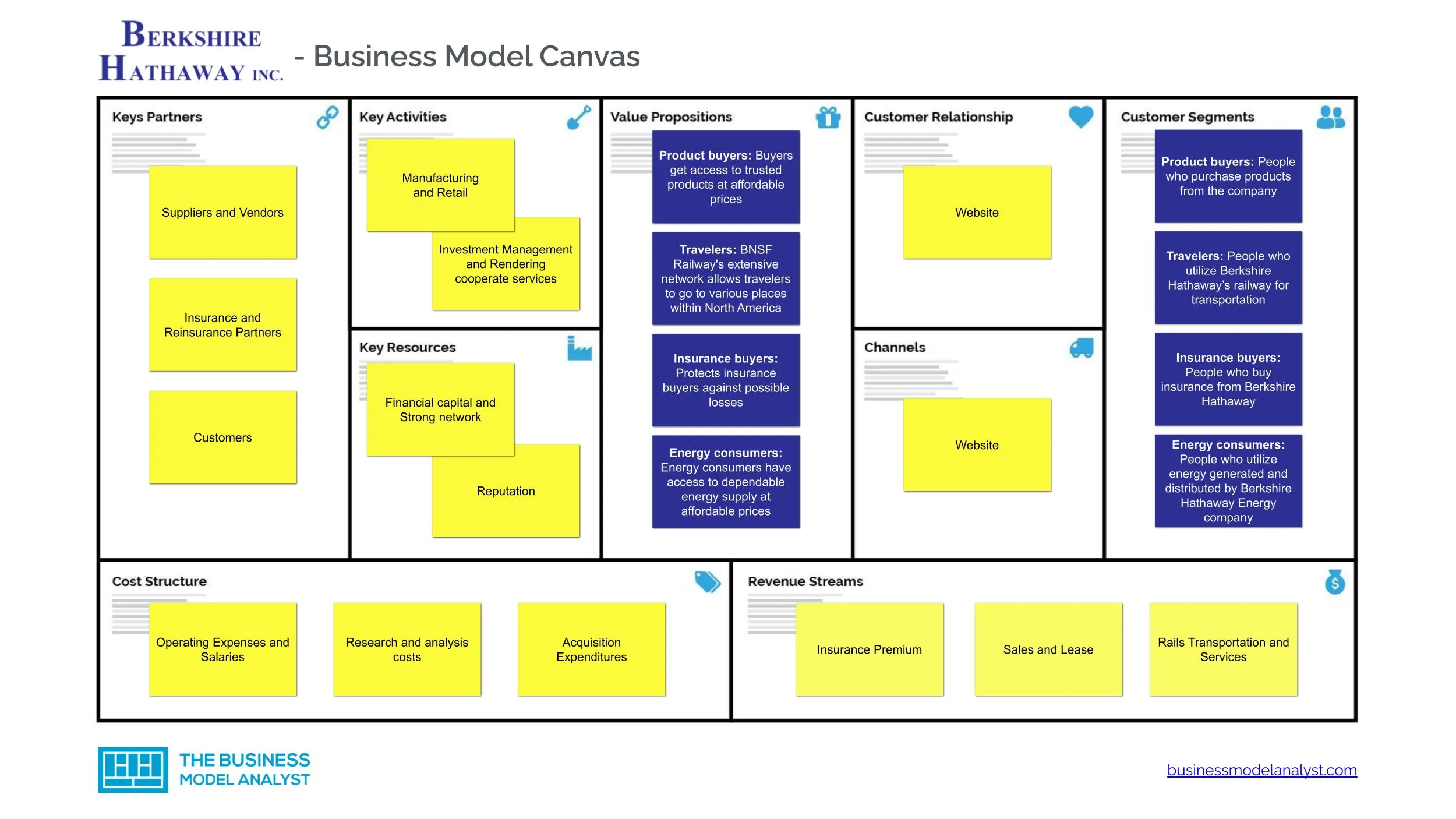
Let’s be honest: when you hear “Berkshire Hathaway,” you probably picture Warren Buffett in his glasses, sipping a Cherry Coke, and owning half of America. It feels like a club for billionaire grandpas, not something we can understand. But peel back the curtain, and you’ll find a business model that is actually weirdly simple—and surprisingly relatable.
Berkshire isn’t a single company; it’s a holding company that owns other companies. Think of it less like Apple and more like a really, really organized flea market where everything makes money. The core secret? It uses the “float” from its insurance business—Geico and General Re—as interest-free cash to buy railroads, energy utilities, and See’s Candies.
Here’s the part nobody talks about: Berkshire makes more money from sleeping than from trading stocks. Over 60% of its operating earnings come from wholly owned businesses like BNSF Railway and Berkshire Hathaway Energy. They buy these boring, cash-spewing assets and just let them run.
Must Read
The Insurance Engine That Runs the World
You pay your car insurance premium in January. You might crash in December. For twelve months, Berkshire holds that money—called the float—and invests it. If they can invest it at 6% while having a 4% loss ratio on claims, they win twice: on the premium profit and the investment return.
Warren Buffett calls this “negative-cost leverage.” In plain English? They borrow billions from customers at less than 0% interest. No bank gives you that deal. It’s the financial equivalent of finding a $20 bill in your winter coat every single day.
Fun fact: Geico’s gecko isn’t just a mascot; he’s a cost-cutting machine. By selling directly to customers (no expensive agents), Geico keeps expense ratios below 12%. Competitors often hover around 20–25%. Those savings? They become Berkshire’s investment ammo.
 Berkshire Hathaway - A Business Breakdown
The “Boring” Empire of Pipes and Tracks
When you flush your toilet in San Francisco, Berkshire’s energy company might be treating that water. When your new iPhone arrives in a cardboard box, it probably traveled on BNSF Railway. These aren’t sexy businesses—they are infrastructure toll booths.
Railroads, for example, have massive moats. You can’t just build a new railway next to BNSF’s tracks without spending decades and billions in permits. This gives Berkshire steady pricing power. Inflation is actually their friend here—they raise rates as costs go up.
Cultural reference: Think of it like owning the only bridge on your commute. You keep it maintained, charge a small toll, and watch cars (and dollars) roll in regardless of the economy. That’s Berkshire’s energy and railroad play.
 $BRK Berkshire Hathaway FY25. • Final year with Warren Buffett as CEO
The Undiscovered Portfolio: More Than Apple and Coke
We know they own a pile of Apple stock (about 40% of their public portfolio). But the secret sauce is a hidden gem called “equity method investments.” This includes companies like Kraft Heinz and BYD (electric cars). They don’t just buy shares; they often have board seats and influence strategy.
Here’s the practical tip: Owning a small piece of something you understand is better than trying to predict the stock market. That’s the Buffett principle. He doesn’t worry about tomorrow’s news; he worries if people will still eat Oreos and fly on NetJets in ten years.
Fun fact: Berkshire owns nearly 5% of the entire U.S. electricity grid. Turn on a light switch, and you’re probably feeding their energy business. They own 15% of the global share of re-insurance for cataclysmic events. Big storms = big claim checks for them (in bad weather) and big premiums in good weather.
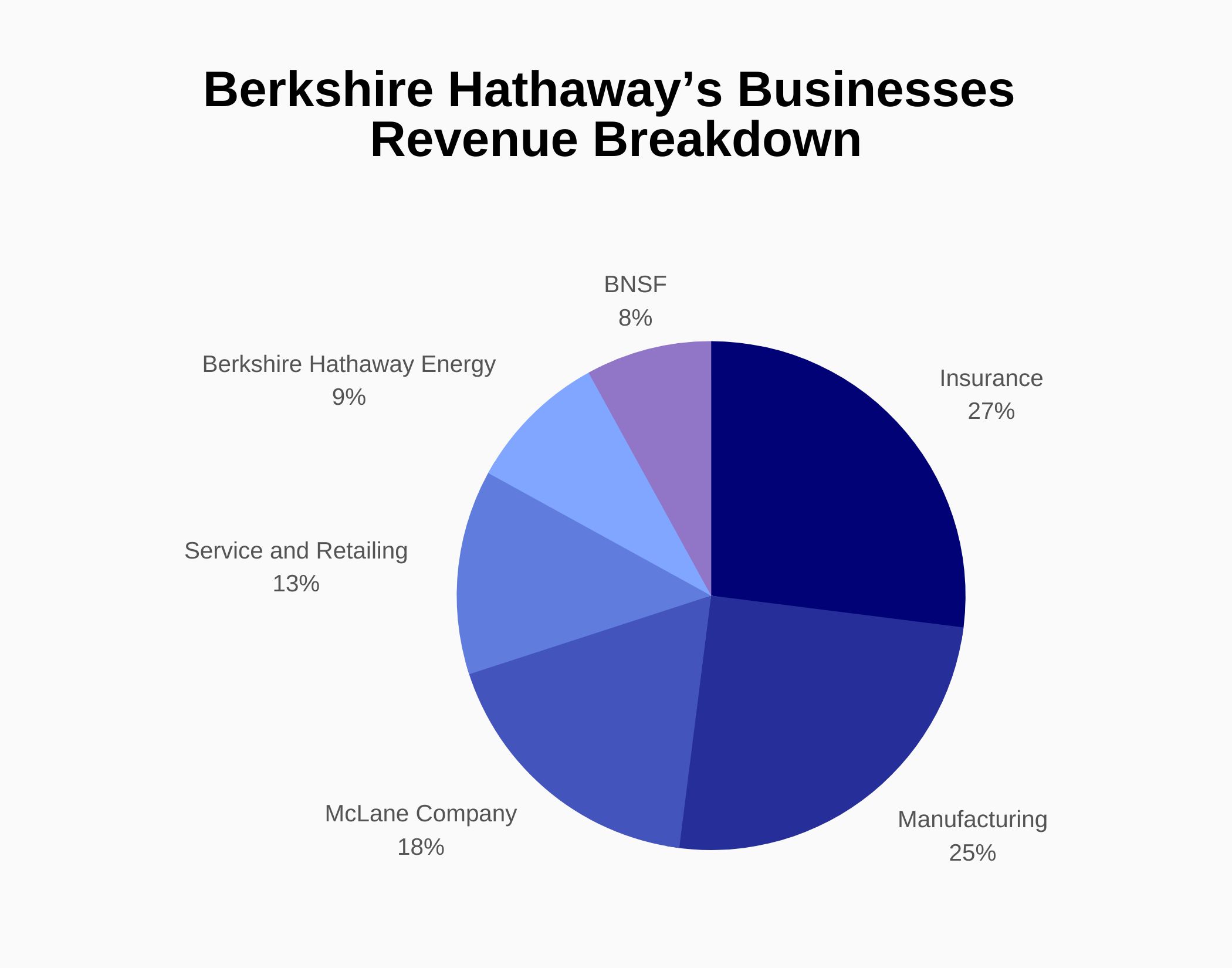 Berkshire Hathaway Revenue and Growth Statistics (2024) - SignHouse
The “Do Nothing” Management Style
Most CEOs would drive you crazy with restructuring. Berkshire’s model? Hire good people, give them a checkbook, and get out of their way. They bought See’s Candies in 1972 for $25 million. It has since earned over $2 billion in cumulative profits. They never changed the chocolate recipe once.
This is the “buy and hold” culture applied to entire companies, not just stocks. Buffett famously says his favorite holding period is “forever.” It removes the stress of quarterly earnings and lets compounding work like a slow-motion volcano.
Practical tip for your life: Look at your own “portfolio” of habits or side hustles. Instead of switching jobs every year, could you stick with one skill and let it compound? Berkshire proves that patience is a competitive advantage.
![[OC] How Berkshire Hathaway Inc. makes money: Income statement](https://preview.redd.it/how-berkshire-hathaway-inc-makes-money-income-statement-v0-n603zqknpdlc1.png?width=1080&crop=smart&auto=webp&s=483c2383f87c177b526a026e701f27fddf911981) [OC] How Berkshire Hathaway Inc. makes money: Income statement
[OC] How Berkshire Hathaway Inc. makes money: Income statement
The Cash Mountain Nobody Talks About
In 2023, Berkshire held over $150 billion in cash. That’s more than the GDP of some small countries. Critics yell that they should “do something” with it. That’s the genius part: they are waiting for the next crisis.
When the market panics—like during 2008 or 2020—Berkshire swoops in with cash to buy preferred shares or whole companies at a discount (think Goldman Sachs in 2008). This is like keeping a parachute that you only pull when the plane is going down. It’s not exciting, but it saves your life.
Reflection: Most of us feel pressure to be “busy” with our money. We buy crypto, chase trends, check stock prices hourly. Berkshire’s model whispers a different truth: Boring is beautiful. Cash is not a sin. Waiting is a strategy.
Next time you get a property insurance bill, or you see a train rumbling by, remember: somewhere in Omaha, a 94-year-old in a sweater is smiling. He doesn’t need to trade faster. He just let the world turn—and the money followed.
