Why Does Berkshire Hathaway Own So Many Different Businesses?

Picture this: You’re at a massive garage sale, and someone is selling a railroad, next to a box of See’s Candies, a Geico insurance pamphlet, and a Duracell battery. Oh, and t...

Picture this: You’re at a massive garage sale, and someone is selling a railroad, next to a box of See’s Candies, a Geico insurance pamphlet, and a Duracell battery. Oh, and there’s a private jet in the driveway. You’d probably ask, “Who is this person?” That’s essentially what Berkshire Hathaway is: one giant, slightly chaotic garage sale that Warren Buffett started buying up in the 1960s.
I remember the first time I looked at a list of Berkshire’s holdings. I thought my browser had a glitch. They own a railroad (BNSF), an insurance giant (Geico), a candy company (See’s), a battery maker (Duracell), and even a paint company (Benjamin Moore). It felt like someone spilled a Monopoly board and called it a portfolio. But here’s the kicker: it’s not random.
The secret sauce is Buffett’s philosophy, and it’s simpler than you’d think. He doesn’t buy businesses because he wants to run a department store. He buys them because they have a moat—something that keeps competitors out. A railroad? Hard to build a new one across the country. See’s Candies? People love that brand, and they pay upfront. You can’t just replicate a century of trust overnight.
Must Read
The “Cigar Butt” with a Twist
Buffett started with a strategy called “cigar butts”—buying cheap, dying companies for a quick puff of profit. Then his partner, Charlie Munger, gave him a talking to. Munger said, “Forget the cheap, wet cigars. Buy wonderful companies at a fair price.” And that’s when Berkshire went from a textile mill (yes, it was originally a textile company) to a bizarre-but-beautiful conglomerate.
So why own so many? Because each business is a cash-generating machine that feeds the next one. Think of it like a snowball rolling downhill. Geico collects premiums from millions of drivers. That cash? It doesn’t just sit in a vault—Berkshire uses it to buy more businesses. It’s like the world’s most profitable pyramid scheme, except it’s legal and boring.
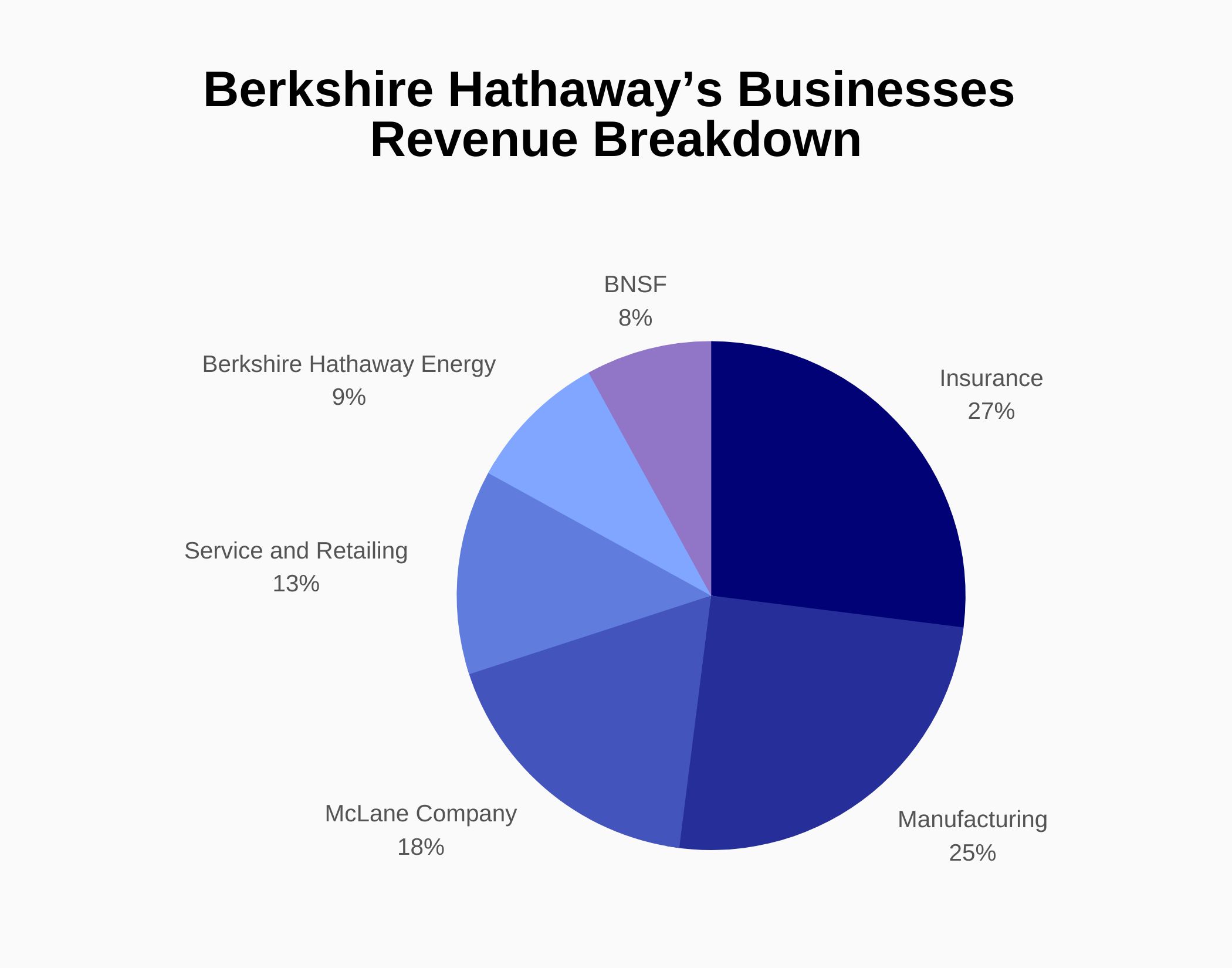 Berkshire Hathaway Revenue and Growth Statistics (2024) - SignHouse
The Insurance Engine (The Real Hero)
Here’s the part that sounds like a math trick: float. When you pay your car insurance premium, Geico holds that money until you file a claim. That “float” is essentially free money Berkshire can invest. With over $100 billion in float, Buffett has a permanent pile of cash to buy whatever he wants—and he doesn’t have to pay interest on it. It’s like having a credit card that never bills you.
Now, owning a candy company alongside an insurance company doesn’t seem so crazy, does it? Because See’s Candies is a cash cow. It doesn’t need giant factories or R&D. It just sells chocolate, and people buy it for Valentines. That cash gets funneled into buying a railroad (which needs tons of capital) or a utility company (which pays dividends for decades). Buffett is just playing a very long, very patient game of Monopoly.
 Companies Owned Berkshire Hathaway In Powerpoint And Google Slides Cpb
The “Diversification” Paradox
Most people think diversification means buying stocks in different sectors. Berkshire takes it to a weird extreme: they buy the entire company. They own Dairy Queen, Fruit of the Loom, and NetJets. It’s not a portfolio—it’s a collection of fortresses. Each one has a durable brand, a predictable cash flow, and a management team that Buffett trusts to not mess it up.
You might ask, “Why not just buy Amazon or Apple stock?” Well, they do that too—but Berkshire prefers to own businesses outright because they can control the cash. If they own a utility, they can use its profits to buy another utility. If they own a retailer, they can optimize its inventory. It’s like being the landlord of the world’s most boring, profitable mall.
 Invest in these 3 companies and you pretty much own the world
So, What’s The Point?
The point is compounding. Each business pays its earnings to headquarters, which then buys more businesses, which then pay more earnings. Rinse and repeat for 60 years. The result? A company that owns everything from insurance to ice cream, and it’s worth nearly a trillion dollars. Crazy, right?
Next time you bite into a See’s chocolate, just know that part of that sugar is buying a railroad engine in Montana. That’s capitalism at its most delightful and bizarre. And honestly? It works because Buffett never tries to be the smartest guy in the room—he just buys the room.
So why does Berkshire own so many different businesses? Because they’re all cash-spewing, moat-protected, dull-as-dishwater machines that compound into a fortune. And also because Warren Buffett really, really likes chocolate and insurance. Simple as that.

