Are The Olympic Gold Medals Solid Gold

Okay, let’s settle this once and for all. You’ve seen an Olympian bite down on that gold medal, right? It’s basically a tradition at this point, like a weird, sweaty victory s...

Okay, let’s settle this once and for all. You’ve seen an Olympian bite down on that gold medal, right? It’s basically a tradition at this point, like a weird, sweaty victory snack. But here’s the real question that keeps me up at night: are those things actually solid gold?
Come on, you already know the answer. If they were solid gold, each medal would weigh like a brick. Imagine Michael Phelps trying to wear three of those around his neck. He’d sink right through the podium.
The truth is way funnier. The last time Olympic gold medals were completely solid gold was 1912. Yeah, over a hundred years ago. Back when athletes wore wool shorts and everyone smoked on the sidelines.
Must Read
So, what are they actually made of?
I’m glad you asked, because this is where it gets good. Today’s “gold” medal is mostly silver. I’m serious. It’s like a silver medal that went to a fancy dress party.
The International Olympic Committee (IOC) has rules for this. A gold medal must be at least 92.5% silver. Then they plate it with at least 6 grams of real gold. That’s it. A thin, shiny jacket over a silver core.
So you’re basically getting a very expensive piece of jewelry. Not a solid gold brick you can use to pay off a mortgage. Sorry to burst your bubble, but those chomping Olympians are just gnawing on silver.
Wait, what about silver and bronze medals?
Oh, those are even more honest. The silver medal? That’s actually solid silver. It has to be at least 92.5% pure. So the silver medal is more “real” than the gold one. Irony, anyone?
 Olympic Medals Made Of
And the bronze medal? That’s just a hunk of copper, tin, and zinc. Basically, it’s a fancy penny. If you dropped it, it would probably make that dull “clunk” sound of disappointment.
So essentially, second place gets the real silver. Third place gets recycled plumbing parts. And first place gets a silver medal with a gold tan. What a world.
Why don’t they just make them solid gold?
Two words: money and physics. Let’s talk money first. A solid gold medal today would cost about $40,000 to $50,000 in raw materials. Now multiply that by 339 events in the Summer Olympics. You do the math. That’s enough gold to make Scrooge McDuck jealous.
Now physics. Gold is super dense and heavy. A solid gold medal would weigh around 2.5 to 3 pounds. Imagine trying to run a marathon with a dumbbell swinging from your neck. Your spine would compress into an accordion.
The current medals are about 500 grams. That’s a bit over a pound. Still heavy enough to make an athlete’s neck sore, but not enough to snap their collarbone. Compromise!
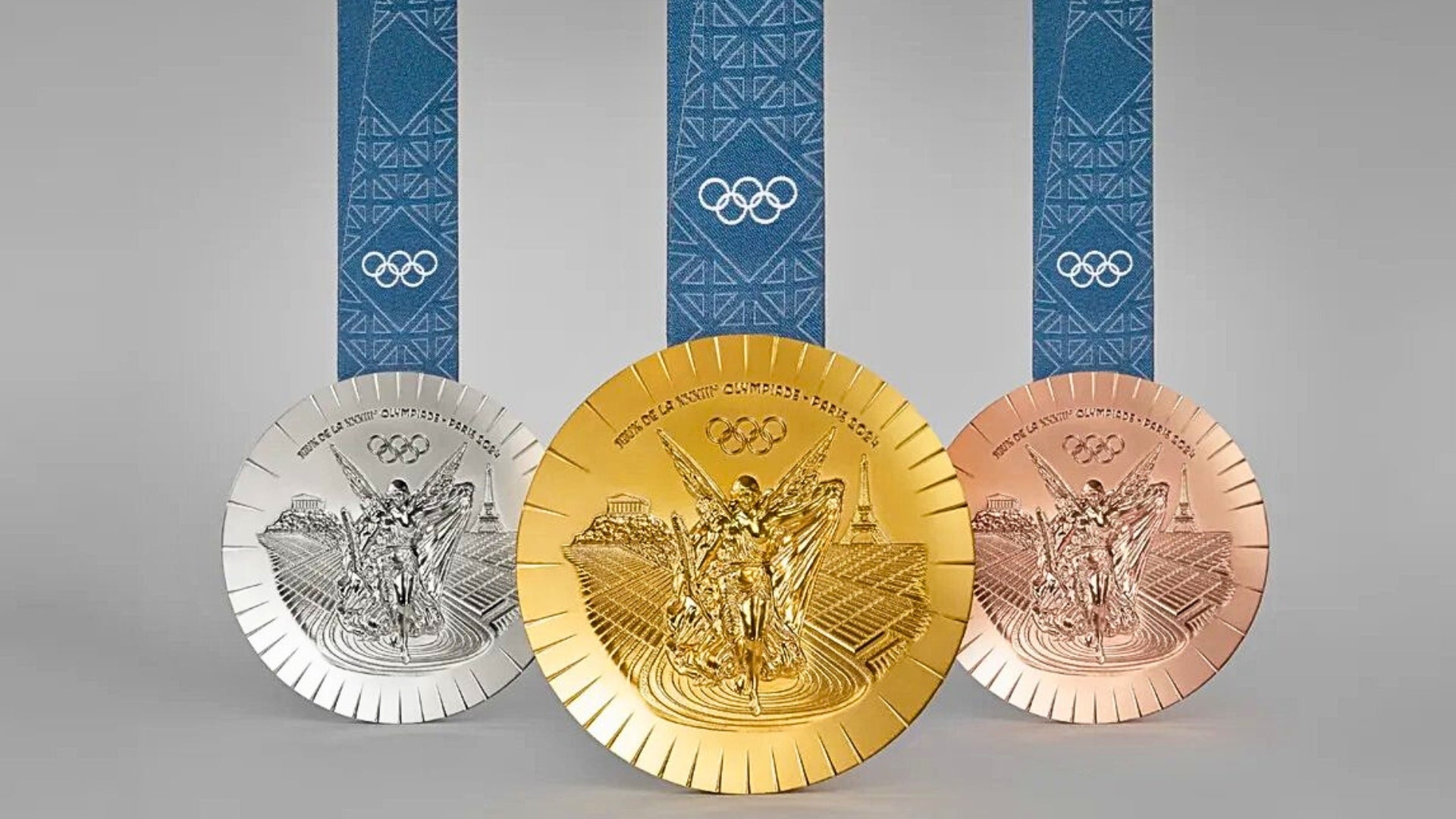 How Much Gold and Silver is in Olympic Medals? - Numismatic News
Does the value even matter?
Here’s the kicker: the sentimental value is way higher than the melt value. Sure, that 6-gram gold coating is worth maybe $400 in scrap. But no Olympian is melting down their medal for cash. That’s like burning your wedding photos for the frame.
Actually, some athletes have sold their medals. Jesse Owens’ 1936 gold medal sold for $1.4 million at auction. That’s a lot of silver underneath all that history. So the real gold is in the story, not the metal.
So next time you see a champion bite their medal, remember: they’re biting silver. But honestly, who cares? It’s still the most expensive piece of metal they’ll ever own—and they didn’t have to buy it. They earned it.
And honestly? I’d take a silver-chunk-with-a-gold-hat over a solid gold lump any day. Because that lump means you’re the best in the world. And nobody can plate that with a lie.
So no, the gold medals aren’t solid gold. But in the grand scheme of sweat, tears, and 0.01 second finishes? They’re worth way more than gold anyway.
