Can I Use Ground Mustard Instead Of Mustard Seed

You’re halfway through making a curry, a tangy pickle, or that fancy potato salad you saw online. The recipe calls for mustard seed, but you open your spice rack and find only...
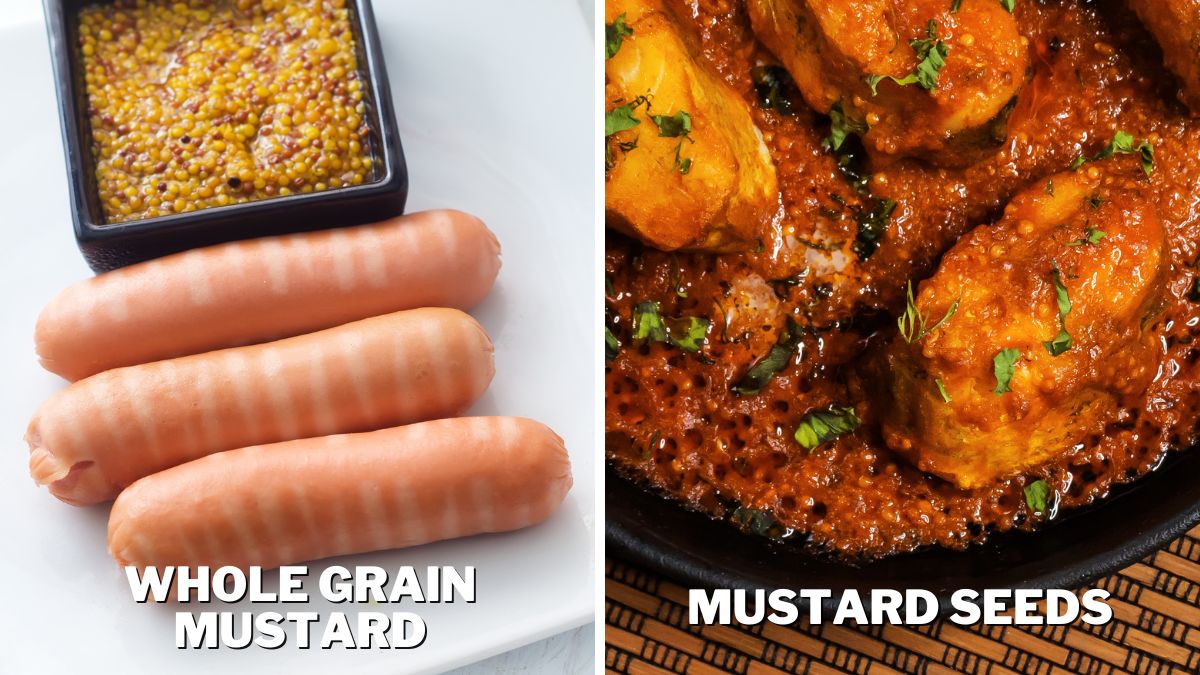
You’re halfway through making a curry, a tangy pickle, or that fancy potato salad you saw online. The recipe calls for mustard seed, but you open your spice rack and find only a dusty jar of ground mustard. Your inner voice sighs, “Close enough, right?”
We’ve all been there—standing in the kitchen, holding a tiny jar of yellow powder, wondering if the universe is testing your cooking flexibility. Good news: the answer is usually yes, but with a few fun, important twists. Let’s break it down like we’re chatting over a cup of tea.
The Tale of Two Mustards
Think of mustard seeds as the shy, reserved cousin at a family reunion. They sit quietly in hot oil, popping and releasing a gentle, nutty warmth over time. Ground mustard, on the other hand, is the loud, party-starting sibling—instant, sharp, and ready to zing your taste buds before you even blink.
Must Read
When you swap seeds for powder, you’re basically swapping a slow build for a direct hit. If your recipe calls for whole seeds in a hot oil “tarka” (that sizzling pop you hear at the start of Indian cooking), ground mustard will just turn into a bitter paste if you let it burn. Trust me, I learned this the hard way during a curry emergency last Tuesday.
But here’s the secret: if you’re mixing ground mustard into a wet dish—like a sauce, dressing, or stew—you’re golden. Just remember that ground mustard is way more potent. You’ll need about one teaspoon of ground mustard for every tablespoon of seeds. That’s a 3-to-1 ratio, kitchen friend.
When to Say “Yes” to the Swap
Picture this: You’re making a creamy mustard sauce for your roasted chicken, but you only have powder. Go for it! Whisk it into a bit of cold water first to activate that heat—wait five minutes, and suddenly your sauce tastes like a fancy bistro made it. Your family will think you’re a culinary genius.
Same goes for salad dressings, marinades, and even homemade mayonnaise. The powder dissolves easily, giving you that familiar tang without any crunchy bits. My grandmother used to sprinkle ground mustard into her deviled eggs, and nobody ever complained about “missing seeds.”
But here’s where it gets tricky: pickling and canning. Mustard seeds are not just a flavor; they’re a texture and a preservation helper. If you swap them out for powder in your cucumber pickles, you’ll end up with a cloudy, gritty brine. Your dill pickles will look like they’ve been in a muddy pond—not appetizing.
When to Beg, Borrow, or Buy Seeds
If you’re making whole-grain mustard, you absolutely need the seeds. There’s no faking that satisfying pop when you crunch into a tiny yellow sphere. Likewise, Indian poha or dal rely on seeds to sizzle and puff in hot ghee. Using powder there is like bringing a guitar to a drum solo—just not the right vibe.
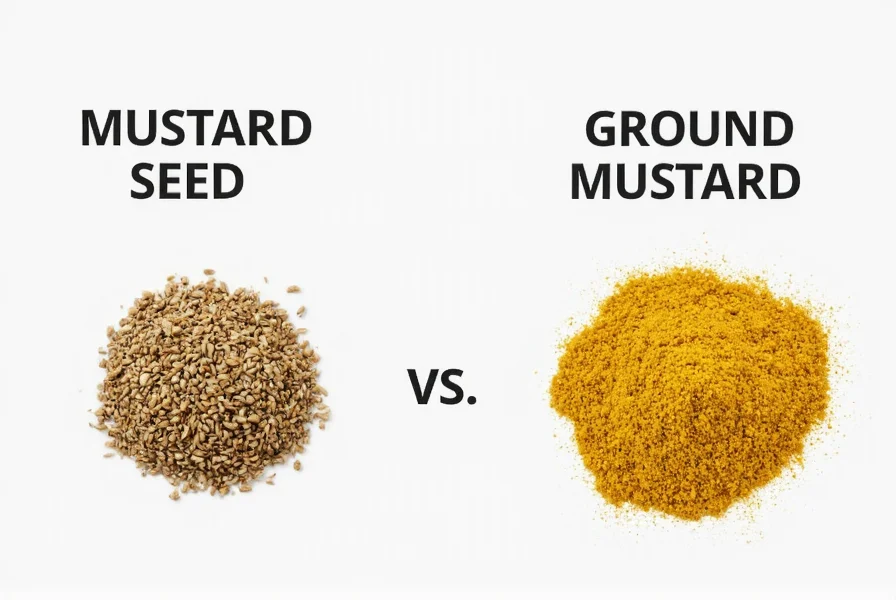 Mustard Seeds vs Ground Mustard: Complete Guide to Differences, Uses
And don’t even think about using ground mustard for mustard oil recipes. That oil comes from pressing the seeds themselves. Powder won’t magically turn into oil, no matter how much you wish it. Save yourself the disappointment.
But honestly, for most home cooking—stews, rubs, sauces, and even some breads—the swap works beautifully. I once made a whole roasted salmon with a honey-mustard glaze using only ground mustard, and my guests licked the plate. Nobody noticed the missing seeds.
A Little Science to Make You Smile
Here’s a fun party fact: Ground mustard and mustard seeds come from the same plant—they’re just different forms of the same cranky ingredient. When you crush the seed, you release an enzyme that creates that fiery kick. Cold water wakes it up; heat (boiling water) kills it dead. So if you want heat, use cold water. If you want a mellow background flavor, use hot water or cook it slowly.
Think of it like the difference between a friend who talks a lot at parties (ground mustard) and one who only whispers clever jokes (seeds). They’re both great, but you wouldn’t ask the loud friend to sit in the corner and crack nuts.
One more tip: always taste your dish before adding more. Ground mustard’s power can sneak up on you. I once over-seasoned a potato salad and turned it into a spicy tear bomb. My dog wouldn’t even sniff it.
The Bottom Line (No Lecture, Just Love)
So, can you use ground mustard instead of mustard seeds? Yes, usually. Just adjust the amount, avoid burning it in hot oil, and don’t use it for pickling unless you want cloudy jars. For everyday cooking—your weeknight marinades, your lazy Sunday sauces, your “I forgot to buy seeds” dinners—ground mustard is your flexible friend.
Next time you’re in that spice rack panic, just remember: You’ve got this. The kitchen is forgiving, especially when mustard is involved. And if all else fails, call it an “experimental fusion” and serve it with a smile. Dinner doesn’t have to be perfect—it just has to be yours.
