Difference Between Red Velvet And Chocolate Cake

Let’s settle this once and for all, because your birthday party is only two slices away from a full-scale food fight. You’ve seen it: that deep, dark slice of devil’s food nex...

Let’s settle this once and for all, because your birthday party is only two slices away from a full-scale food fight. You’ve seen it: that deep, dark slice of devil’s food next to the shockingly red wedge with the white hat. They look like cousins who don't talk at Thanksgiving. But are they actually the same cake with a little food-coloring drama?
The Great Imposter: Red Velvet’s Secret Identity
Here’s the bombshell: red velvet cake is not just chocolate cake that got a facelift from a mad scientist with a tube of red dye. It’s a total poser with a history as weird as a chemistry experiment gone wrong. See, back in the day, bakers used natural cocoa powder, which turned reddish when it reacted with acidic ingredients like buttermilk and vinegar. Yes, vinegar in cake—your grandmother was a chemist with a sweet tooth.
That original “rust” color was a happy accident, not a fashion statement. Then the Great Depression hit, and a food company named Adams Extract started selling red food coloring to make cakes look fancier. Suddenly, every housewife wanted a cake that screamed “I’m fancy, and I have a bottle of dye!” The color went from “dull brick” to “fire truck on a sugar high.”
Must Read
But don’t let that red mask fool you. The real difference is in the flavor soul of each cake. Red velvet has just a whisper of cocoa—like a chocolate bar that’s afraid to commit. Chocolate cake, on the other hand, is a full-blown cocoa orgy, usually double or triple the chocolate punch.
The Texture Showdown: Velvet vs. Brick
Ever noticed that red velvet feels softer, almost like biting into a marshmallow’s classier cousin? That’s because of the buttermilk and vinegar teaming up like a tiny science fair project. The acid tenderizes the gluten, creating a tender crumb that melts. Chocolate cake, especially the dense “devil’s food” type, is built like a fortress of fudge.
Take a fork to a red velvet slice and it practically sighs in relief. Take a fork to a chocolate cake slice and you might need a power tool. That chocolate cake is dense, moist, and serious—it’s the cake that lifts weights between baking sessions. Red velvet is the yoga instructor who whispers, “Feel the air, man.”
And the frosting? This is where the war gets personal. Chocolate cake usually wears a chocolate buttercream or ganache like a velvet robe. Red velvet traditionally gets a cream cheese frosting that’s tangy and sharp. It’s the cake world’s version of pairing a salty pretzel with sweet caramel—the contrast makes you slap the table and say, “Why doesn’t everything taste this good?”
Why Do People Think They’re the Same?
Because grocery store bakeries are lazy liars. Go to a chain supermarket’s bakery section, and that “red velvet” cupcake might just be chocolate cake mix with a bottle of dye and vanilla extract. They skip the buttermilk and vinegar because it’s cheaper. The result? A cake that tastes exactly like chocolate but looks like a clown sneezed on it. It’s a fraud.
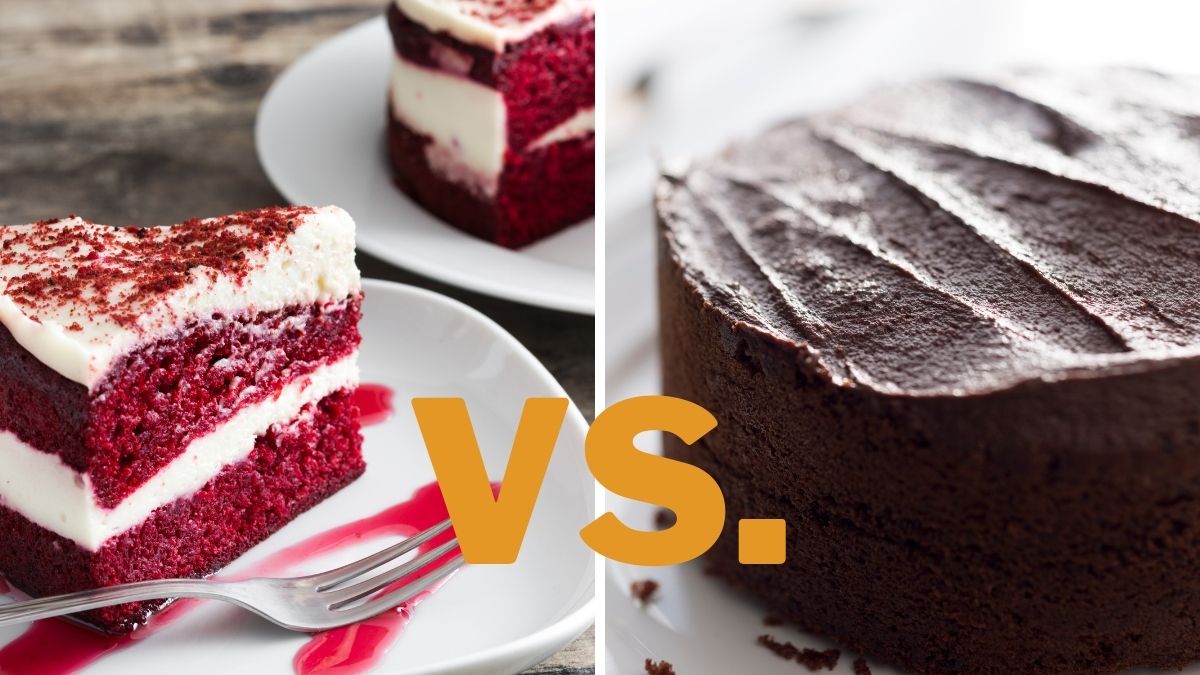 Red Velvet Cake vs. Chocolate Cake: Are They the Same?
Real red velvet has a subtle tang, a lighter crumb, and a distinct lack of overwhelming chocolate. If you close your eyes and eat a slice, and your brain screams “chocolate!” then you’ve been bamboozled by Big Bakery. You deserve a refund and an apology.
Here’s a shocking fact: In the 1940s, a New York City hotel called the Waldorf Astoria served their red velvet cake with a recipe so prized they supposedly charged $100 for it. That’s about $1,200 today for a cake that some people still confuse with a Ho Ho. You could buy a used car for that price, or a cake that makes you cry with joy. Choose wisely.
How to Tell Them Apart Without a DNA Test
First, look at the crumbs. Red velvet leaves a reddish stain on a white plate, like a murder scene in a pastry shop. Chocolate cake leaves brown crumbs that look like the dirt from a chocolate garden. Second, taste the frosting. If it’s sharp, tangy, and makes your tongue do a little dance, it’s probably cream cheese on a red velvet. If it’s sweet and thick like a chocolate cloud, it’s chocolate cake.
Third, check the ingredient list for food coloring. If it lists Red 40 alongside cocoa powder, you’re likely eating red velvet. If it lists “cocoa processed with alkali” and no dye, you’re in chocolate territory. But here’s the twist: Some high-end red velvet uses beet juice for color. Yes, beets. Your cake might taste slightly earthy and secretly healthy. Don’t worry—it’s still packed with sugar. The beet is just a spy.
If you still can’t decide, ask yourself this: Are you in the mood for a cake that tastes like a hug from a chocolate bar, or one that tastes like a clever joke with a tangy punchline? Chocolate cake is a comforting, predictable friend. Red velvet is the mysterious stranger at the party who might be a vampire or just a guy with a spray tan. Either way, you’re winning.
So next time someone says, “Red velvet is just chocolate cake with red dye,” smile politely, then hand them a forkful of the real stuff. Watch their eyes widen as the buttermilk tang hits them. Then tell them the truth: Red velvet is the spy who sneaks into the chocolate family but carries its own secret recipe. And frankly, that makes it way more fun at a birthday party.
