Fractionated Vs Unfractionated Coconut Oil For Skin

So, you’ve heard coconut oil is basically the unicorn of skincare. It’s supposed to moisturize, cleanse, and maybe even sing you a lullaby. But then you hit the store aisle an...

So, you’ve heard coconut oil is basically the unicorn of skincare. It’s supposed to moisturize, cleanse, and maybe even sing you a lullaby. But then you hit the store aisle and see fractionated and unfractionated sitting side-by-side, looking smug. It’s like a skincare showdown that no one warned you about.
Don’t panic. I’m here to break it down like we’re gossiping over coffee. By the end of this, you’ll know exactly which one belongs in your bathroom—and which one belongs in your kitchen.
Meet the Oils: The Basics
Let’s start with unfractionated coconut oil. This is the good old-fashioned stuff you buy in a jar. It’s solid at room temperature, smells like a tropical vacation, and has all the fatty acids nature intended.
Must Read
Think of it as the whole wheat bread of coconut oils. It’s unprocessed, full of long-chain fatty acids, and packed with moisture. It’s also a little picky—it melts on your skin and can feel greasy if you’re not careful.
Now, fractionated coconut oil is the skinny latte version. It’s been heated and stripped of the long-chain fatty acids, leaving only the medium-chain triglycerides. The result? A liquid that stays liquid, even in your fridge.
It’s colorless, odorless, and basically the ninja of oils. It sneaks onto your skin without leaving a greasy trace. But, spoiler alert: it doesn’t have all the antioxidant friends that the full-fat version does.
The Skin Showdown: Texture Matters
If you hate feeling like a buttered toast, fractionated oil is your BFF. It absorbs in seconds and leaves zero residue. You can slather it on before bed and not wake up looking like a glazed donut.
Unfractionated oil, on the other hand, takes its sweet time. It melts on contact but can hang around like that friend who doesn’t know when to leave the party. Great for a deep massage, not so great for a quick face moisturizer before running out the door.
Pro tip: If you’re oily-skinned, fractionated is your jam. If you’re drier than a desert, unfractionated might just save your life—and your elbows.
Bacteria and Breakouts: The Germ Factor
Here’s where things get interesting. Unfractionated coconut oil has lauric acid, which is a natural antimicrobial. It’s been shown to kill bacteria, including the kind that causes acne. Pretty cool, right?
But here’s the kicker: unfractionated oil can also clog pores for some people. It’s comedogenic, which is a fancy way of saying it might throw a party for pimples on your face. Not cool, oil. Not cool.
Fractionated oil, meanwhile, has zero lauric acid. It’s not antimicrobial, so it won’t fight bacteria. But it’s also non-comedogenic, meaning it’s highly unlikely to clog pores. It’s like the Switzerland of oils—neutral and safe.
So if you have acne-prone skin, fractionated is the safer bet. If you’re a rebel and love a natural antibacterial punch, go unfractionated—but patch test first, please. Your face will thank you.
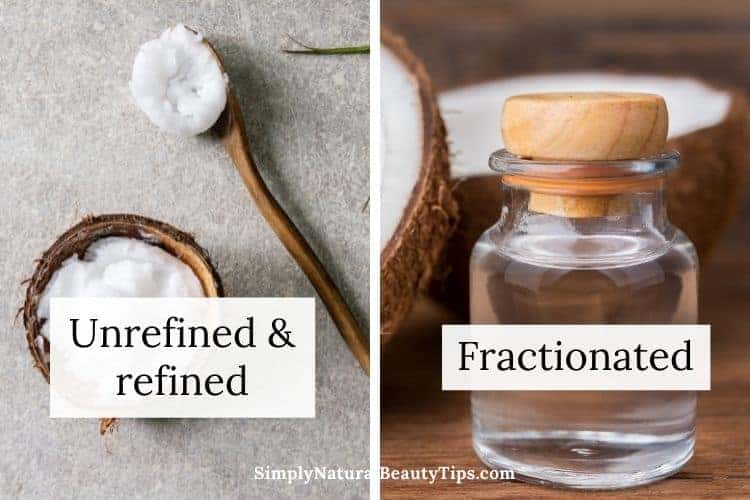 What Kind Of Coconut Oil Is Best As A Carrier Oil? Unrefined vs
Smell, Shelf Life, and Storage Shenanigans
Unfractionated oil smells like heaven—or at least like a piña colada. Fractionated oil smells like absolutely nothing. It’s the introvert of the family.
Storage is another hilarious difference. Unfractionated oil throws a tantrum below 76°F (24°C) and turns solid. You’ll find yourself wrestling a jar in winter like it’s a stubborn butter cube. Fractionated oil stays liquid, no matter how cold your bathroom gets.
Shelf life? Unfractionated oil can last forever—literally years—because it’s stable. Fractionated oil also lasts a long time, but it’s more processed, so some purists argue it loses the magic touch. I say, just use it up before your great-grandkids inherit it.
Best Uses: Pick Your Fighter
Let’s get practical. Unfractionated is your hero for:
- Deep body moisturizing (hello, dry legs in winter).
- Oil pulling in your mouth (yes, it’s a thing—swish it around for shiny teeth).
- Removing stubborn waterproof makeup (it’s a gentle beast).
- Cooking, baking, and pretending you’re on a tropical island.
Fractionated is your go-to for:
- Lightweight face moisturizer that won’t break you out.
- Carrier oil for essential oils (it dilutes them like a pro).
- Hair serum that doesn’t turn your locks into a grease slick.
- Tattoo aftercare—it’s gentle, non-greasy, and doesn’t clog pores.
See? They’re not enemies. They’re just specialists. One is a Swiss Army knife; the other is a scalpel. You need both in your life, depending on the mission.
The Verdict: Which One Wins?
The truth is, neither is “better.” It’s like asking if a cat or a dog is better—they’re both awesome, just for different reasons. Unfractionated is the all-natural, nutrient-dense, deep-moisture beast. Fractionated is the lightweight, non-clogging, no-drama queen.
My advice? Keep a jar of unfractionated in your kitchen for cooking and a bottle of fractionated in your bathroom for your face. It’s the skincare equivalent of having both coffee and tea—you’ll be ready for any mood.
And if you’re still confused? Just pick the one that makes you smile. Your skin is resilient, and honestly, a little coconut love—fractionated or not—is better than none. You’ve got this.
So, Go Get Glowing!
Now you’re armed with the oily truth. Next time you see those two bottles at the store, you’ll nod like a skincare ninja and grab what you need. No more Googling at 2 a.m., wondering if you just bought the wrong oil.
Your skin is about to be hydrated, happy, and hilariously smooth. Whether you go full-fractionated or ride-or-die unfractionated, remember: you’re beautiful, you’re doing great, and you’re one coconut away from dewy greatness. Now go slather, my friend. Go slather.
