House Shoes Good For Plantar Fasciitis

Last Tuesday, I watched my friend Jen hobble across my kitchen like a cowboy who’d been thrown from a horse one too many times. She was clutching her coffee mug and muttering...

Last Tuesday, I watched my friend Jen hobble across my kitchen like a cowboy who’d been thrown from a horse one too many times. She was clutching her coffee mug and muttering something about “stabbing pains” in her heel. I felt for her—truly—but I also had to bite back a laugh when she kicked off her stylish-but-flat sandals and groaned, “I can’t even walk to the bathroom without regretting my life choices.” Sound familiar? If you’ve ever had that sharp, lancing jolt in your heel first thing in the morning, you probably know the villain: plantar fasciitis.
Here’s the thing Jen didn’t realize: her feet were fighting a two-front war. She was treating the pain with ice and stretches, but then she’d slide into those flimsy slippers that offered zero support. It’s like going to the gym for a leg day, then driving home in a car with square wheels. So let’s talk about the one thing that can turn your mornings from “ouch” to “okay, maybe I’ll survive”: house shoes. Yes, the humble indoor footwear you probably ignore.
Now, I know what you’re thinking: “House shoes? Aren’t those just fuzzy things I wear to fetch the mail?” Oh, my sweet summer child—no. If you have plantar fasciitis, your house shoes need to do more than keep your toes warm. They need to act like a tiny, supportive butler for your arches. The key is good arch support and cushioning that doesn’t let your heel collapse like a sad soufflé the second you stand up.
Must Read
Let me explain why this matters. Your plantar fascia is a thick band of tissue that runs from your heel to your toes—think of it as a rubber band. When it’s strained or tight, that rubber band gets micro-tears and inflammation. Now, imagine walking on hard tile or hardwood floors all morning. Every step is a small tug on that already angry rubber band. House shoes with a supportive sole act like a shock absorber, giving that tissue a break so it can actually heal.
But here’s the ironic part: most people grab the cheapest, softest slippers they can find. Those fluffy cloud-mops? They’re worse than going barefoot. They offer no structure, so your arch flattens out, and you end up with more pain. (Side note: I once bought a pair of unicorn slippers from a discount bin. Cute? Yes. Functional? I might as well have been walking on marshmallows soaked in regret.)
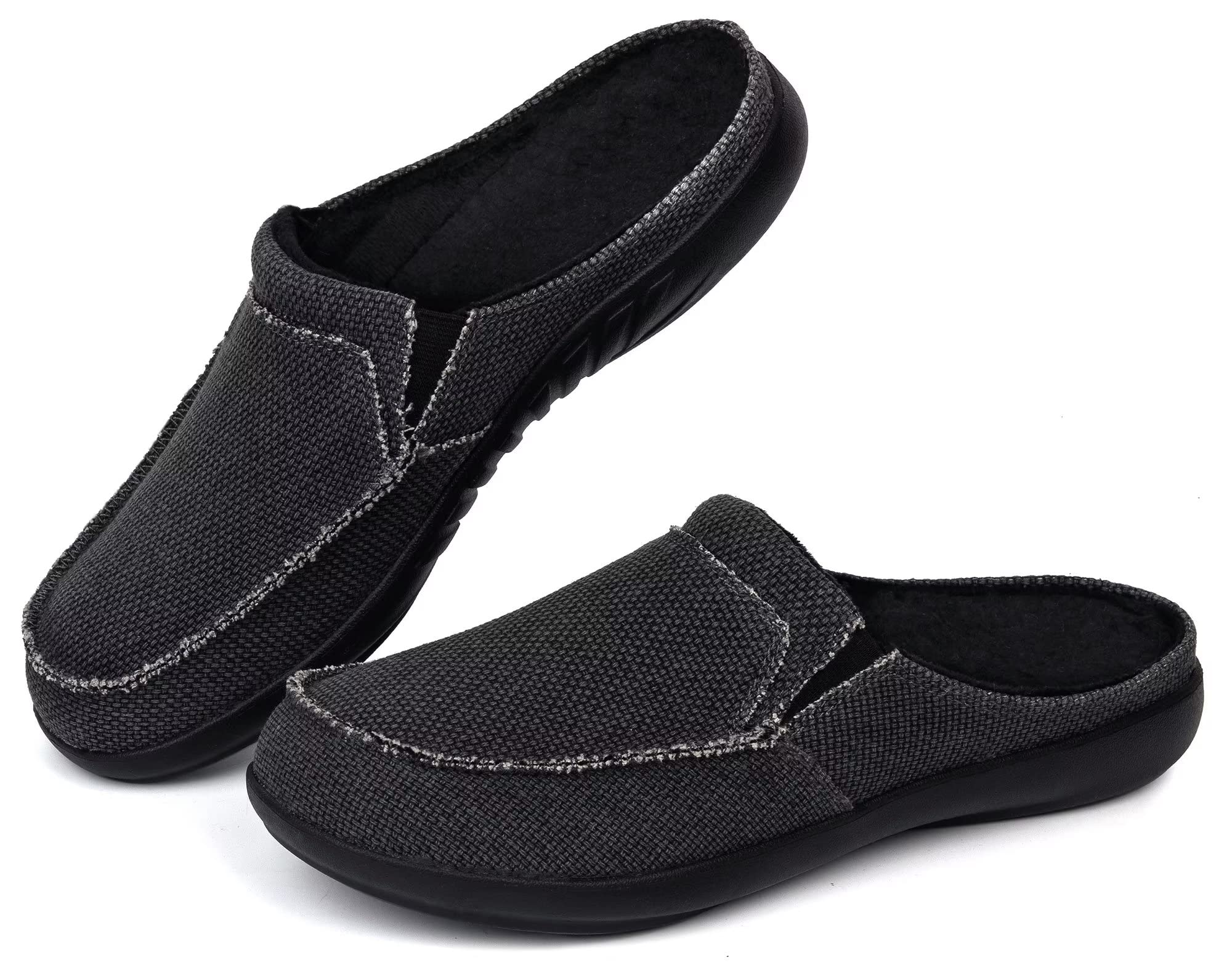 Plantar Fasciitis Slippers for Men Arch Support Orthopedic Canvas
What to Look for in a Plantar Fasciitis-Friendly House Shoe
Okay, let’s get practical. You don’t need to break the bank, but you do need to look for a few specific features. First, a firm heel cup—not squishy, but not rock-hard. It should cradle your heel so it doesn’t wobble. Second, arch support that you can actually feel. If you slide your foot in and your arch feels like it’s floating in space, that shoe is a dud.
Third, a slight heel elevation. I know that sounds weird, but a small lift (like 1/4 inch to 1/2 inch) takes pressure off the plantar fascia by tilting your foot forward. Many good house shoes have a built-in rocker sole that mimics this. And finally, a non-slip sole—because stumbling while you’re already in pain is a special kind of comedy you don’t want to star in.
Now, let me dish on my favorite types. Crocs? Yes, really. They’re ugly, I know, but the classic Crocs have a supportive, contoured footbed and a slight heel cup. Put them in “sport mode” (strap back) and they’re surprisingly effective for around the house. Another option: Oofos recovery sandals. They look like pool floaties for your feet, but they’re designed to absorb shock and reduce strain on your fascia. I wore a pair after a long hike, and my arches literally thanked me. (Your feet might stage a protest if you try to buy the knock-off version, though—I learned that the hard way.)
 Litfun Women's Orthopedic Slippers with Arch Support Adjustable Open
Slides vs. Slippers: Which Wins?
Great question. Slides (open-toe) are easier to slip on and off, which is perfect for midnight bathroom trips. But they can sometimes let your foot slide forward, causing toe gripping—which tightens your calf and, yep, worsens plantar fasciitis. Closed-toe slippers keep your foot snug, so your toes don’t have to work overtime. I personally rotate: Birkenstock-style house shoes (like the Arizona Soft Footbed) during the day, and fuzzy clog slippers with arch support for evening lounging.
One more thing: don’t forget the floor you’re walking on. If your house has tile or hardwood, even the best house shoes can only do so much. I put a cheap, thick rug runner in my kitchen, and it made a noticeable difference. (Jen came over last week, stepped on it, and said, “Is this carpet made of angel tears?”) It’s not a cure, but it buys you a little grace.
Look, I’m not here to sell you a specific brand—promise. But I will say this: if your plantar fasciitis feels like a petty tyrant running your mornings, test a proper pair of house shoes for a week. Walk around your home, do your routine. You might feel a little foolish at first, admiring your own arches. But when that morning heel pain starts to fade? You’ll probably catch yourself smiling at your boring-but-brilliant house shoes. And maybe—just maybe—you’ll start forgiving your friend for all those cowboy jokes.
