What Is The Difference Between A Fruit And A Veggie

Ever stood in the produce aisle, holding a tomato and wondering, “Am I buying a fruit or a veggie?” You’re not alone. It’s one of those simple questions that gets surprisingly...

Ever stood in the produce aisle, holding a tomato and wondering, “Am I buying a fruit or a veggie?” You’re not alone. It’s one of those simple questions that gets surprisingly tricky.
The short answer: it depends on who you ask. A botanist will give you a different answer than a chef. And honestly? Both are right in their own way.
The Botanical Breakdown: The Science of Seeds
Let’s start with the nerdy, but fascinating, part. Botanically speaking, a fruit is the part of a plant that develops from a flower and contains seeds. Think apples, oranges, and—brace yourself—pumpkins.
Must Read
A vegetable, in this same scientific world, is everything else. That includes roots (carrots), stems (celery), leaves (spinach), and even flower buds (broccoli). So, a fruit is a specifically designed seed-holder, while veggies are the plant’s other tasty bits.
This means that cucumbers, peppers, and even corn (yes, corn) are all botanical fruits. Mind blown yet? It is pretty cool when you think about how nature packages seeds so creatively.
The Culinary Twist: Taste and Texture
Here’s where things get practical. In your kitchen, no one calls a bell pepper a fruit. Why? Because of flavor and use. Chefs and cooks classify produce by how it tastes and how it’s eaten.
Fruits in the culinary sense are typically sweet or tart. You use them for desserts, smoothies, or jams. Veggies lean toward savory, earthy, or sometimes bitter flavors. They show up in salads, soups, and main dishes.
So a tomato? It’s a botanical fruit but a culinary vegetable. It’s both—a delicious, juicy rebel. This is why you’ll hear it called “nature’s in-between.”
Fun Comparisons to Mess With Your Mind
Let’s play a game. Take a strawberry. It’s a fruit, right? But technically, its seeds are on the outside, and the red part isn’t from the flower’s ovary. So a strawberry is actually a false fruit or accessory fruit. Name weird, but true.
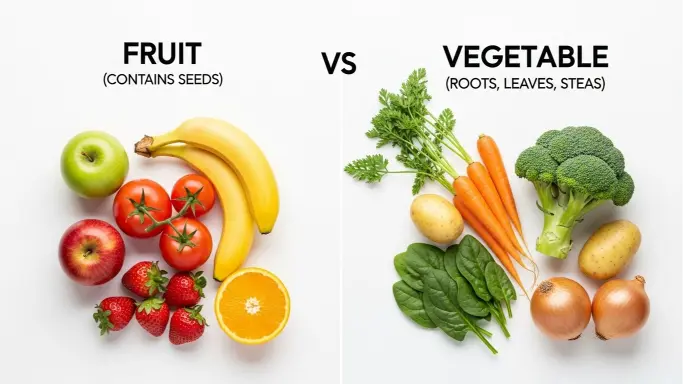 Fruit vs Vegetable: What’s the Real Difference in 2026?
Now, a rhubarb stalk? It’s a vegetable (a stem), but because we often bake it with sugar into pies, we call it a “fruit.” It’s a culinary impostor! And a banana? Botanically a berry. Yes, a berry. Meanwhile, a raspberry is not a true berry—it’s a cluster of tiny drupelets. Everything is confusing and wonderful.
That’s the fun part: the line between fruit and veggie is blurry. It’s not a strict rule, but more like a guideline that shifts depending on context.
Why Should You Care?
Honestly, you don’t have to care. Your salad won’t judge you for tossing in a few cherry tomatoes (fruit) alongside cucumber (also fruit but treated as veggie). But knowing the difference makes you a smarter shopper and a more curious eater.
It also explains why the US Supreme Court once ruled on this! In 1893, they decided that tomatoes should be taxed as vegetables under U.S. law, even though they’re botanically fruits. The court said, “In the common language of the people, it is a vegetable.” Power move.
So, What’s the Takeaway?
The next time someone asks, “Is this a fruit or a veggie?” you can confidently answer: “Depends on who you’re talking to.”
Botanists focus on seeds and flower parts. Cooks focus on flavor and recipes. You? You get to enjoy both perspectives. It’s a little bit of science, a little bit of culture, and a whole lot of delicious.
So go ahead, pick up an avocado (yes, it’s a fruit) and a zucchini (also a fruit), and make a killer salad. Call it whatever makes you smile. Because at the end of the day, the best distinction is simple: if it tastes good, who really cares about the label?
