What Was The Purpose Of The Thirteenth Amendment

You probably learned about the Thirteenth Amendment in a history class, maybe while doodling in a notebook or half-listening to a documentary. But let’s be real—its purpose is...
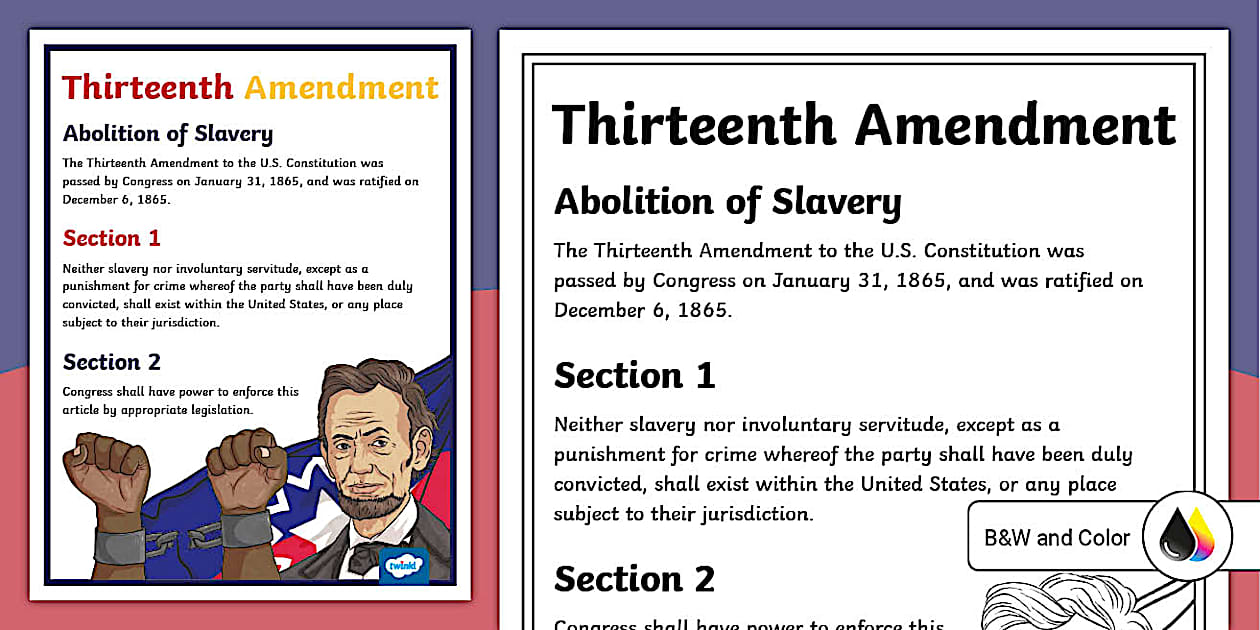
You probably learned about the Thirteenth Amendment in a history class, maybe while doodling in a notebook or half-listening to a documentary. But let’s be real—its purpose is way more fascinating and relevant than most of us remember. Ratified on December 6, 1865, this single sentence reshaped America’s legal landscape forever. It didn’t just end slavery; it redefined what freedom actually means in the eyes of the law.
So, what was the big, bold purpose? Simply put: to abolish slavery and involuntary servitude across the entire United States. Before 1865, the Constitution actually protected the practice—think the infamous “three-fifths compromise” and clauses that let states keep enslaved people as property. The Thirteenth Amendment was the legal wrecking ball that smashed all that. It’s the single most radical rewrite of American citizenship—and it happened right after the Civil War.
The One Sentence That Changed Everything
Here’s the text, and it’s deceptively short: “Neither slavery nor involuntary servitude, except as a punishment for crime whereof the party shall have been duly convicted, shall exist within the United States.” That’s it. One sentence, but it did two huge things. First, it banned owning people as property—period. Second, it gave Congress the power to enforce this with “appropriate legislation.” It was a massive victory for human rights, but it also left a tricky loophole: “except as a punishment for crime.”
Must Read
That little exception is why, even today, some people argue the amendment’s work isn’t quite done. But let’s not get ahead of ourselves. The main purpose was crystal clear: declare that no human being can be legally owned by another. It was the constitutional equivalent of throwing open the prison doors—legally, if not immediately in practice.
Why It Wasn’t Just About the South
You might think the Thirteenth Amendment was only about freeing enslaved people in the Confederate states. Nope. It applied to every state, including the North. Before 1865, Northern states had their own forms of legal servitude—like indentured servitude and forced labor for debt. The amendment swept those away too, making the entire country a place where your body and labor are your own. That’s a huge shift in personal autonomy.
Think about it: today, when you sign a contract or take a job, it’s because you chose to—not because someone claims ownership of you. The Thirteenth Amendment made that choice the law of the land. It’s the legal bedrock for things like fair wages and the right to quit your job (within reason, obviously).
Practical Tips for Living the Amendment’s Spirit
You don’t need a law degree to honor the Thirteenth Amendment’s purpose in daily life. Here’s how to make freedom feel fresh:
1. Vote like your liberty depends on it. Because it does. The amendment gave Congress power to enforce freedom, which means laws about voting rights, labor protections, and criminal justice reform all trace back to it. Your vote is a direct echo of 1865.
2. Support fair labor practices. The amendment outlawed forced labor, but modern slavery exists in supply chains. Check if your clothes or coffee are made by people who aren’t free—there are apps for that. Buying ethically is a quiet, radical act.
 PPT - Rebuilding the South PowerPoint Presentation, free download - ID
3. Question the “prison exception.” The amendment allows forced labor as punishment for a crime. That’s why incarcerated people in the U.S. can be paid pennies an hour. Learning about prison reform—and supporting groups that fight it—keeps the amendment’s purpose alive. Freedom shouldn’t have a loophole.
Pop Culture & Fun Facts
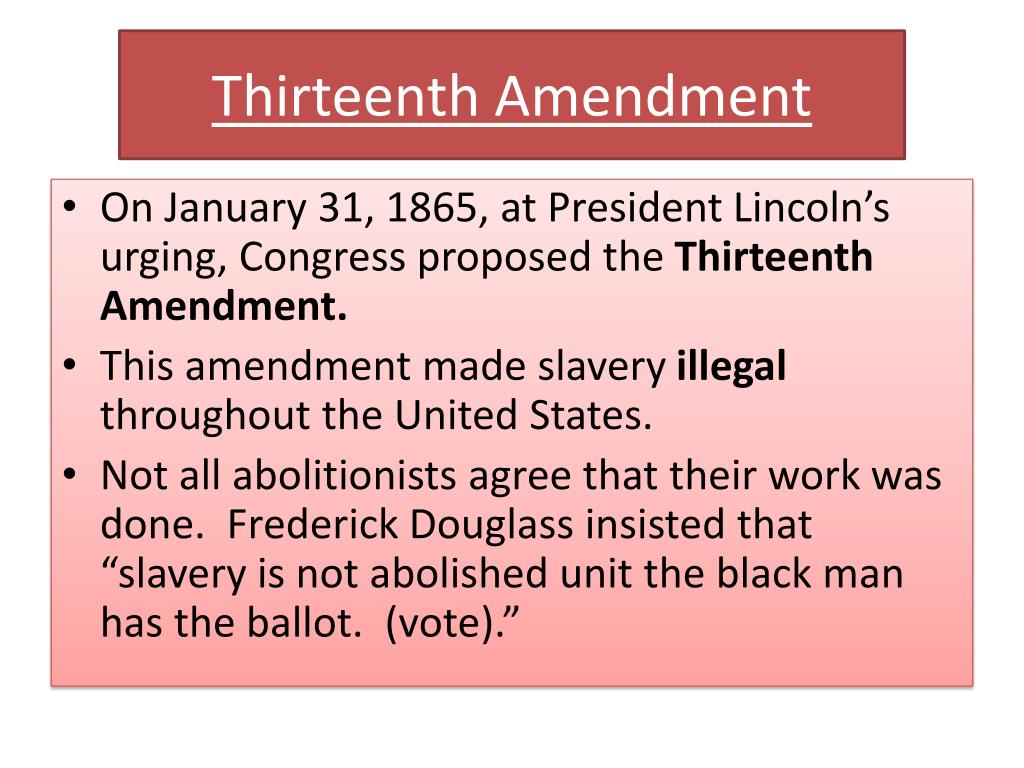
Ever seen the movie Lincoln (2012)? It dramatically shows the battle to pass the amendment in Congress. Spoiler: it barely made it. President Lincoln and his allies bribed and cajoled lawmakers to get the two-thirds vote. In real life, the vote was 119 to 56—a nail-biter.
Fun fact: The Thirteenth Amendment was the first of three “Reconstruction Amendments.” The Fourteenth Amendment (equal protection) and Fifteenth Amendment (voting rights for Black men) followed. Together, they form the constitutional backbone of civil rights. But the Thirteenth is the one that removed the curse of ownership from the Constitution.
Another fun fact: The amendment was passed by Congress on January 31, 1865, but wasn’t ratified by enough states until December. Texas was the last to ratify it—in 1870. Yeah, they took their sweet time.
A Daily Life Reflection
So, what does a 150-year-old amendment have to do with your morning coffee or your commute? Everything. Every time you choose your own path—your job, your home, your relationships—you’re walking on ground paved by the Thirteenth Amendment. It’s the legal promise that you belong to yourself. That’s not just history; it’s a daily gift.
Next time you feel frustrated by a long workday or a tough decision, take a breath. Realize that the core purpose of the Thirteenth Amendment—the right to not be owned—is still the foundation of your autonomy. We don’t live in a perfect world, but we live in one where your body and will are yours alone. That’s worth a quiet moment of gratitude.
Now go enjoy that freedom—maybe by taking a walk, reading a book you love, or just saying “no thanks” to something you don’t want to do. That’s the amendment in action.
