Why Are There So Many Dangerous Animals In Australia

Let’s be honest: when you think of Australia, you probably picture kangaroos, the Sydney Opera House, and a sunburnt landscape. But then, the thought quickly turns to the spid...

Let’s be honest: when you think of Australia, you probably picture kangaroos, the Sydney Opera House, and a sunburnt landscape. But then, the thought quickly turns to the spiders, the sharks, and that nerve-wracking sensation of checking your shoe for a snake. Why does this one continent seem to have cornered the market on critters that can ruin your whole day?
It’s a fair question, and the answer is a weird mix of evolutionary luck, geographic isolation, and a simple case of “it’s not personal, mate.” These animals aren’t out to get you. They’re just really, really good at surviving in a land that has been doing its own thing for millions of years.
Think of Australia as the world’s biggest, hottest island. When the continents broke apart, Australia floated off like a giant life raft carrying only its native passengers. Without many large, land-based predators like lions or wolves, small creatures had to evolve different tricks to stay alive.
Must Read
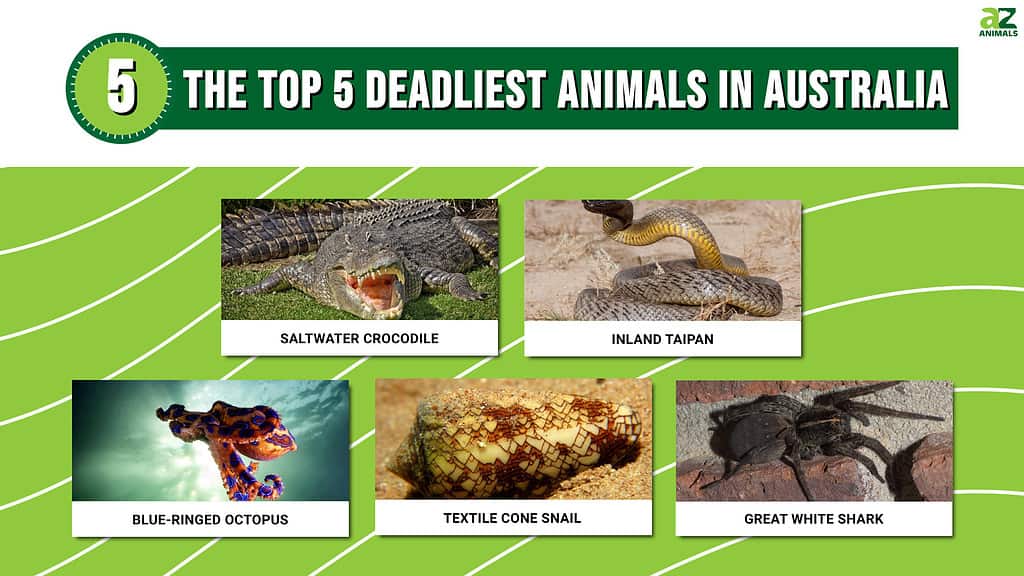
So, instead of running fast, many Australian animals got very venomous. It’s a low-energy, high-reward defense system. A tiny cone snail can’t outrun you, but its venom can drop something much larger. It’s the ultimate stay-at-home security system.
Let’s take the box jellyfish. It’s basically a floating blob of pure “nope.” But it didn't become that way to spite swimmers. In the warm, murky waters, being nearly invisible and delivering a lightning-fast sting is the best way to catch a shrimp for dinner. Annoying for us, brilliant for the jellyfish.
Then there’s the Sydney Funnel-web spider. It sounds like a B-grade horror movie star. Yet, if you met one, it wouldn’t be looking for your ankle. It’s just a grumpy arachnid that lives in a muddy burrow and feels threatened by your gardening. Its venom is potent because its natural predators are other insects and lizards that are surprisingly resistant.
And what about the saltwater crocodile? Imagine the grumpiest reptile you’ve ever seen, then multiply it by a million years of perfect hunting. Crocs have been around since the dinosaurs. They are not evil; they are simply the most efficient ambush predators the planet has ever made. You are just a large, warm bag of water in their territory.
Here’s the wild part: the danger is mostly a media trick. We hear about the one snake bite in Queensland while ignoring the millions of Australians who live their whole lives without a scratch. Most Aussies have never even seen a dangerous spider in their living room. It’s like fearing a lion in downtown New York.
In fact, Australia is statistically safer than many other places. You are far more likely to be killed by a bee in the US or a hippo in Africa than by an Australian animal. The real danger in Australia is heat stroke and sunburn. But a story about “sunscreen” is not as exciting as “giant killer snake,” right?
 Why Are There So Many Dangerous Animals In Australia | Detroit Chinatown
So, why should you care about this weird rolling pin of venom and claws? Because it tells an incredible story about adaptation and survival. Every dangerous animal is a masterpiece of living in a tough neighborhood. The thorny devil drinks water through its skin. The platypus is a poisonous, egg-laying mammal with a duck bill. It’s bonkers.
Caring about these animals means respecting their role. The dingo keeps kangaroo populations in check. The stonefish is a master of camouflage that keeps the reef floor balanced. Without its venom, it would just be a lump of ugly rock. They are the weird, essential cousins in the family of life.
Think of it like this: you wouldn’t walk through a burning building without checking for hot spots. In Australia, you just learn to do the same with rocks, shady logs, and the ocean. You adapt. You learn the “shuffle” walk to warn snakes you’re coming. You shake out your towel before sitting on the beach.
When you understand this, the fear turns into awe. That octopus with the blue rings isn’t a monster; it’s a tiny, brilliant package of biochemistry. That taipan snake isn’t looking for a fight; it’s just trying to get a mouse for lunch without being stepped on by a giant, clumsy human.
So, the next time you watch a nature documentary and see a huntsman spider the size of your hand, don’t scream. Smile. You’re looking at a creature that won a billion-year game of evolution on a continent that really wanted to be left alone. They aren’t dangerous because they hate us. They’re dangerous because they got very, very good at being themselves.
And honestly? That’s something worth caring about, even if you keep a broom handy. Just in case.
