Can You Use Heavy Cream Instead Of Half And Half

Picture this: You’re halfway through a recipe for creamy pasta, and your soul is ready for that silky, velvet finish. Then you open the fridge and find only a sad carton of ha...

Picture this: You’re halfway through a recipe for creamy pasta, and your soul is ready for that silky, velvet finish. Then you open the fridge and find only a sad carton of half-and-half with a best-by date from the last eclipse—or worse, nothing but a pint of heavy cream. Don’t panic. The answer is yes, you absolutely can use heavy cream instead of half-and-half, but let me warn you: you’re about to enter a world of dairy drama and delicious decisions.
Let’s get this straight: heavy cream is the muscle-bound bodybuilder of dairy, while half-and-half is the polite, slightly boring cousin who shows up to brunch on time. Heavy cream clocks in at about 36–40% milk fat, while half-and-half is a lightweight at 10–18%. That means swapping one for the other isn’t a crime—it’s a culinary power move, with a few cautionary tales.
The Golden Rule: Dilute or Decimate?
If you replace half-and-half with straight heavy cream in your coffee, you’re not making coffee—you’re making a dairy soup with a caffeine whisper. That’s because heavy cream is so thick it can turn your morning brew into a gloopy, cholesterol-laden hug that doesn’t know when to let go. For coffee, you’ll want to dilute heavy cream with a splash of whole milk or water—about one part cream to two parts liquid—to mimic half-and-half’s delicate balance.
Must Read
But here’s the shocking fact: heavy cream is actually closer to butter than milk. Yes, you’re basically adding warm, liquid gold to your food. In fact, a single tablespoon of heavy cream has about 51 calories and 5.5 grams of fat, while half-and-half has just 20 calories per tablespoon. So if you’re counting calories and want to live a little, heavy cream is your decadent rebel yell.
When Heavy Cream Is a Hero (and When It’s a Villain)
In sauces and soups, heavy cream is a game-changer. It won’t curdle as easily as half-and-half when faced with high heat or acidic ingredients like tomatoes. I’ve personally watched heavy cream stand firm against a lemon-tinged chicken piccata while half-and-half whimpered into a curdled mess. That’s because heavy cream’s higher fat content stabilizes it like a dairy bodyguard—it takes more punishment before breaking a sweat.
However, in baking, heavy cream can be a sneaky saboteur. If you swap it one-for-one in a muffin recipe that calls for half-and-half, your muffins might come out too rich, dense, and greasy—like they’ve been hitting the gym but forgot to sweat. The fix? Use about two-thirds the amount of heavy cream, then add a splash of milk or water to match the liquid volume. Your muffins will still taste like a cloud kissed by a cow.
But here’s the real kicker: heavy cream can whip into stiff peaks, while half-and-half will just flop like a sad soufflé. If your recipe requires whipping—like for a light, airy dessert—don’t even try with half-and-half. That’s like asking a goldfish to climb a tree. Use heavy cream and thank the dairy gods.
The Great Coffee Catastrophe (and How to Dodge It)
Let’s revisit coffee, because this is where most casual cooks make their first, hilarious mistake. Imagine pouring heavy cream straight into your mug: it sinks like a lead balloon, then slowly rises as a greasy slick. You’ll be sipping a drink that tastes more like melted ice cream than a morning ritual. The trick is to warm the cream slightly before adding it, or whisk it with a fork first to incorporate air. This prevents the fat from separating and coating your tongue like a buttercoat.
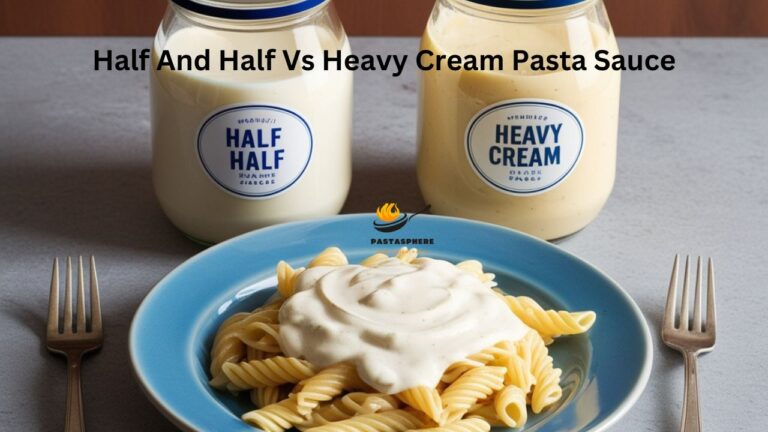 Half And Half Vs Heavy Cream Pasta Sauce
I once did this at a friend’s house, and she took one sip and said, “Did you put ranch dressing in my coffee?” No, Karen, that’s just unadulterated heavy cream. Moral of the story: dilute, warm, or whisk—your taste buds will thank you.
Surprising Facts That’ll Make You the Life of the Party
Did you know that heavy cream has less lactose than half-and-half? That’s because lactose is found in the watery part of milk, which heavy cream has less of. So if you’re mildly lactose-intolerant but still want creamy pasta, heavy cream might actually save your stomach from a rebellion. Meanwhile, half-and-half could send you into gas-lighting territory.
Also, heavy cream can be frozen for months without going weird, while half-and-half turns into a grainy, separated nightmare. So if you buy a carton of heavy cream and only use a splash, pour the rest into ice cube trays. Frozen heavy cream cubes are like little dairy diamonds you can drop into soup, coffee, or even cocktails. Yes, you can make a boozy, creamy espresso martini with them. I won’t judge.
The Final Swap Verdict
Here’s your cheat sheet: Use heavy cream when you want richness, stability, and a little drama—like in alfredo sauce, chowders, or whipped toppings. Use half-and-half when you want a lighter, more subtle touch—like in scrambled eggs, light soups, or your morning coffee. If you only have heavy cream, just remember the three D’s: Dilute, Dilute, Dilute.
One last surprise: heavy cream actually contains more vitamin A and vitamin D than half-and-half because those vitamins are fat-soluble. So you’re not just being decadent—you’re being medicinal. Feel good about your life choices.
So go ahead, swap heavy cream for half-and-half like a reckless but heroically delicious fool. Your taste buds will either reach nirvana or stage a tiny rebellion. And if all else fails, just call it a “traditional dairy improvisation.” That’s chef-speak for “I forgot to go to the store.” Now go forth and cream wisely.
