Definition Of Experimental Probability In Math

Imagine you're at a carnival, and you're eager to win a giant stuffed animal at the ring toss game. You've got your eyes on the prize, and you're willing to spend a few bucks...
Imagine you're at a carnival, and you're eager to win a giant stuffed animal at the ring toss game. You've got your eyes on the prize, and you're willing to spend a few bucks to take home that adorable teddy bear. But, have you ever wondered what the chances are of actually winning?
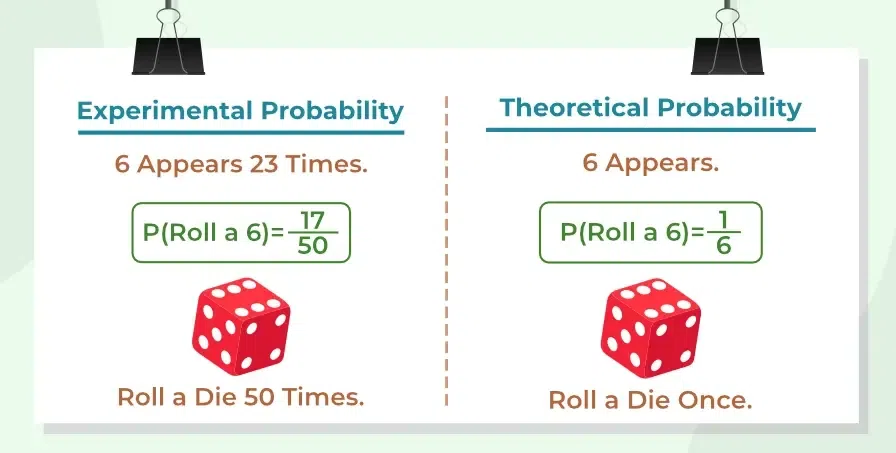
The experimental probability is a concept in math that helps us figure out the likelihood of an event occurring based on repeated trials or experiments. It's like trying your luck at the ring toss game multiple times to see how often you can win. By doing so, you'll get a sense of the probability of winning, which can help you decide whether to spend more money or try a different game.
What is Experimental Probability?
Experimental probability is defined as the number of times an event occurs divided by the total number of trials or experiments conducted. For instance, if you play the ring toss game 10 times and win 3 times, your experimental probability of winning would be 3/10 or 0.3. This means that, based on your experience, you can expect to win about 30% of the time.
Must Read
To calculate the experimental probability, you need to keep track of the number of successful outcomes (in this case, winning the game) and the total number of attempts. The more trials you conduct, the more accurate your experimental probability will be. It's kind of like baking a cake – the more times you make it, the better you'll get at predicting how it'll turn out.
Real-Life Applications
Experimental probability is not just limited to games and carnivals; it has many practical applications in our daily lives. For example, a company might conduct experiments to determine the effectiveness of a new marketing strategy or the reliability of a product. By analyzing the data from these experiments, they can make informed decisions about how to proceed.
In medicine, experimental probability is used to determine the likelihood of a patient responding to a new treatment or medication. Doctors and researchers conduct clinical trials to test the efficacy of a treatment and calculate the probability of success. This helps them make informed decisions about patient care and develop more effective treatments.
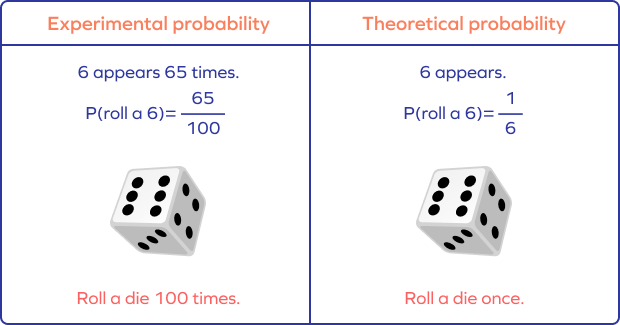 Experimental Probability? Definition, Formula, Examples
Why Should We Care?
Experimental probability might seem like a complex concept, but it's actually pretty straightforward. By understanding and applying it, we can make better decisions in our personal and professional lives. Whether it's deciding which game to play at the carnival or which investment to make in the stock market, experimental probability can help us weigh the risks and potential outcomes.
In essence, experimental probability helps us navigate the uncertainties of life by providing a framework for making informed decisions. So, next time you're faced with a choice or a chance event, take a moment to think about the experimental probability – it might just help you make a more informed decision and increase your chances of success.
So, go ahead and try your luck at the ring toss game – and don't be afraid to experiment and learn from your experiences. With a little bit of math and a lot of practice, you'll be a pro at calculating experimental probability in no time. Who knows, you might just win that giant stuffed animal and become the envy of all your friends!
