Taste Difference Between Yams And Sweet Potatoes

Okay, let’s settle this once and for all. You know that scene at the Thanksgiving table where someone proudly says, “Pass the yams”? Newsflash: they’re probably handing you sw...
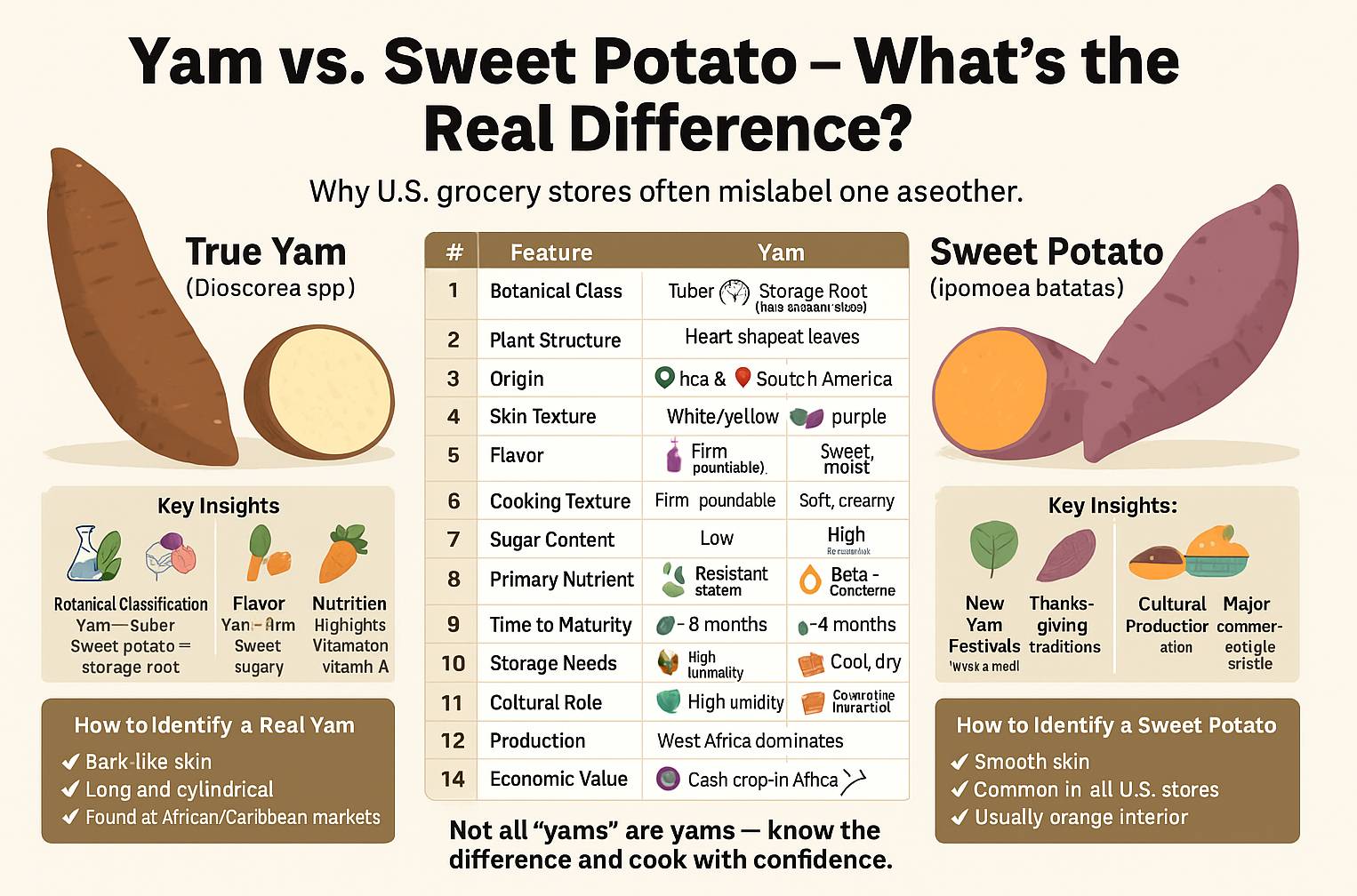
Okay, let’s settle this once and for all. You know that scene at the Thanksgiving table where someone proudly says, “Pass the yams”? Newsflash: they’re probably handing you sweet potatoes. I know, I know—your grandma’s marshmallow-topped casserole felt so legit. But the truth is, we’ve been living a delicious, tuber-based lie for decades.
Here’s the thing: true yams and sweet potatoes aren’t even cousins. They’re more like distant acquaintances who met at a grocery store mix-up. Yams are actually from Africa and Asia. Sweet potatoes? They’re from the Americas. The confusion? That’s all on 20th-century American marketers who called orange sweet potatoes “yams” to sound fancier. Sneaky, right?
The Real Yam: A Starchy, Chunky Beast
Let’s talk about the actual yam first. If you’ve ever seen one, you’ll never confuse it again. A true yam is massive—like a log, not a cute little potato. The skin is thick, rough, and almost bark-like, with a texture that screams, “I’ve been through some stuff.”
Must Read
Inside, a yam is pale, starchy, and dry. Imagine a potato that went to the gym for ten years and forgot to eat anything else. It’s not sweet. At all. You’d serve it boiled, fried, or pounded into fufu—a West African staple. Think dense, savory, and hearty.
Flavor-wise, it’s subtle, like a blank canvas for spices. You won’t get a sugar rush. It’s a workhorse, not a dessert. Honestly, if you’re expecting that marshmallow vibe, a real yam will feel like a betrayal.
The Sweet Potato: The Sweet, Juicy Star
Now, the sweet potato? That’s your party guest. Even the raw ones smell faintly sweet when you cut them open. The skin is smooth, thin, and easy to peel—no heroic effort required. Inside, they range from pale yellow to vivid orange, with the orange ones being the sweetest.
Cook one, and something magical happens. The starches convert to sugar, making it soft, creamy, and almost candy-like. That’s why they’re the star of casseroles. You can roast them, mash them, or even eat them raw in a salad (I dare you to try a raw yam—your jaw will quit).
The flavor is straight-up sweet, with notes of caramel and a hint of nuttiness. It’s the kind of vegetable that doesn’t need butter to convince you to eat it. It’s a solo act.
The Great Taste Test: Side by Side
Imagine you’re at a dinner party, and someone serves both. First, the yam. Take a bite—you get a dense, dry, slightly earthy taste. It’s a bit like a russet potato that ate a bread roll. You’ll be reaching for salt, pepper, or maybe a puddle of gravy. It’s satisfying, but it’s a blank page.
:max_bytes(150000):strip_icc()/sweet-potatoes-vs-yams-1808067-FINAL-5bedddc046e0fb0051924a11.png) The Difference Between Sweet Potatoes And Yams
The Difference Between Sweet Potatoes And Yams
Next, the sweet potato. One forkful, and your mouth does a little dance. It’s juicy almost, with a velvety texture that melts. The sweetness hits your tongue first—almost like a pumpkin pie filling. You don’t need salt. You need a second helping.
So, which is better? Depends on the mood. If you’re making a savory stew, a yam is king. If you’re craving comfort that tastes like a hug, sweet potatoes win. But let’s be real: 90% of the time, you’re eating sweet potatoes and calling them yams. And that’s okay. No one’s judging.
Why Does This Confusion Even Happen?
Blame the grocery store, not your taste buds. In the U.S., there are two main sweet potato types: firm (pale, dry, less sweet) and soft (orange, moist, super sweet). The soft ones? They got labeled “yams” in the 1930s to stand out. It stuck. Now, the USDA has given up and just calls them “sweet potatoes” anyway.
So when you buy a “yam” at the supermarket, you’re really buying a moist, orange sweet potato. A true yam is a different species—from Africa or the Caribbean—and it looks like a hairy log. You won’t find it next to the marshmallows.
Ask yourself: have you ever bought a yam that weighed ten pounds? No? Then you’re probably holding a sweet potato. It’s the ultimate identity crisis—and we’re all accomplices.
The Takeaway (Pun Intended)
Next time you’re at the store, don’t stress the label. Taste is what matters. If it’s orange and sweet, it’s a sweet potato. If it’s beige and starchy, it’s a yam. Want a fun fact? Yams are actually monocots (like grasses), while sweet potatoes are dicots (like morning glories). They’re not even close relatives. Mind blown?
So, grab your favorite—the sweet, the savory, the marshmallow-topped whatever. Just know that every time you say “yam,” a botanist somewhere sheds a tear. But hey, who cares when it tastes this good? Pass the casserole, and let’s not overthink it.
