How Often To Feed Tetras

So, you’ve got tetras. Those tiny, glittering torpedoes of chaos that spend their days chasing each other around your underwater disco. You love them, you feed them, and now y...

So, you’ve got tetras. Those tiny, glittering torpedoes of chaos that spend their days chasing each other around your underwater disco. You love them, you feed them, and now you’re staring at the fish food container like it’s a sacred text. How often do you feed these little guys? Buckle up, because this is where science meets a vacuum cleaner with fins.
Let’s get one thing straight right off the bat: tetras are not hungry. Ever. They lie. If you walk past the tank, they will swim to the front and give you the sad, liquid eyes of a Victorian orphan. Do not fall for it. In the wild, a tetra’s life is a constant hunt for tiny bugs, but in your 10-gallon palace, they get breakfast, lunch, and a midnight snack from your toddler’s dropped Goldfish cracker. Overfeeding is the number one killer of tetras, and it’s usually dressed up as love.
The actual answer, the boring-but-true answer, is once or twice a day. But here’s the twist: you should feed them only what they can eat in about two to three minutes. I know, that feels criminal. You just bought a whole jar of flakes and they’re supposed to last? Yeah, that jar will last you until your grandkids inherit the tank. Think of it like this: a tetra’s stomach is roughly the size of its eyeball. Its eyeball. Feed it more than that, and you’re basically stuffing a trash compactor with birthday cake.
Must Read
Now, here’s a fun surprise: tetras actually prefer to eat multiple tiny meals rather than one big feast. If you’re home and want to spoil them (and you absolutely will, because they’re adorable), split that daily ration into two feedings. Morning and evening. But here’s the key: skip a day once a week. That’s right, a fasting day. It mimics their natural feast-or-famine cycles in the wild—they get to hunt imaginary bugs in the gravel, and their digestion gets a break. Plus, it makes you feel like a harsh but loving drill sergeant.
Let’s talk about the “feeding frenzy” chaos. When flakes hit the water, your tetras turn into tiny, glittering piranhas from a B-movie. It’s hilarious and terrifying. But watch the clock. If after three minutes there are flakes floating around like confetti at a sad party, you’ve overdone it. Those leftovers sink and rot, creating ammonia spikes that drown your fish in their own waste. Classy. So vacuum leftovers immediately, or better yet, feed less next time.
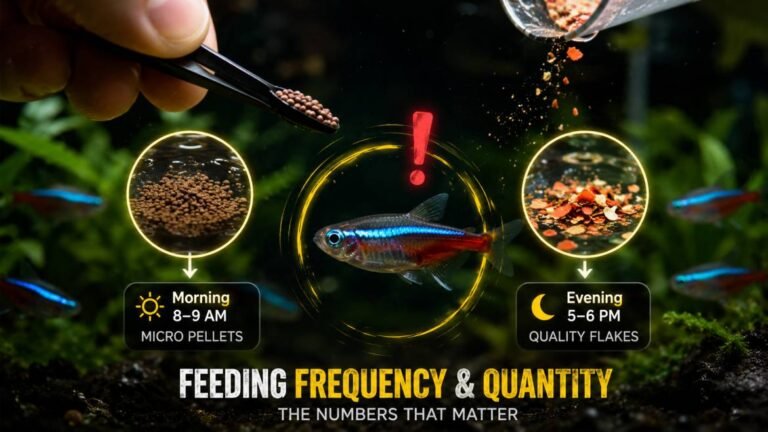 What to Feed Neon Tetras: Best Foods, Schedule & Mistakes to Avoid
What about treats? Oh, you want to be the fun fish parent. Fine. Once or twice a week, you can swap flakes for frozen bloodworms or brine shrimp. Tetras will lose their tiny minds. But a word of caution: defrost them first. If you drop a frozen cube in, you might as well be serving them ice cream—they’re cold-blooded, people! A frozen dinner actually shocks their system. Let the worms thaw in a cup of tank water, then dump them in. Your tetras will perform a synchronized dance of gratitude that rivals a Broadway number.
Here’s another surprising fact: young tetras need more food than adults. Fry (baby tetras) are like teenagers with tapeworms—they eat three to four times a day because they’re building bones and sparkly scales. But adults? They’re lazy. They swim, they argue about territory, they sleep. Once your tetras are fully grown (usually around six months), they become the couch potatoes of the aquarium world. Feed them twice a day and they’ll live for up to five years. That’s a long time to be a glittery jerk.
 Feeding Tetra Fish: How Often And How Much? | PetShun
What about the “vacation feeding block”? You know, those white chalky blocks you stick in the tank when you go to Cancun? Throw them away. They dissolve unevenly, foul the water, and your tetras will either starve or get bloated from eating chalk. Instead, skip feeding for three to four days. Tetras are tough little survivors. In the wild, they’ve lasted through floods and droughts without a single flake. A long weekend without food is a spa retreat for them. Honest.
One more thing: watch their bellies. If your tetras look like pregnant soccer balls, you’re feeding too much. If they’re thin and their spines are showing through their skin, you’re feeding too little. The ideal tetra looks like a sleek sports car, not a minivan. Check the water parameters too—if ammonia or nitrite levels spike, it’s often because uneaten food is rotting in the gravel, silently cursing your name.
Final takeaway: feed your tetras once or twice daily, let them finish in three minutes, and give them one day off per week. That’s it. They’ll be healthy, they’ll be active, and they’ll stop guilt-tripping you with their little fishy faces. But honestly, they’ll still try. Let them. It’s all part of the tank drama you signed up for. Now go forth and feed with righteous restraint—your clean water, and your tetras’ tiny tummies, will thank you.
