When To Plant A Peach Pit

Let’s be honest: deciding when to plant a peach pit feels a bit like trying to convince a cat to take a bath. It’s messy, slightly confusing, and you’re not entirely sure if i...

Let’s be honest: deciding when to plant a peach pit feels a bit like trying to convince a cat to take a bath. It’s messy, slightly confusing, and you’re not entirely sure if it’s worth the hassle. But here’s the thing: growing a peach tree from a pit is one of the most satisfying acts of pure hope you can perform in your backyard.
You eat a perfect, juicy peach in August, and suddenly you’re a farmer. You look at that brown, wrinkled pit in your hand and think, “This little guy is going to be a tree. I’ll name him Sir Juices-a-Lot.”
But then reality hits: when do you actually stick this thing into the ground? The short answer is: not right after you eat the peach. That might sound obvious, but I’ve made that mistake. I once buried a pit in July, watered it lovingly, and waited. Nothing happened except a small ant colony moving in.
Must Read
The Cold Truth (Literally)
Peach pits are stubborn little characters. They need a long, cold nap—a process called stratification—to trick them into thinking winter has passed. Without this chill, your pit will sit in the dirt like a tiny, judgmental rock.
Think of it this way: the pit is a ten-year-old on summer break. It refuses to wake up for school unless it’s had a good three months of freezing weather. So, you have two options: plant it outdoors in the fall, or fake the winter in your fridge.
I prefer the fall planting method because it feels more natural. You eat your peach in late summer, save the pit, let it dry for a few days, and then dig a hole two to three inches deep in your garden right before the first frost. Mark the spot with a stick, or you’ll forget and accidentally plant a tomato there in spring.
The Indoor Cheat Code
If you’re like me and live in an apartment with only a sad patio, you can cheat. Wrap the clean, dry pit in a damp paper towel, put it in a ziplock bag, and stash it in the back of your fridge for 8 to 12 weeks. It’s like giving the pit a spa vacation, except the spa is a crisper drawer next to some sad celery.
 How to Grow a Peach Tree from a Pit
Check on it once a month. If the paper towel gets moldy, swap it out. You’re looking for the moment the pit cracks open and a tiny root peeks out. When that happens, you feel like a botanical wizard.
Then, plant that little rooty thing in a pot with good drainage. Keep it indoors under a grow light or a sunny window until spring. It will look like a pathetic twig for the first year. Don’t worry—that’s normal. My first peach seedling looked like a green toothpick that had given up on life.
Timing is Everything (and Kind of Flexible)
The ideal window for outdoor planting is late fall to early winter, just as the soil is about to freeze. This gives the pit its cold dose naturally. If you miss that window, you can fridge-stratify the pit and plant it in early spring, after the last frost.
Don’t overthink the calendar. Peaches are forgiving. I once planted a pit in March that had been forgotten in my coat pocket all winter. It grew into a scrappy tree that produced sad, tiny peaches—but they were my sad, tiny peaches.
The biggest mistake people make is planting too early in the spring. If you pop that pit in the ground in April when there’s still a chance of a late frost, the baby tree will freeze and die. It’s like sending a toddler out in a snowstorm without a coat—just cruel.
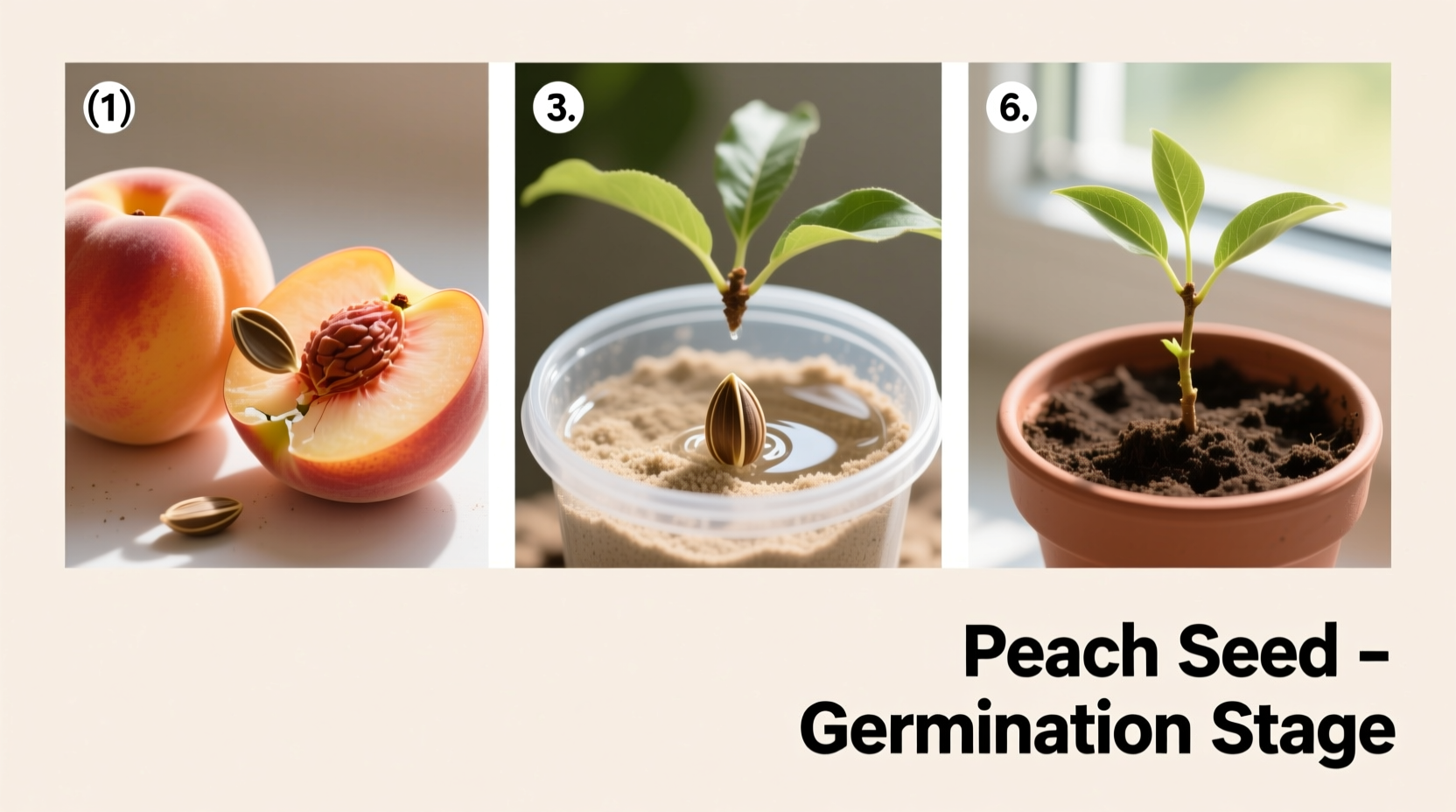 Plant a Peach Seed: Step-by-Step Guide for Home Gardeners
What to Expect (Low Expectations Are Best)
Here’s the real talk: growing a peach from a pit is a lottery. You might get a tree with amazing fruit, or you might get a tree that makes inedible, fuzzy golf balls. Most store-bought peaches are hybrids, so the baby tree might not taste like the parent peach. It’s nature’s version of a surprise bag.
But you know what? The process itself is a joy. You watch a dried-up stone turn into a green sprout, and you feel like you’ve cheated the universe. Plus, you get to tell your friends, “Oh, that tree? I grew it from a pit I ate two summers ago.” That line never gets old at a barbecue.
Even if the fruit is terrible, the blossoms in spring are gorgeous. Pink and fluffy, like cotton candy on a stick. The tree will also attract squirrels, which will then steal your tomatoes, but that’s a problem for future you.
So here’s my advice: save that pit. Dry it. Give it a cold nap. Plant it in fall or fake the winter in your fridge. Then wait. And wait. And one day, when you’ve completely forgotten about it, you’ll see a tiny green shoot—and you’ll feel a silly, proud smile spread across your face.
And isn’t that the whole point of gardening? A little dirt, a lot of hope, and a story about a peach pit that became a tree. Go on, give it a shot. Worst case? You just have a very expensive conversation piece for your living room.
